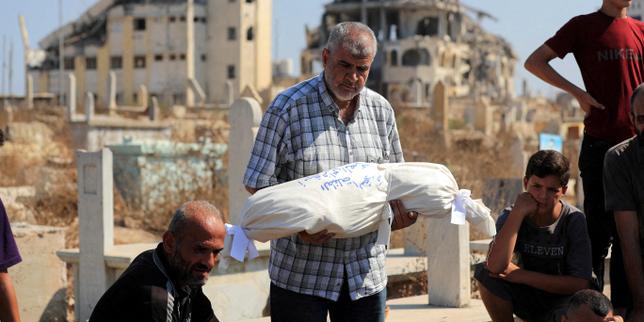
Emergency responders in Gaza recorded at least twelve civilian deaths following a series of Israeli airstrikes on residential areas, including six members of a single family wiped out in a single hit. The strikes, which battered urban districts without prior warning, highlight a relentless pattern where residential structures become sites of immediate mass casualties. Local civil defense crews arrived at collapsed concrete shells only to retrieve relatives from beneath rubble using hand tools and bare hands. This incident is not an anomaly. It reflects a systemic operational reality in Gaza where high-yield ordnance hits densely populated neighborhoods, eliminating whole multi-generational households in seconds.
The Mechanized Precision of Urban Destruction
Urban bombardment in Gaza operates under tactical protocols where structural destruction is often considered collateral to targeting objectives. When a heavy bomb strikes a multi-story residential building, the destruction is not contained to the immediate floor. The blast wave collapses vertical supports, sending thousands of tons of reinforced concrete cascading downward.
Civil defense workers operate in an environment stripped of heavy machinery. Fuel shortages render excavators useless. Emergency personnel must rely on picks, shovels, and manual labor to clear structural debris. Every minute spent attempting to lift concrete slabs by hand drastically reduces the survival window for those trapped beneath the weight of their own homes.
+-----------------------------------------------------------------------+
|              STRUCTURAL COLLAPSE STAGES IN RESIDENTIAL STRIKES        |
+-----------------------------------------------------------------------+
| 1. Detonation      -> Kinetic force penetrates structural roof/walls  |
| 2. Pillar Failure  -> Load-bearing columns collapse under overpressure|
| 3. Pancake Effect  -> Floor slabs stack vertically, trapping occupants|
| 4. Secondary Fire  -> Ruptured gas lines and wiring ignite remnants   |
+-----------------------------------------------------------------------+
The physical reality of these strikes reveals a predictable timeline. Air-dropped munitions generate extreme overpressure, shattering internal organs before structural collapse crushes the body. When six members of one family die simultaneously, they are typically gathered in what they assume is the safest room of the dwelling—usually an interior hallway or ground-floor alcove away from glass windows. In dense urban architecture, these interior spaces offer zero defense against bunker-busting or heavy general-purpose bombs.
The Systemic Erasure of Civil Registry Lines
When an entire branch of a family dies in a single moment, the administrative consequences ripple through Palestinian civil infrastructure. Official registries lose entire lineages. Property titles, guardianship documentation, and legal records vanish overnight alongside the individuals who held them.
Humanitarian organizations tracking casualty metrics note that family erasure alters the demographic record permanently. It leaves orphaned survivors with no immediate kin to assume legal guardianship or execute property transfers. The psychological impact on surviving relatives—who often find themselves the sole remaining member of an extended family tree—creates deep, long-term social fragmentation.
The Collapsing Infrastructure of Emergency Medicine
First responders do not simply face structural hazards; they operate inside a completely broken medical ecosystem. The arrival of twelve bodies alongside dozens of wounded individuals instantly overwhelms localized trauma stabilization points.
Hospital facilities throughout Gaza face chronic shortages of essential surgical supplies. Anaesthetics, sterile dressings, orthopedic pins, and blood products are routinely exhausted within hours of major bombardments.
"We are forced to perform complex surgical procedures on civilian casualties without adequate pain management or basic antiseptic coverage," stated a local trauma physician operating near the strike site. "When multi-patient casualties arrive at once, triage becomes an exercise in deciding who can survive without immediate surgical intervention."
Triage Decisions in Resource-Deprived Trauma Units
When emergency medical teams receive mass casualties, they must categorise victims instantly:
- Immediate (Red): Severe structural trauma requiring urgent surgical intervention where survival is statistically probable with immediate supplies.
- Delayed (Yellow): Stable fractures and soft-tissue wounds capable of waiting several hours without fatal deterioration.
- Expectant (Black): Victims with severe head trauma, massive internal blast injuries, or extensive third-degree burns who cannot be saved with existing medical supplies.
This mathematical reality strips medical care down to cold survival metrics. Patients who might survive in a functional hospital system are regularly classified as expectant due to the total absence of mechanical ventilators or operational intensive care beds.
The Protocol Behind High-Density Bombardment
Military analysts point out that targeting protocols in urban environments rely heavily on algorithms and automated intelligence networks. These systems process vast datasets—including cellular tracking, satellite imagery, and communication metadata—to generate target lists rapidly.
However, high-speed targeting systems operate with defined error margins and acceptable collateral damage ratios. When a target is approved within a high-density zone, the algorithm calculates potential civilian casualties based on historical occupancy models. In Gaza, where multiple generations reside within single multi-story structures, these models routinely undercount real-time occupancy.
+-----------------------------------------------------------------------+
|              TARGETING DATAFLOW & COLLATERAL CALCULATION              |
+-----------------------------------------------------------------------+
| Signal Intelligence -> Target Identification -> Collateral Model      |
|                                                      |                |
| Real-time Casualties <- Strike Execution <- Strike Authorization     |
+-----------------------------------------------------------------------+
The use of heavy ordnance in residential zones creates an immediate mismatch between military objectives and civilian protection requirements under international humanitarian law. Under standard rules of engagement, proportionality requires that expected civilian harm must not be excessive in relation to the concrete and direct military advantage anticipated. Yet, when six members of one family die in a strike aimed at a single target, the practical application of proportionality comes under intense legal scrutiny.
Legal Definitions vs Ground Reality
International legal experts point to two core tenets of armed conflict law that face constant friction during residential urban bombardment:
- Distinction: Parties to a conflict must at all times distinguish between civilian objects and military objectives. Attacks must be strictly directed against combatants and military infrastructure.
- Precaution: Operations must be conducted with continuous care to spare the civilian population, civilian objects, and civilian dwellings. This includes providing effective advance warning when circumstances permit.
On the ground, advance warnings have become increasingly rare or logistically impossible to act upon. Telecommunications blackouts prevent civilians from receiving SMS notifications or phone alerts. Even when warnings occur, civilians often have nowhere safe to flee, as surrounding sectors face simultaneous bombardment or lack basic shelter infrastructure.
The Escalating Cost on the Ground
The recurring loss of entire family units illustrates a fundamental truth about modern urban warfare in enclosed geographic spaces. When heavy munitions strike high-density residential buildings, the distinction between precision targeting and mass civilian casualty becomes non-existent in practice.
Emergency services continue to dig through concrete using bare hands, searching for missing relatives beneath the rubble, fully aware that the next strike could land on the exact location they are trying to clear. The survival of Gaza's remaining civil infrastructure hangs on whether international oversight can force a change in targeting protocols before the civil registry loses further family names entirely.