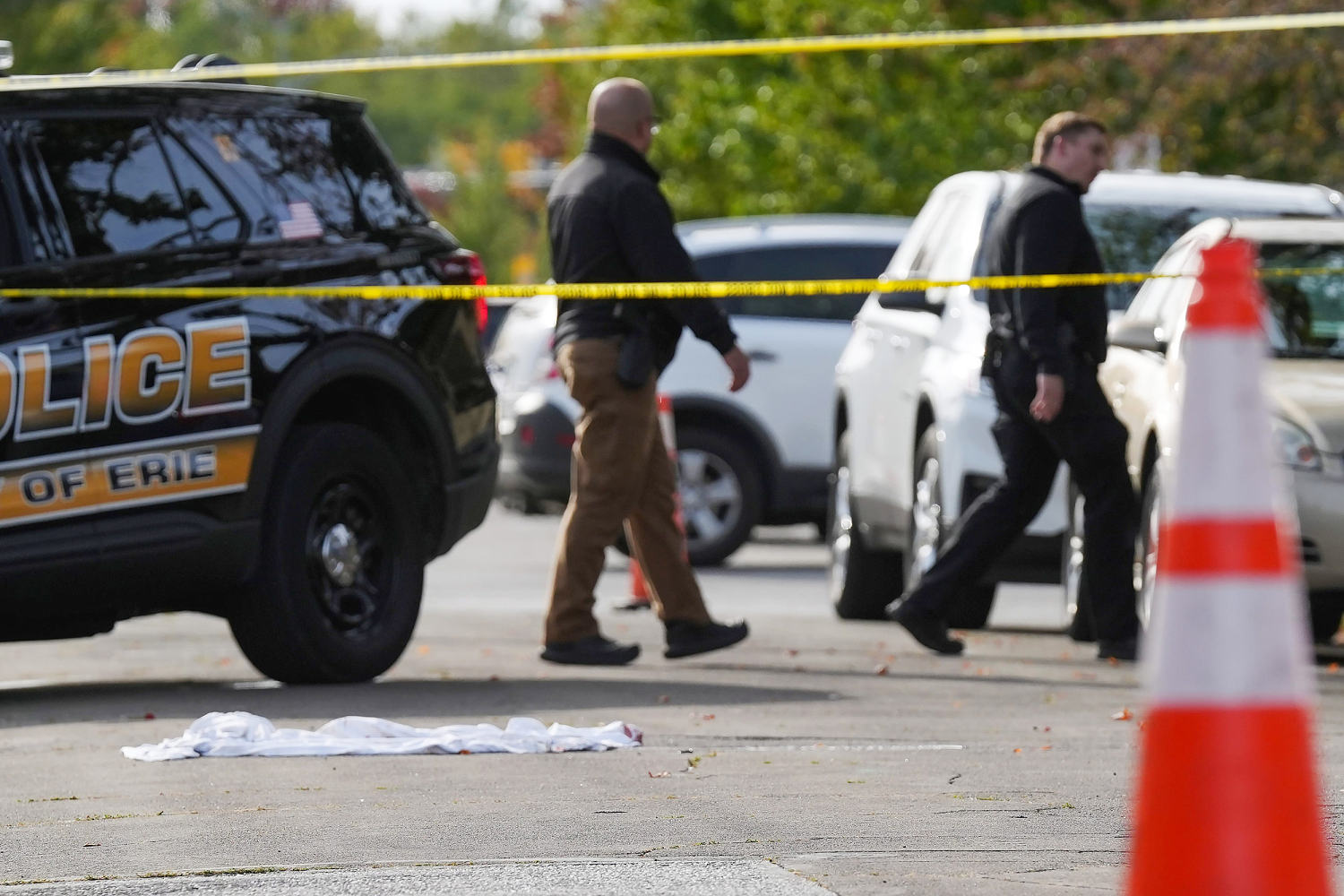
Another headline flashes across the screen. Nine dead in Erie. Officials scramble to microphones, offering the standard liturgy of thoughts, prayers, and hollow promises about community resilience. The media industrial complex feasts on the carnage, turning a human catastrophe into a twenty-four-hour entertainment loop.
Stop watching. Stop sharing. Stop pretending that reading these breaking news updates constitutes civic engagement.
Every time a mass casualty event hits the news cycle, the public falls into a predictable, Pavlovian trap. We demand answers from institutions that have proven entirely incapable of preventing the last tragedy, let alone the next one. We treat gun violence, mental health crises, and systemic breakdowns as meteorological phenomena—sudden storms that arrive unannounced and leave us huddled under broken umbrellas.
This framing is entirely wrong.
Tragedies like the one in Pennsylvania are not anomalies to be mourned and filed away under bad luck. They are the predictable output of a society that monetizes isolation, glorifies notoriety, and treats public safety as a partisan football rather than a basic logistical engineering problem.
The Problem With Our Outrage Economy
When Erie officials step up to the podium, they perform a script written decades ago. They express shock. They invoke unity. They pledge investigations.
None of this works. None of it has ever worked.
The standard news cycle demands a villain and a victim, neatly packaged for consumption before the evening commute. This binary narrative completely ignores the structural rot underneath. Mass violence in America is heavily incentivized by the very spotlight we shine on it. Every breathless profile of a shooter, every minute spent analyzing their manifesto or digital footprint, acts as free marketing for the next individual seeking permanent infamy.
Media organizations know this. They also know that blood sells ads. The incentive structure rewards sensationalism while burying the boring, systemic policy fixes that might actually save lives.
Shifting the Burden of Proof
Let us look past the initial emotional shockwave and examine the mechanics of how communities respond to violence. The conventional wisdom dictates that stricter local ordinances or heavier policing will solve the crisis. Both arguments miss the mark because they focus on downstream symptoms rather than upstream incentives.
Police departments are reactive forces. They arrive after the shots are fired, tape off the perimeter, and collect the bodies. Expecting a patrol car on every corner to cure a spiritually and socially bankrupt culture is like expecting a mop to fix a leaking roof.
Conversely, treating every incident purely as a symptom of a mental health crisis lets individuals off the hook for violent acts while stigmatizing millions of people who struggle with clinical issues without ever harming a fly. Mental illness does not equal mass violence. Conflating the two is a lazy cop-out used by politicians who refuse to tackle structural regulation or the deep-seated cultural alienation rotting out towns from Erie to rural Texas.
Dismantling the Performance
If you want to understand why these tragedies keep happening, look at the architecture of modern American life. We have atomized our neighborhoods. We have replaced physical community spaces with algorithmic echo chambers that reward radicalization and grievance. When a young man snaps in Pennsylvania, he does not do so in a vacuum. He operates within a ecosystem that practically breeds detachment and rage.
Yet, our public discourse remains trapped in a juvenile loop of political posturing. One side screams about hardware; the other screams about software. Both sides use the dead as props for their next fundraising email.
It is time to admit that the current leadership class has nothing left to offer. They are managers of decline, presiding over an increasingly fractured populace while protecting their own institutional survival.
The Uncomfortable Reality of Prevention
Real prevention is unglamorous. It does not fit into a twenty-second TikTok clip or a punchy cable news chyron. It involves boring, tedious investments in social capital, architectural safety redesigns, early intervention networks that actually track kids falling through the cracks, and a complete overhaul of how media outlets report on violent crime.
Until we change the economic and social incentives around violence—until we starve prospective perpetrators of the oxygen of fame and hold institutions accountable for their operational failures—these headlines will keep repeating.
Different city. Different number of dead. Same empty ritual.
Put down the phone. Turn off the cable news loop. Stop consuming the tragedy porn. The only way to break the cycle is to starve the machine of its fuel.