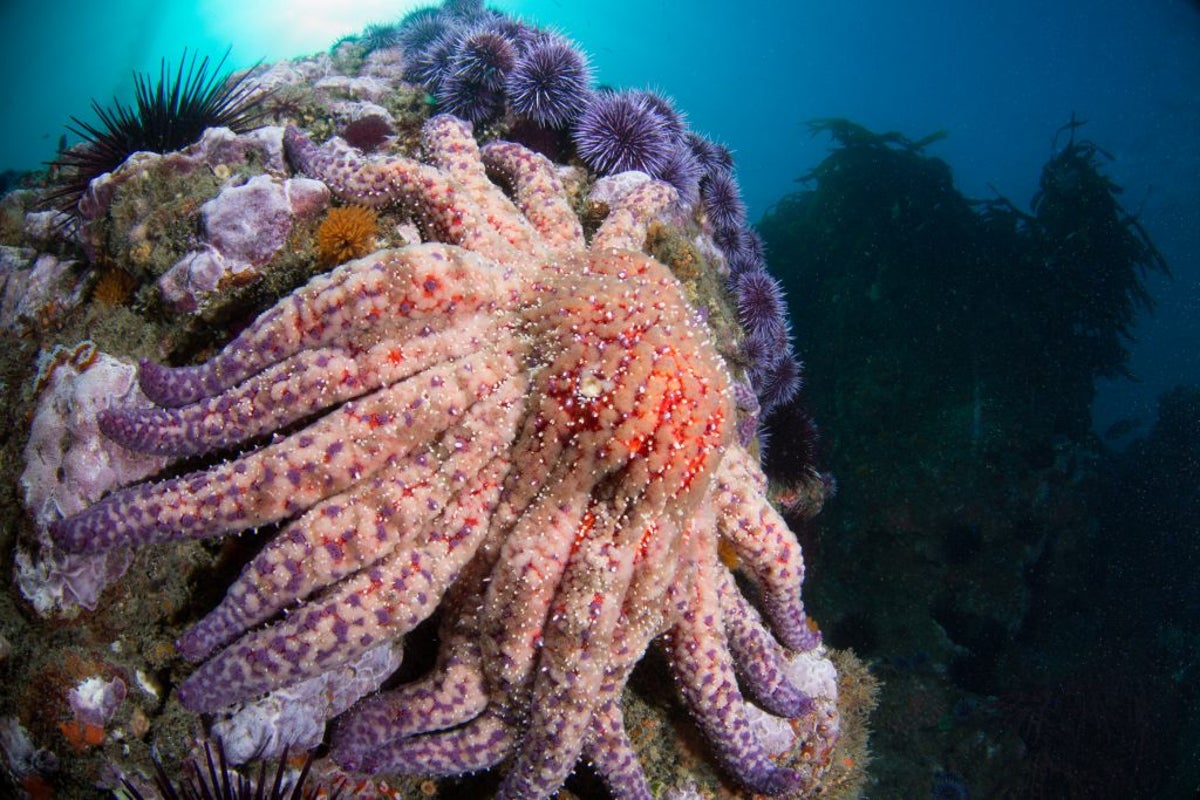
The media loves a resurrection story. When a marine biologist spots a creature off the coast of California that was supposedly wiped out during the Pleistocene, the press pool immediately fires up the typewriter. The headlines write themselves. "Nature finds a way." "Hope for the oceans." "A miracle of resilience."
It is a comforting narrative. It is also a dangerous delusion.
The lazy consensus in environmental reporting treats the rediscovery of a "Lazarus species"—an organism that vanishes from the fossil record or scientific surveys only to reappear decades or centuries later—as a triumph of nature over human destruction. The underlying assumption is that if a species can survive in secret, the oceans are more resilient than we thought, and our ecological sins are somehow mitigated.
This is backward. The reappearance of a long-lost ocean species isn’t a sign that the marine ecosystem is healing. It is a stark indictment of how primitive our oceanic monitoring tools actually are. We didn't "save" this species. We just failed to notice it was still alive because our tracking infrastructure is painfully inadequate.
By celebrating these biological flukes as conservation wins, we are blinding ourselves to the actual state of the oceans.
The Sampling Illusion and the Shifting Baseline
To understand why a rediscovery is an architectural failure of science rather than a biological miracle, you have to look at the math of marine sampling.
The oceans hold roughly 1.3 billion cubic kilometers of water. Human beings have thoroughly explored less than five percent of it. When a scientist declares a marine species "extinct," that declaration is rarely based on a definitive count. Instead, it is based on statistical absence from a vanishingly small sample size.
Imagine a scenario where a tech company claims its new cybersecurity software catches 100% of malware, but the company only scans three files out of a million. If a virus slips through and activates ten years later, you don't praise the virus for its "resilient coding." You fire the security team.
In marine biology, we call this the sampling illusion. Marine organisms, particularly those living in deep benthic zones or pelagic trenches, exist in low-density populations spread across vast, inaccessible terrains. A species might drop below the detection threshold of standard trawling nets or remote operated vehicles (ROVs) while its actual population remains stable but microscopic.
When that species finally drifts into a high-traffic coastal zone—like the heavily monitored waters off Southern California—and gets caught in a survey, it isn't a comeback. It is a statistical inevitability of prolonged sampling.
By treating this as a victory, we fall victim to the Shifting Baseline Syndrome. This is a psychological phenomenon where each generation of scientists accepts the local ecosystem status when they start their career as the baseline, ignoring how degraded it already is compared to fifty or a hundred years ago. Finding a handful of survivors from a historically devastated species doesn't reset the baseline. It just shows how little we know about the wreckage.
The High Cost of Eco-Optimism
This isn't just an academic debate about definitions. The "hopeful" narrative surrounding resurrected species actively damages conservation policy by misallocating resources and draining political will.
During my years analyzing environmental policy metrics, I’ve seen regulatory bodies use these rare, feel-good stories to justify easing protections on active industrial zones. The logic from corporate lobbyists is simple: "Look, the species survived forty years of offshore drilling and commercial shipping without us even knowing it. Clearly, our environmental impact reports are too conservative. The habitat is tougher than we think."
Optimism is a luxury the oceans cannot afford. When we focus capital and media attention on a single glamorous "survivor," we divert it from the systematic, boring work required to keep non-extinct species from sliding into the abyss.
Consider the raw economic trade-offs:
- The Resurrection Hype: Millions of dollars in grant funding rush to study the genomic sequence of the newly discovered "miracle" species.
- The Reality: Meanwhile, foundational indicator species—like kelp forests, phytoplankton, and local forage fish—are collapsing due to ocean acidification and rising sea temperatures. These species don't get headlines because they aren't "surprises." They are just dying out in plain sight.
We are funding the autopsy of the rare instead of the life support for the critical.
The Technological Delusion: eDNA Won't Save Us
The modern counterargument to this critique is that technology is solving the sampling problem. Proponents of environmental DNA (eDNA)—a method where scientists sequence genetic material shed by organisms directly from a cup of seawater—claim that we will soon have a real-time ledger of every living creature in the ocean.
They are wrong. eDNA is a powerful diagnostic tool, but it is currently crippled by false positives, false negatives, and massive spatial lag.
A single biological sample of eDNA can tell you that a specific sequence of nucleotides passed through a coordinate within the last 24 to 48 hours. It cannot tell you if that DNA came from a healthy breeding population, a single dying individual, or the digestive tract of a migrating gray whale that ate the organism five hundred miles away and defecated it near a California pier.
Relying on eDNA to map biodiversity without physical confirmation creates a ghost ecosystem. We risk writing policies based on genetic echoes rather than living biomass.
Dismantling the "People Also Ask" Assumptions
To correct our course, we have to look directly at the flawed premises that dominate public curiosity on this topic.
Why do species suddenly reappear after being thought extinct?
They don't reappear. They never left. The phrase "thought extinct" is the flaw. It implies an omniscience that marine science simply does not possess. A species "reappears" because human technology finally crossed paths with its remaining habitat, or because environmental shifts forced a deep-water population into shallower waters where humans happen to look.
Does finding a Lazarus species mean the ocean is healthier than we think?
No. It means our baseline data is poorer than we admit. Finding a single survivor from a fire doesn't mean the house is intact; it just means one room hasn't collapsed yet. A truly healthy ocean does not produce Lazarus species because populations would be dense enough to register consistently on basic scientific surveys.
Shift the Capital: Stop Chasing Ghosts
If we want to stop mismanaging our marine resources, we must abandon the romantic obsession with biological resurrections and pivot to an aggressive, unglamorous strategy of habitat preservation.
This requires changing how conservation funds are deployed.
| Current Allocation Strategy (The Hype Cycle) | Proposed Counter-Strategy (The Fortress Model) |
|---|---|
| Funding hyper-targeted expeditions to locate historical species. | Funding automated, permanent marine protected areas (MPAs) that bar all human activity. |
| Relying on episodic, vessel-based surveys that sample less than 1% of a habitat. | Deploying fixed, autonomous acoustic arrays to map long-term habitat usage. |
| Using "hopeful" media coverage to boost organizational donor engagement. | Publishing brutal, data-driven assessments of total biomass decline to force regulatory action. |
The downside to this contrarian approach is obvious: it is politically unpopular. It doesn't yield viral videos of scientists crying on a boat because they found a prehistoric crab. It requires telling coastal industries that they cannot fish, drill, or ship in massive corridors of the ocean, regardless of whether a "miracle" species is currently using that water or not.
But if your goal is actual ecological stability rather than a self-congratulatory press release, you have to look at the cold numbers. A resurrected species is a data point of one. A collapsed ecosystem is a systemic catastrophe.
Stop looking for miracles in the water. Start enforcing the boundaries that keep the remaining ninety-five percent of marine life from needing a resurrection in the first place.


