Dawn in the Bab-el-Mandeb strait rarely arrives with a gentle brush of gold. Instead, the sun cuts through the heavy, salt-choked air like a hot blade, instantly baking the steel decks of everything afloat.
Captain Tariq stood on the wing of the bridge, his fingers gripping the worn handrail. Below him, the vast hull of a massive crude carrier stretched forward like an industrial island. It carried millions of barrels of oil, a floating artery of energy destined for distant ports. To the untrained eye, the vessel was an exercise in pure geometry and raw tonnage. To Tariq, who had spent three decades navigating the chokepoints of global commerce, it felt fragile.
A tin can on an ocean of fire.
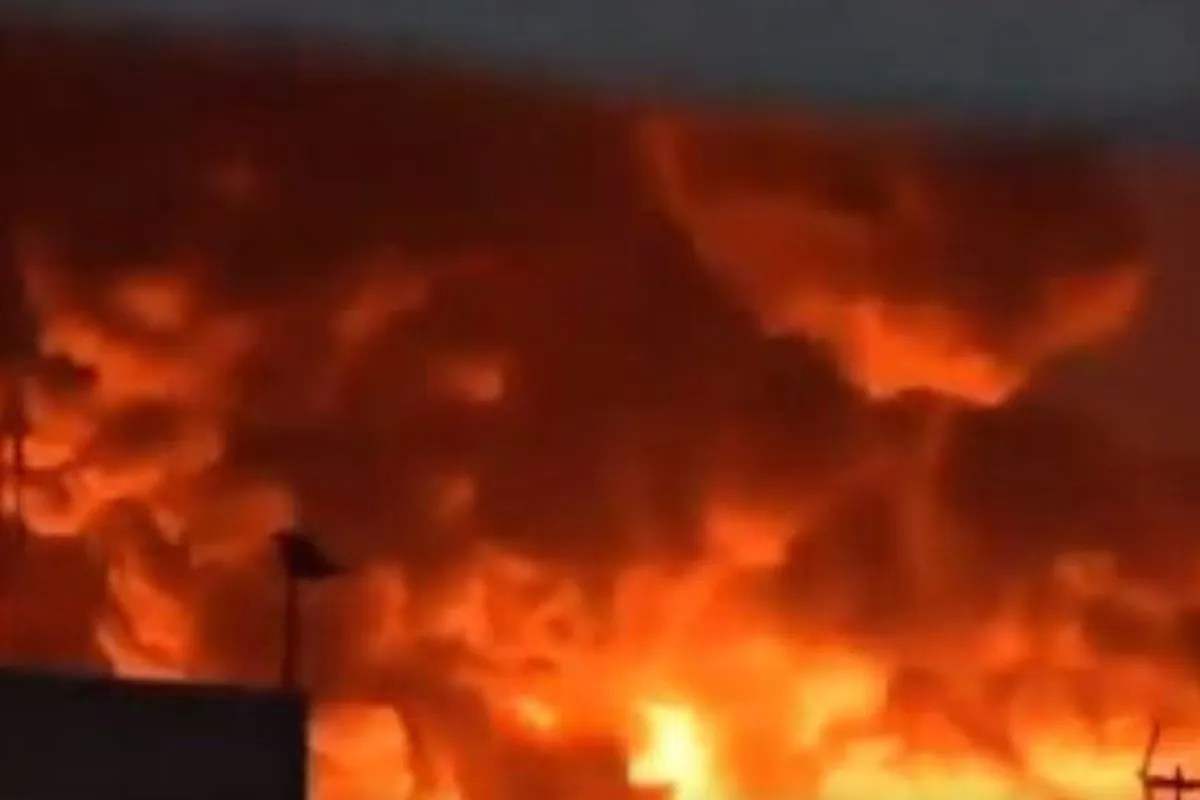
Hours earlier, the tranquility of the night had shattered. Not with the cinematic roar of a blockbuster film, but with a sharp, piercing whine that belonged to no ordinary seabird. A missile, launched from the rugged, conflict-scarred coastline of Yemen, had torn through the stratosphere before curving downward.
It missed. But only by yards.
The shockwave had rattled coffee cups and turned stomachs inside out.
When the Houthi movement claimed responsibility for the strike shortly after, it was treated as a data point in distant newsrooms. A ticker tape flash. A geopolitical statistic. But numbers on a screen do not capture the smell of scorched ozone on a bridge wing, nor do they reflect the icy silence that settles over a crew when they realize how close they came to becoming an environmental and human catastrophe.
Consider what happens next: the missile splashes into the dark water, sending up a geyser of white foam, and the world outside the ship keeps spinning. Markets react with a nervous twitch. Oil futures tick upward by a few dollars. Insurance premiums spike for ships daring to pass through the southern mouth of the Red Sea.
Yet, these financial adjustments mask a deeper, more unsettling reality. The global supply chain is not a machine of titanium and concrete; it is a fragile web of trust. For decades, humanity operated on the quiet assumption that the blue highways of the world were fundamentally safe. Ships could cross oceans, thread through narrow straits, and deliver the fuel of modern civilization with little more than a weather eye on the horizon.
That trust is gone.
The Houthi forces controlling much of western Yemen have turned the waterways off their coast into a theater of asymmetric warfare. Armed with anti-ship missiles, explosive-laden drone boats, and coastal radar, a faction born from local civil conflict has leveraged geography to project power across international shipping lanes. The strategic calculation is brutally simple. By threatening the flow of crude oil through the Bab-el-Mandeb—a narrow passage where the Red Sea meets the Gulf of Aden—they hold a choke point through which a massive percentage of global trade passes daily.
Saudi Arabia, the primary target in this specific instance, finds itself caught in a multi-front struggle. Its oil facilities, its tankers, and its coastal waters are continuous magnets for incoming projectiles launched by adversaries backed across the region. When a tanker bearing the kingdom's flag is targeted, the stakes extend far beyond corporate balance sheets.
Think of the marine engineers deep in the bowels of the vessel, surrounded by the deafening roar of massive diesel engines. They cannot see the sky. They only feel the violent shudder of the hull if something strikes. They are fathers, sons, and daughters working thousands of miles from home, earning a living by keeping the lights on in cities they may never visit.
When modern conflict reaches out and touches them, the abstract becomes brutally personal.
The broader international community scrambles to respond. Naval task forces patrol the horizon, launching interceptors and tracking radar signatures with the grim efficiency of the digital age. Warships from various nations steam back and forth, playing high-stakes defense against projectiles that cost a fraction of the defensive missiles used to shoot them down.
Economics dictates that this game of chicken cannot last forever. The math of asymmetric warfare favors the attacker. A cheap drone or a crude missile forces the deployment of multimillion-dollar interceptor hardware. More importantly, it forces shipping companies to make a choice.
Do they risk the Red Sea route, shaving days off the journey to Europe and Asia? Or do they route their vessels entirely around the African continent, rounding the Cape of Good Hope?
Choosing the Cape adds thousands of miles and weeks of transit time to every single voyage. It burns extra bunker fuel. It ties up tonnage that could be moving the next cargo. It quietly, persistently raises the cost of nearly every manufactured good on earth.
When an oil tanker is targeted off the coast of Yemen, the ripple effect reaches a motorist pumping gas in Rotterdam, a factory worker buying groceries in Tokyo, and a family heating their home in London. The world is smaller than we care to admit, and the friction points are becoming sharper.
Captain Tariq knows nothing of these macro-level theories while on watch. He only knows the rhythm of his engine, the vastness of the water, and the knowledge that the horizon is no longer empty. Every radar blip is a question mark. Every cloud of smoke on the distant shore is a reminder that the peace of the oceans is an illusion maintained only by constant vigilance.
The sun climbs higher, bleaching the water to a blinding silver. The tanker steams onward, leaving a white scar across the deep blue sea, cutting through waters that have grown infinitely more dangerous than they were yesterday.