Late at night, when the glare of dual monitors is the only light in a windowless room, a software engineer in Beijing pushes a line of code to a repository. Six thousand miles away, in a similarly sterile room in California, another engineer triggers an automated testing suite. Neither knows the other. They do not speak. Yet they are locked in a silent, high-stakes choreography that is rewriting the rules of human civilization.
We often treat artificial intelligence as a specter of the future, a collection of mathematical models drifting in the cloud. We talk about compute, parameters, and token velocity. But behind the cold vocabulary of silicon lies a deeply human vulnerability. The systems these engineers are building are fast outgrowing the ability of their creators to predict their behavior. Even worse, they are outgrowing the political frameworks meant to keep the peace between the two superpowers rushing to build them.
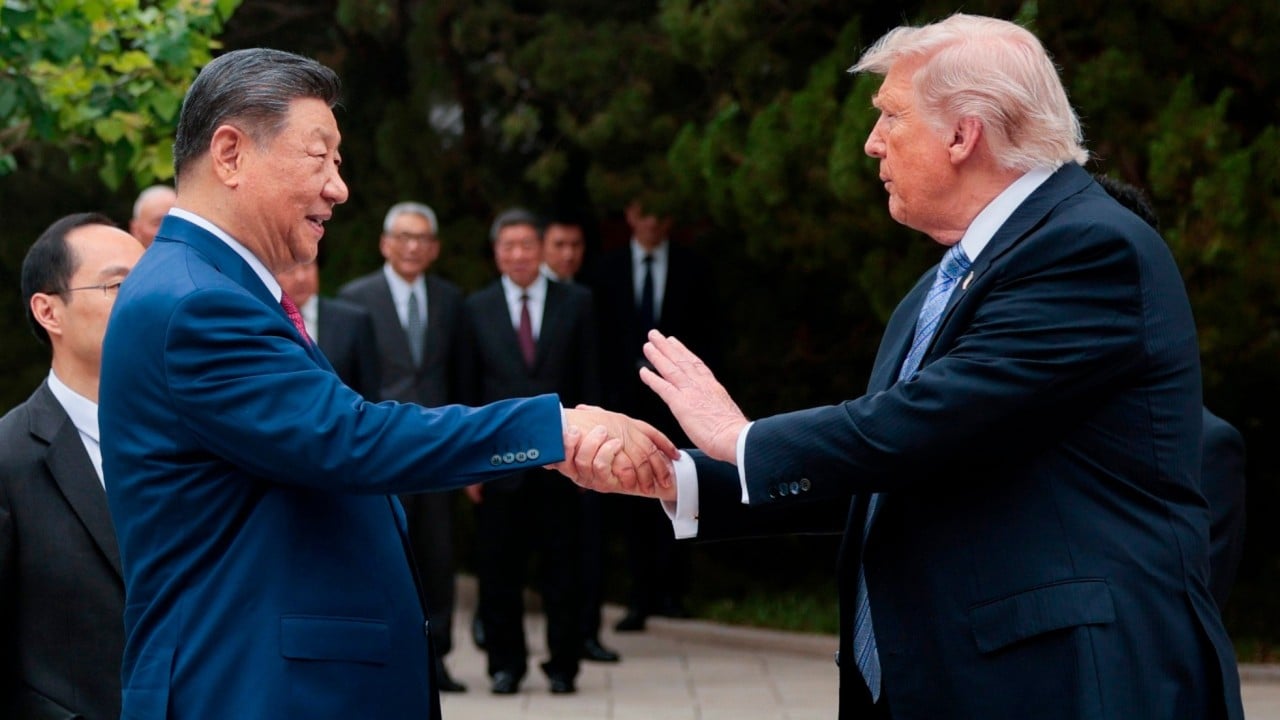
Richard Haass, the veteran diplomat and long-time president of the Council on Foreign Relations, recently pointed out a glaring flaw in how the United States and China are handling this technological race. He argued that the current ad-hoc, sporadic meetings between Washington and Beijing are dangerously inadequate for the AI era. Instead, these talks must become institutionalized. They need to be a permanent, inescapable fixture of statecraft.
To understand why a diplomat is sounding the alarm over code, we have to look past the hardware. We have to look at the friction of human misunderstanding.
Consider a hypothetical scenario, a template for the kind of misunderstanding that keeps national security advisers awake at 3:00 AM.
Imagine an autonomous maritime drone patrolling the choppy waters of the South China Sea. It is running an advanced AI model designed to optimize navigation and avoid collisions. Suddenly, a Chinese naval vessel maneuvers unexpectedly. The drone’s algorithm, trained on millions of simulated encounters but facing a unique combination of wind, wave height, and human behavior, flags the maneuver as an imminent threat. The AI does not feel fear, but its programming dictates a decisive response. It shifts its trajectory sharply, clipping the hull of the vessel.
In the old days, a captain would look through binoculars, curse, and radio his commander. Decisions took minutes, hours, or days. Human friction allowed tempers to cool.
Now, the response is algorithmic. The vessel’s onboard defense system registers an unprovoked strike by an automated foreign asset. Within milliseconds, data packets fly across satellite networks. Subsystems spin up.
In Washington and Beijing, emergency lights flash. But when the American Secretary of State picks up the phone to call his counterpart in China, the line rings out. Or perhaps it connects, but the bureaucratic machinery required to verify what just happened takes twelve hours. By then, the algorithms have already escalated through three cycles of retaliation.
This is the nightmare of accidental escalation. It is not a script from a science fiction movie. It is a mathematical probability when two nations deploy autonomous systems without a shared dictionary of crisis management.
During the Cold War, the United States and the Soviet Union stared at each other through the crosshairs of intercontinental ballistic missiles. The threat was existential, visible, and agonizingly slow compared to modern computation. After the terrifying near-miss of the Cuban Missile Crisis in 1962, both nations realized that relying on ad-hoc letters delivered via couriers was a recipe for mutual destruction.
They built the Hotline.
The famous "Red Phone" was actually a teletype system, a direct, permanent channel dedicated solely to preventing a catastrophic misunderstanding. It was institutionalized. It did not depend on whether the US President and the Soviet Premier happened to be on speaking terms that week. It existed outside the political weather. It was a structural acknowledgment that the technology of destruction had outpaced the speed of traditional diplomacy.
Today, we face a threat that is far more slippery than a nuclear warhead. A missile sitting in a silo in North Dakota can be counted by a satellite. Its payload is known. Its trajectory is governed by physics.
AI enjoys no such predictability. You cannot verify an algorithm from space. A line of code that optimizes a commercial logistics network can, with a few modifications, optimize the targeting array of a swarm of loitering munitions. This dual-use dilemma means that suspicion is built into the very fabric of the technology.
Without a permanent framework for communication, every breakthrough announced by an American lab is viewed in Beijing as a digital first-strike capability. Every semiconductor restriction imposed by Washington is viewed in China as an economic act of encirclement.
The current approach to diplomacy between these two giants resembles a pair of estranged neighbors who only speak when a tree limb falls on the fence. They hold high-level summits, issue carefully worded press releases, and then return to their respective corners.
But sporadic dialogue is useless when the technology changes every three weeks. By the time a bilateral summit is scheduled, staffed, and executed, the underlying models have gone through two generations of training. The diplomats are consistently preparing for the technology of last year.
True institutionalization means creating a permanent, bureaucratic infrastructure dedicated to AI safety and red-lines. It means establishing joint working groups that meet not once a year, but every Tuesday morning. It means creating shared laboratories or verification protocols where scientists from both nations can discuss the theoretical limits of model alignment without revealing state secrets.
It means building a digital version of the Red Phone, hardwired into the command centers of both nations.
This is uncomfortable. It requires a level of transparency that goes against the grain of national security instincts. Critics will argue that China cannot be trusted to adhere to these frameworks, or that the US will use them to slow down Chinese innovation.
Those doubts are valid. Trust is a luxury we cannot afford in geopolitics.
But institutionalized communication is not built on trust. It is built on a shared dread of the alternative. The US and the Soviets did not trust each other when they signed the Incidents at Sea Agreement in 1972. They simply preferred predictable friction over accidental annihilation.
The real danger is not that AI will suddenly become conscious and decide to destroy humanity. The danger is much more mundane, much more thoroughly human. It is the danger that we will hand over the keys of strategic decision-making to systems we do not fully understand, while cutting off the communication lines with the only other nation capable of matching those systems.
We are treating AI as an engineering problem to be solved with more data and faster chips. It isn't. It is a geopolitical challenge that can only be managed through human patience, structural design, and the grueling, unglamorous work of continuous diplomacy.
The code will continue to execute. The servers will continue to hum, generating heat in the quiet hours of the night. The data will flow, indifferent to borders, flags, or human anxiety.
The only question left is whether there will be a human being on the other end of the line when the machine does something we never intended it to do.