The rain in Bratislava has a way of making the old stones of Bratislava Castle look like polished iron. Standing on the ramparts, looking out over the Danube where the borders of Slovakia, Austria, and Hungary blur into the horizon, you can feel the weight of centuries of European history. This is a landscape shaped by empires that rose and fell, by treaties signed in drafty rooms, and by the quiet, unyielding realities of geography. For decades, Western Europe looked at this region as the "East"—a buffer, a transition zone, a collection of states finding their footing after the Cold War.
But history has a habit of moving when we are looking the other way.
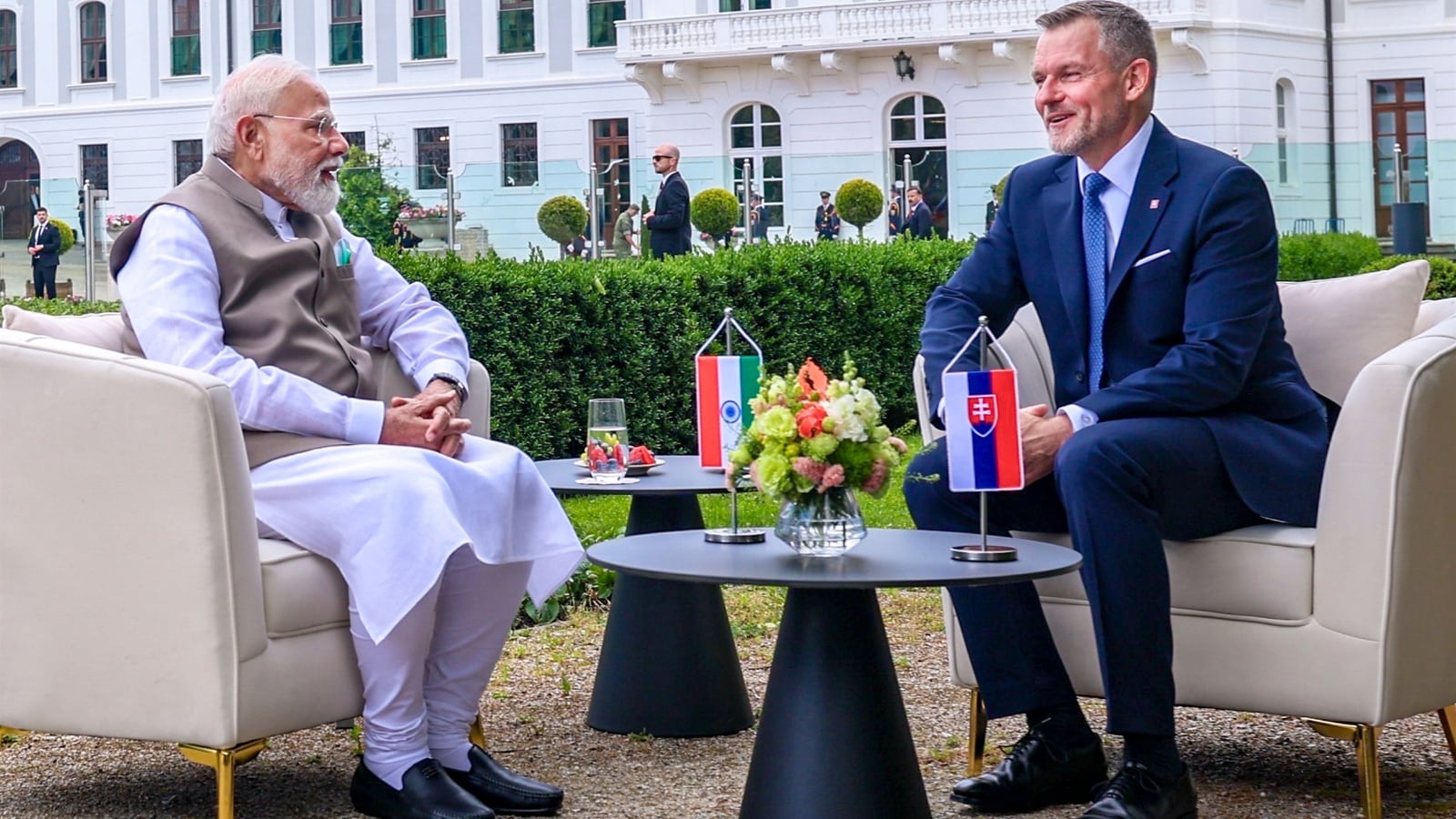
A few days ago, the atmosphere inside the presidential palace was heavy with the scent of formal state dinners and the sharp crack of camera flashes. Indian Prime Minister Narendra Modi stood alongside Slovak officials, receiving the highest state honor the country can bestow upon a foreign leader. To the casual observer scanning a news feed, it looked like standard diplomatic theater. The photographs showed the usual geometry of statecraft: flagpins, practiced handshakes, signed leather folders resting on mahogany tables. The headlines dutifully tallied the metrics—14 agreements, a partnership upgraded, a photo gallery of smiles.
If you only read the numbers, you missed the entire point of the evening.
Diplomacy is rarely about the paper being signed. It is about the invisible lines of force being drawn beneath the surface of global commerce. To understand why a superpower of 1.4 billion people is suddenly anchoring its European strategy in a Central European nation of five and a half million, you have to look past the podiums. You have to look at the factories, the shipping lanes, and the quiet anxieties of a world trying to reinvent how it trades.
The Weight of the Medal
Consider what happens when a state confers its highest honor. It is not a gold watch given for long service; it is a public declaration of alignment. For Slovakia, a country that has spent the last few decades balancing its integration into the European Union with its historical ties to the East, hosting the Indian Prime Minister with this level of intensity is a calculated gamble on the future.
Imagine a logistics manager named Peter, working late in a warehouse just outside Bratislava. For years, Peter’s job was simple: receive components from East Asia, assemble them, and ship them westward into Germany and France. But over the last few years, the old predictability broke down. Shipping containers got stuck in choked maritime straits. Energy prices spiked. The long, fragile supply chains that the global economy relied upon suddenly felt like nooses.
Peter’s reality is the friction that drove the 14 deals signed in Bratislava.
When India and Slovakia upgrade their relationship to a strategic partnership, they are not just engaging in bureaucratic vanity. They are responding directly to Peter's empty pallets. India is aggressively positioned to become the world’s manufacturing alternative, but factories in Gujarat or Tamil Nadu mean nothing if their outputs cannot find a reliable, stable harbor inside the European single market. Slovakia, sitting squarely in the geographical heart of the continent, wants to be that harbor.
The 14 agreements span everything from defense manufacturing and semiconductor supply chains to digital infrastructure and labor mobility. But beneath the legal jargon, the core message is singular: Western Europe is no longer the sole gatekeeper of continental economic power.
The Secret Geometry of the Danube
There is a specific kind of blindness that affects global analysts who only look at the traditional capitals. They assume the big decisions are made exclusively in Washington, Beijing, New Delhi, or Brussels. They forget that the bloodstream of Europe runs through the valleys of the Danube.
Slovakia has quietly built itself into an automotive and industrial powerhouse. Per capita, it produces more cars than any other nation on earth. Walk through the sprawling manufacturing plants near Nitra or Trnava, and you see a highly sophisticated, hyper-efficient ecosystem that feeds the entire continent’s industrial appetite. But this ecosystem faces a quiet crisis. It needs raw materials, it needs advanced engineering talent, and above all, it needs diversification.
India needs what Slovakia has mastered: precision engineering, heavy industrial capability, and a direct, tariff-free gateway into the European market.
The strategy behind this visit becomes clear when you look at the map from a logistical perspective rather than a political one. For India, establishing a deep, institutionalized relationship with Bratislava allows it to bypass some of the larger, more bureaucratic European capitals. It creates a nimble, high-tech corridor straight into the industrial core of Central Europe.
It is an elegant solution to a messy problem. By securing agreements on green energy technologies and defense co-production, India is embedding its own corporate giants into the very fabric of Central European infrastructure. This is not trade done from a distance; this is integration.
The Human Friction Beneath the Ink
We often treat international relations like a game of chess played with bloodless wooden pieces. We talk about "states" and "markets" as if they are sentient entities. They are not. They are collections of human beings driven by ambition, fear, and the desire for stability.
The most critical, yet least discussed, aspect of the Bratislava summit centers on labor mobility and educational exchanges. This is where the abstract concepts of geopolitics collide with human life.
Think of a young software engineer in Bengaluru, looking at a world where traditional migration pathways to the West are tightening, becoming choked by political rhetoric and visa backlogs. Simultaneously, think of a Slovak tech firm in Košice, desperately searching for the specialized talent required to scale its automation platforms. The agreement signed between the two nations aims to bridge this exact chasm.
But bridges are difficult to build when the cultural foundations are entirely different.
The true test of these 14 deals will not take place in parliamentary debates or during high-profile state visits. It will happen in the quiet, mundane moments of daily execution. It will be tested when an Indian engineering team tries to integrate its workflow with a Slovak assembly line, navigating differences in language, regulatory culture, and workplace expectations. It will be tested when small and medium-sized enterprises in both countries try to utilize these new legal frameworks without the massive legal budgets of multinational corporations.
Global politics is filled with grand declarations that evaporate the moment the ink dries. The road from a signed memorandum of understanding to a functioning, profitable supply chain is long, unglamorous, and fraught with bureaucratic peril.
The Shift You Can Feel
As night fell over Bratislava, the lights of the castle reflected in the dark waters of the Danube, casting long, wavering lines across the river. The official motorcades have long since cleared the streets, leaving the city to its usual quiet rhythms. The photographs from the visit have been archived, analyzed, and filed away by state media.
Something fundamental shifted in the geopolitical landscape this week, and it had very little to do with the specific wording of the joint statements.
For decades, developing nations looked to Europe as a monolithic bloc of donors and critics. Europe looked outward through a lens of historical privilege. What happened in Bratislava is evidence of a completely different world order—one where pragmatism beats ideology, and where mid-sized European powers are realizing that their economic survival depends on building direct, unmediated lifelines to the rising titans of Asia.
The world is getting smaller, faster, and far more unpredictable. The traditional centers of gravity are losing their pull, and new networks are forming in the spaces between them. You could see it in the way the Slovak guards stood at attention during the ceremony, their uniforms crisp against the gray sky. You could see it in the intensity of the closed-door meetings that ran hours over schedule.
The map of the world is not rewritten by sudden, cataclysmic wars alone. More often, it is rewritten quietly, page by page, agreement by agreement, on rainy afternoons in cities that the rest of the world underestimates.