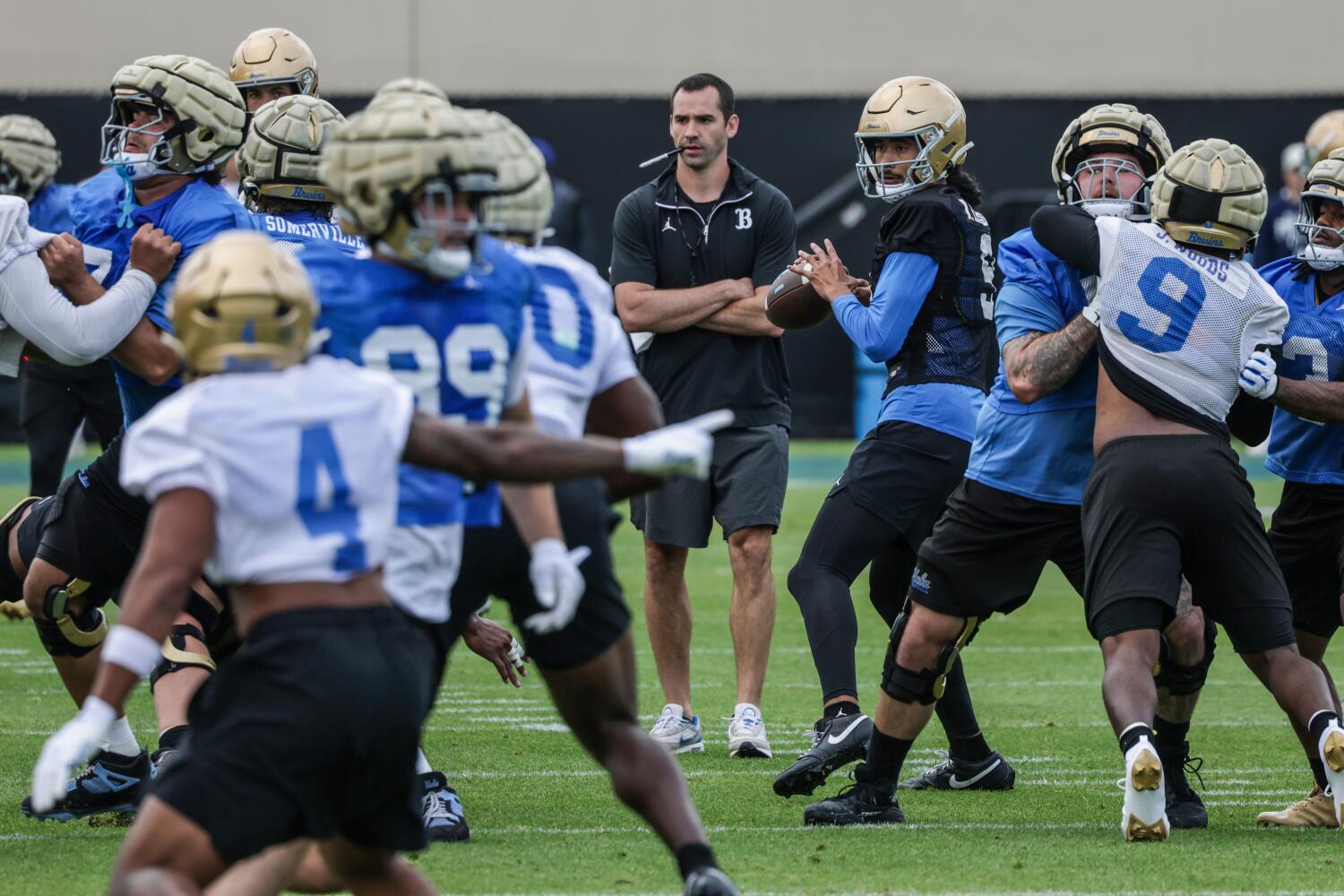
Winning the press conference is the easiest job in sports. It requires a tailored suit, a firm handshake, and a script full of buzzwords about "culture" and "alignment." The recent coronation of Jeff Chesney as a savior for the Bruins, backed by the vocal support of high-profile names like Nico Iamaleava and Cole Martin, is a masterclass in optics. It is also a dangerous distraction from the cold, hard mechanics of winning at the highest level of college football.
The consensus is lazy. It suggests that if the big-name recruits are "sold," then the program is fixed. This ignores the historical graveyard of "player-favorite" hires who lacked the tactical depth to survive the gauntlet. Recruiting is the lifeblood of a program, but a coach who is primarily a salesman is just a recruiter with a more expensive title.
The Mirage of the Recruitment Stamp of Approval
Why do we care what a quarterback at another school thinks about a coaching hire? The media loves the narrative of the "player's coach." They point to Iamaleava’s endorsement as if it carries the weight of a Super Bowl ring. In reality, a star player’s endorsement of a new coach often stems from personal relationships and summer camp vibes rather than an objective analysis of a coach's X’s and O’s.
I have seen programs burn through decade-long legacies because they chased the approval of eighteen-year-olds. When a player says they are "sold" on a leader, they are usually sold on a personality. But Saturday afternoons don’t care about your personality. They care about your third-down conversion rate and your ability to adjust when a defensive coordinator is eating your lunch in the second half.
The FCS Translation Gap
Chesney’s record at the lower levels is undeniably impressive. He won. He dominated. But the "winner" label is being applied as if success is a portable file you can just drag and drop into a Power Four environment. It isn't.
The gap between the Patriot League and the elite tier of college football isn't a step; it’s a canyon. In the FCS, you can out-scheme opponents with basic discipline and superior conditioning. In the big leagues, everyone is disciplined. Everyone is conditioned. The advantage comes from micro-adjustments and the ability to manage a roster that is effectively a professional front office.
If you analyze the data on coaches jumping from the lower tiers to the top, the failure rate is staggering when they try to rely on the same "culture" building that worked against Holy Cross. Culture is what you talk about when you don't have a talent advantage. At this level, you need both, plus a ruthless understanding of the transfer portal that goes beyond "building relationships."
The NIL Reality Nobody Wants to Admit
The "Chesney is a winner" narrative conveniently skips over the financial infrastructure required to actually compete. You can be the greatest motivator since Patton, but if your NIL collective is anemic, you are fighting a tank with a toothpick.
The endorsements from Iamaleava and Martin are gold for social media engagement, but they don't fill the coffers. The status quo suggests that a "charismatic leader" will naturally attract donors. The opposite is true. Big donors don't invest in charisma; they invest in ROI. They want to see a coach who handles the program like a CEO, not a camp counselor.
By focusing on whether the players "believe" in the coach, the program is masking a structural vulnerability. If the focus is on the man at the top rather than the machine behind him, the Bruins are setting themselves up for a rude awakening when the initial honeymoon phase hits the reality of a four-game losing streak against ranked opponents.
Why Player Loyalty is a Lagging Indicator
The most dangerous thing a new coach can do is try to be liked. True leadership in high-stakes football is often abrasive. It’s demanding. It’s frequently unpopular in the short term.
When I see headlines about players being "sold" on a coach before they’ve even had a padded practice, I see a red flag. It suggests a lack of friction. If everyone is happy in February, someone is lying, or someone isn't working hard enough.
Consider the "Hard Truth" of program building:
- Initial Buy-in is Cheap: Anyone can sell a vision.
- Tactical Depth is Scarce: Most coaches who "win the room" lose the headset battle.
- Endorsements are Currency, Not Performance: A tweet from a star player is a marketing asset, not a scouting report.
Imagine a scenario where a coach is hired specifically because he is the "anti-establishment" choice that players love. The locker room is electric. The energy is high. Then, week three arrives. The opponent shows a defensive look that wasn't on the film. The "player's coach" looks at his clipboard and sees "culture" written in the margins while the scoreboard is ticking against him.
The Logic of the Counter-Intuitive Hire
The Bruins didn't need a "winner" in the traditional, feel-good sense. They needed a disruptor. Someone who was willing to come in and alienate the very people currently praising him in order to gut the complacency that has defined the program for years.
Instead of asking "Are the recruits sold?" we should be asking:
- What is the specific schematic advantage Chesney brings that translates to the Power Four?
- How does his staff manage the transition from a developmental model to a "win now" portal model?
- Is the support from outside stars a sign of respect, or a sign that they don't view the program as a threat yet?
True authority isn't granted by a press release or a celebrity endorsement. It is taken on the field. The current obsession with the "vibe" of the Chesney hire is a classic symptom of a program that is more concerned with its image than its output.
The most successful coaches in history—the Sabans, the Meyer types, the Harbaughs—weren't hired because the players were "sold" on them. They were hired because they had a proven, repeatable system that functioned regardless of whether the players liked them or not. In fact, many of their players hated them until they saw the championship rings.
Stop Celebrating the Honeymoon
The sports media cycle thrives on the "New Era" trope. It’s easy to write. It’s easy to consume. But it’s almost always wrong. The "New Era" usually looks a lot like the old one, just with different slogans on the weight room walls.
The real test isn't whether Cole Martin thinks Chesney is a leader. The test is whether Chesney can recruit a defensive line that can hold up in the fourth quarter against a blue-blood program that doesn't care about his FCS trophies.
We are witnessing a branding exercise, not a football revolution. The Bruins are betting on a feeling. In a sport that is increasingly defined by data, NIL valuation, and professional-grade scouting, betting on a feeling is a recipe for mediocrity.
If you want to know if the Bruins are actually back, stop looking at the quotes from the star quarterbacks. Look at the film from the spring game. Look at the transfer portal out-flow. Look at the trenches.
The "winner" label is a heavy burden. It’s one thing to carry it when you’re the big fish in a small pond. It’s another thing entirely when you’re swimming with sharks who don't care about your resume.
Stop buying the hype and start looking for the substance, because "culture" won't stop a blindside blitz.