The fluorescent bulb over the kitchen table hums at sixty cycles per second, a low, persistent vibration that seems to settle directly into the teeth of anyone sitting beneath it at five in the morning. For Carlos—a hypothetical composite drawn from thousands of undocumented laborers across the American Midwest—that hum is the sound of the clock running out. Before the coffee even finishes dripping, he checks the local weather, glances at the stack of school permission slips waiting for a signature, and listens for the crunch of gravel on the county road outside.
He is not a cartel boss. He is not a cartel runner. He has spent fourteen years framing houses in Ohio, paying taxes through an Individual Taxpayer Identification Number, and coaching a Saturday morning youth soccer league where half the parents speak English with a thick rural drawl and the other half speak Spanish in hushed, polite tones near the bleachers. Meanwhile, you can find other stories here: The Quiet Arithmetic of a Locked Room in Paris.
For years, political rhetoric treated Carlos as an abstraction—a statistic on a cable news chyron, a talking point in a campaign stump speech, a problem to be solved with maximum force and zero nuance.
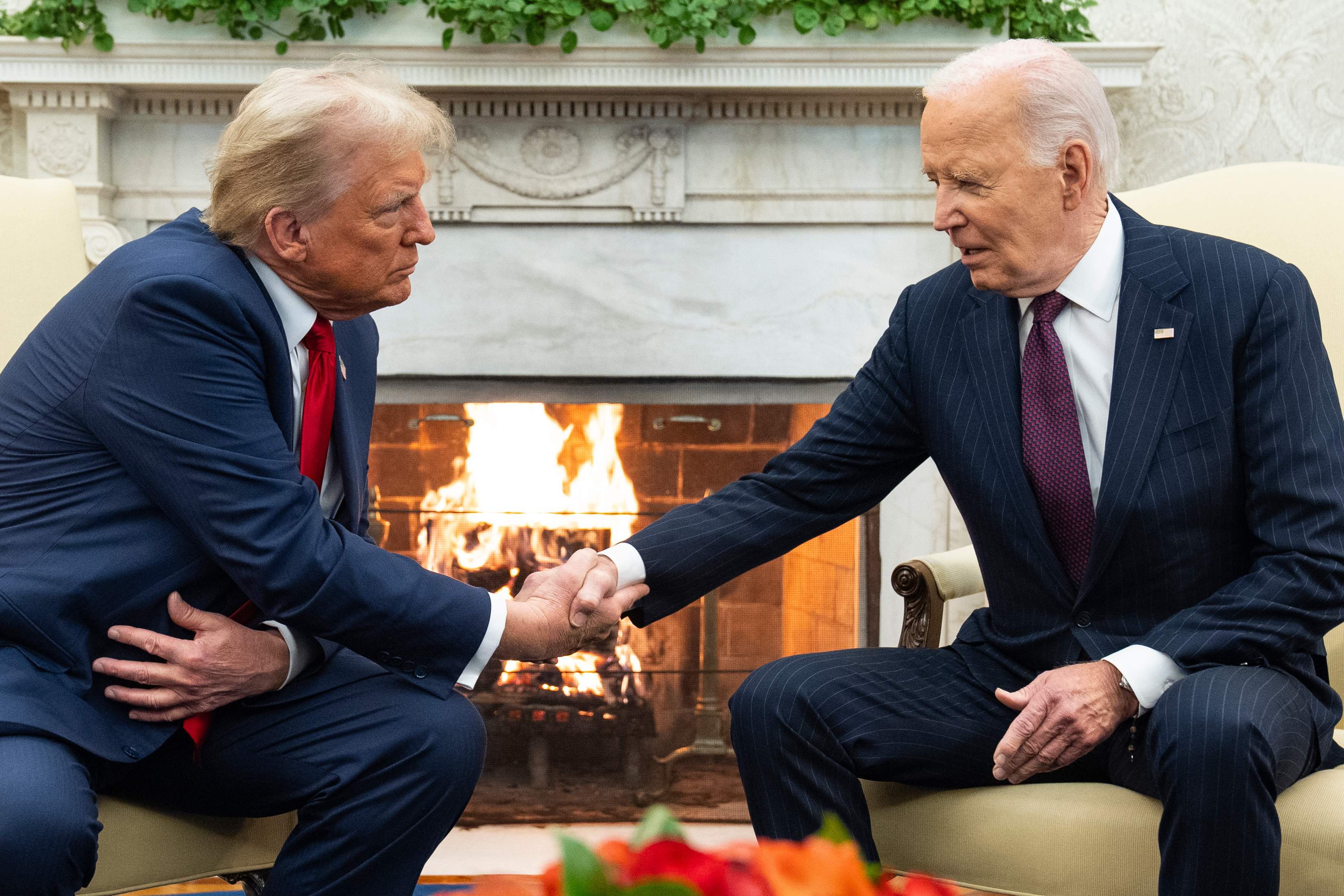
Then came the election. And then, in a moment of startling candor that sent shockwaves through Washington and across kitchen tables like Carlos’s, Donald Trump looked at the electoral aftermath and admitted what the polls, the focus groups, and the neighborhood grocers had been whispering for months: his deportation policy "might have been too tough" for voters. To explore the bigger picture, we recommend the recent report by TIME.
Wait. Read that again.
For a political movement built entirely on the refusal to blink, on the promise of uncompromising strength and relentless enforcement, those six words landed like a dropped wrench on a concrete floor. Might have been too tough. It wasn't an apology. It wasn't a policy white paper. It was a crack in the armor, revealing a fundamental miscalculation about what Americans actually want when the slogans fade and the trucks roll down their own streets.
The Architecture of a Slogan vs. The Reality of a Street
To understand why that admission matters so deeply, you have to strip away the partisan noise and look at how immigration politics works in the American imagination. On a rally stage, mass deportation sounds clean. It sounds like an accounting ledger being balanced—a simple subtraction problem where undocumented numbers are removed from a column, restoring order to an overwhelmed system.
Voters, exhausted by inflation, housing shortages, and chaotic scenes at the southern border, initially nodded along. In survey after survey leading up to the vote, majorities expressed deep frustration with the status quo and an appetite for stricter border security. Politicians mistook that frustration for a blank check. They assumed that when people asked for order, they were asking for raids at elementary school pickup lines and meatpacking plants.
They were wrong.
Consider what happens next when an abstract policy collides with physical geography. Imagine—and let us be entirely explicit that this is a hypothetical illustration of a documented real-world phenomenon—a small town in western Michigan. The local economy runs on dairy farms and apple orchards. Everyone in town knows the sheriff, the high school principal, and the crew of men who show up at dawn to milk the cows.
When enforcement sweeps sweep through a community like that, the impact isn't felt on a spreadsheet in Washington. It is felt on Tuesday morning when the diner is half-empty, on Wednesday when the roofing contractor has to cancel three jobs because his best crew didn't show up, and on Thursday when a second-grade teacher has to explain to a classroom of seven-year-olds why Mateo’s desk is empty and why he didn't get to say goodbye.
I have stood in communities in the days following large-scale enforcement actions, and the air itself feels different. It smells of diesel exhaust, cold coffee, and a heavy, suffocating silence. Neighbors who spent years arguing about property taxes suddenly find themselves dropping off boxes of groceries on porches after dark, terrified of drawing attention to the families hiding behind drawn blinds.
The Invisible Ledger of Fear and Economics
Why did voters recoil? The answer lies in a profound psychological distinction that political strategists routinely miss: Americans despise disorder at the border, yet they deeply value fairness and stability in their neighborhoods.
Think of the economy not as a machine made of steel gears, but as a living ecosystem—a dense forest where even the smallest roots hold the soil together. You cannot rip out millions of foundational roots without causing the hillside to slide. According to data from the American Immigration Council and numerous nonpartisan economic analyses, undocumented immigrants contribute tens of billions of dollars annually in federal, state, and local taxes, including billions into Social Security and Medicare funds they will likely never draw from.
More immediately, they occupy the load-bearing walls of entire industries:
- Agriculture and Food Processing: Where labor shortages translate within weeks into rotting crops and spiking grocery bills.
- Construction and Trades: Where a sudden loss of skilled framers, roofers, and drywall installers freezes housing starts in a market already starved for affordable homes.
- Hospitality and Caregiving: Where nursing homes, hotels, and restaurants operate on razor-thin margins and chronic staffing deficits.
Voters who went to the ballot box hoping for lower grocery prices and cheaper housing suddenly realized that an indiscriminate deportation dragnet would achieve the exact opposite. You cannot deport the people who harvest the food and expect the price of milk and apples to drop. You cannot remove the hands that frame the walls and expect the cost of a starter home to fall.
The Moral Friction at the Heart of the Electorate
Yet the backlash was never purely transactional. Economics explains the hesitation in the boardroom; empathy explains the revolt at the ballot box.
Most Americans carry a quiet, internal compass regarding basic decency. They understand the difference between targeting violent offenders—a policy that enjoys overwhelming, bipartisan support across almost every demographic—and tearing apart families who have spent a decade or two building a quiet, law-abiding life in the shadows.
When enforcement policies blur that line, treating a mother of three American-born children with the exact same severity as a cartel operative, the moral intuition of the average voter rebels. It feels disproportionate. It feels cruel.
During the campaign and its aftermath, swing voters in battleground suburbs—the very people who decide modern American elections—began voicing a specific kind of unease. In interviews and focus groups, they didn't sound like progressive activists. They sounded like pragmatic neighbors. They talked about the guy who fixed their transmission, the woman who cleaned their church, the kids on their son's baseball team.
Trump’s remark that his deportation stance "might have been too tough" is a direct reflection of that suburban friction. It is the sound of a seasoned political instinct recognizing that the pendulum swung past the point of public consent.
What History Tells Us About Overreach
This pattern is not entirely new in American political life. History shows us that whenever an administration or a movement interprets a narrow mandate for reform as a sweeping license for radical upheaval, the electorate eventually pulls the emergency brake.
In 1954, the federal government launched "Operation Wetback," a military-style deportation campaign that swept through agricultural communities across the Southwest. While praised by hardliners at the time for its sheer scale, the operation quickly drew fierce condemnation from farmers, business owners, religious leaders, and local officials as citizens were swept up alongside undocumented workers, families were shattered without due process, and local economies buckled under the sudden labor vacuum.
Decades later, in 2010, Arizona passed SB 1070, the stringent "show me your papers" law that became the template for hardline state-level enforcement. The law energized a passionate base in the short term, yet it triggered years of boycotts, economic disruption, and a profound demographic and political realignment that steadily eroded the state's long-standing conservative stronghold.
The lesson across seventy years is consistent: enforcement without discernment breeds exhaustion.
Confessions of an Uncertain Observer
I will admit something that pundits rarely confess on television: watching this unfold is deeply unsettling, because it exposes how fragile our consensus on human dignity really is. For months, it felt as though the loudest voices in the room had convinced themselves that millions of human beings could simply be erased from the American story without leaving a scar on the people who stayed behind.
It is scary to realize how easily cruelty can be packaged as efficiency. And it is equally jarring to watch that same cruelty get dialed back, not necessarily out of a sudden spiritual awakening, but because the electoral math stopped working.
Does a candid admission that a policy was "too tough" actually change the machinery of the state? That remains the great, unanswered question hanging over communities from California to North Carolina. Political rhetoric can pivot in a single afternoon during a press availability; federal agencies, detention contracts, and local enforcement partnerships turn much more slowly, like cargo ships trying to reverse course in a narrow channel.
The Shift in the Wind
Still, words carry weight, especially when they come from the architect of the policy itself. By acknowledging that the approach alienated voters, Trump cracked open a door that had been bolted shut for years.
Suddenly, the conversation shifts from how many people can we remove to who actually belongs here, and how do we fix a broken system without destroying our own communities?
Watch what happens when that shift takes hold:
- The return of distinction: Lawmakers face renewed pressure to separate violent criminals from long-term, tax-paying residents with deep community ties.
- The revival of pragmatic solutions: Ideas like earned legal status for Dreamers, expanded guest-worker visas for agriculture and construction, and streamlined asylum processing move back out of the deep freeze.
- The accountability of local impact: Governors, mayors, and business leaders gain political cover to push back against sweeping federal raids that threaten their local tax bases and social fabric.
None of this guarantees an easy resolution. Immigration has been the third rail of American politics for four decades precisely because it forces the country to confront two competing truths at once: a sovereign nation must control its borders, and a humane nation cannot thrive by terrorizing the people who feed, build, and care for it.
Five O'Clock in the Morning
Back in that kitchen in Ohio, the coffee pot finally stops hissing. Carlos pours a mug, the steam rising into the cool morning air, and looks out the window toward the driveway.
He doesn't watch the twenty-four-hour news networks. He doesn't parse the subtle shifts in polling data from swing counties in Pennsylvania or Wisconsin, nor does he dissect the exact phrasing of a former president’s post-election reflections. He knows only what he sees in the faces of the people around him—the foreman who slips him an extra twenty dollars on Fridays, the neighbor who waves from across the street, the kids who run onto the soccer field on Saturday mornings expecting their coach to be standing there with a whistle and a bag of balls.
Down the road, the headlights of a pickup truck sweep across the frost-covered grass, pause at the end of the gravel drive, and then turn smoothly toward the highway, heading toward the job site as the first gray light of dawn breaks over the trees.