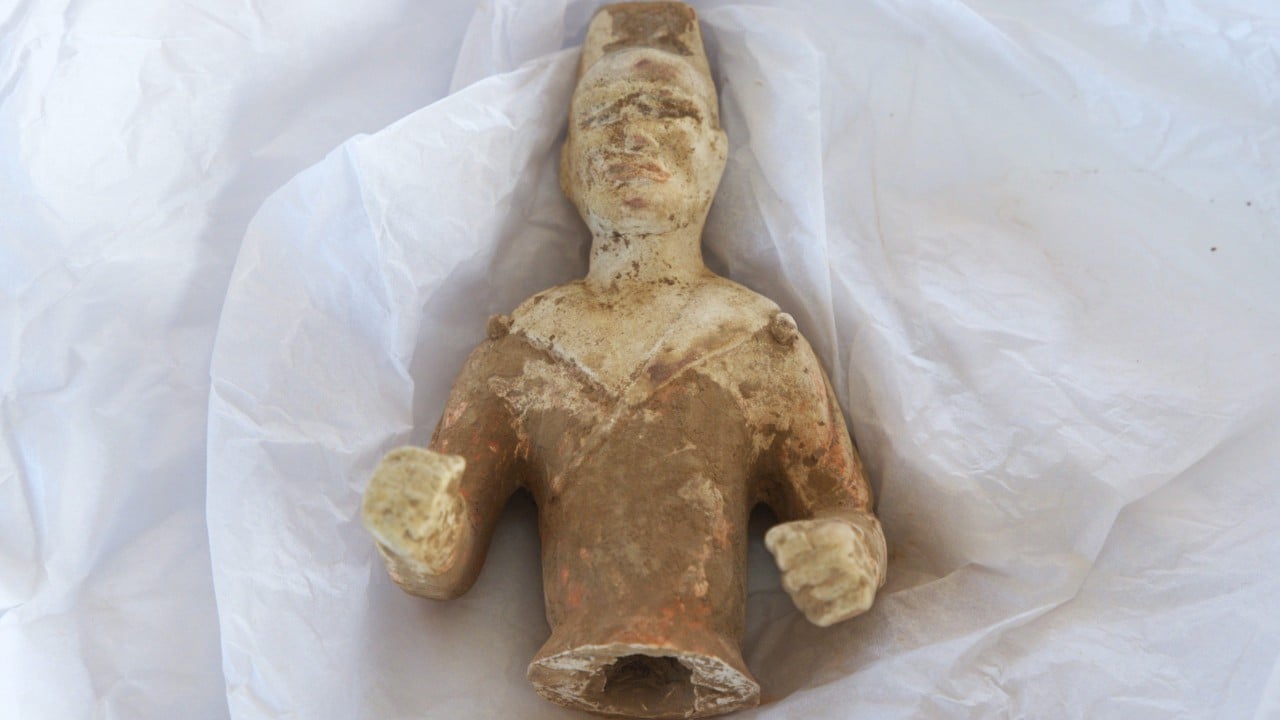
Geopolitics isn't always about trade tariffs, defense pacts, or closed-door summits. Sometimes, it happens over a quiet table in Washington and New York where law enforcement officials hand over ancient stone statues, delicate pottery figurines, and rare fossils.
The United States recently transferred 64 smuggled Chinese cultural relics and paleontological fossils back to China. On the surface, it reads like a standard bureaucratic win for international antiquities tracking. Look closer, and you'll see a calculated diplomatic gesture right before major leadership dialogues.
Behind the Seizures and the Handover
The operation wasn't a spontaneous act of goodwill. It was the result of long-term investigations carried out by U.S. Homeland Security Investigations (HSI) and the Manhattan District Attorney's Office. These agencies tracked down looted treasures, including items tied to historic thefts like the pillaging of the Tianlongshan Grottoes, where ancient Buddhist statues were systematically vandalized and stripped of their torsos and heads decades ago.
The handover occurred across two distinct ceremonies in September. The first took place in Washington, D.C., returning 58 items, followed by a second event in New York covering the remaining pieces.
This cooperation didn't emerge out of nowhere. It relies on a bilateral memorandum of understanding originally signed back in January 2009. That agreement has been renewed three times—in 2014, 2019, and 2024—providing a legal framework to block the illegal import of Chinese cultural property into the American market.
Why Antiquities Repatriation is High-Stakes Diplomacy
When superpowers trade cultural heritage items, they're signaling stability. Art and history are deeply emotional subjects. For Beijing, the systematic recovery of lost heritage is a core national priority. When American federal authorities actively seize and return these items, it acts as a pressure valve in an otherwise tense bilateral relationship.
Diplomats call these "concrete good deeds." They provide a tangible baseline of cooperation when larger economic and geopolitical disagreements seem intractable. You can argue about semiconductor chips and trade routes all day, but returning a stolen 1,000-year-old Bodhisattva torso offers a rare moment of mutual alignment.
What This Means for Private Collectors and Art Markets
If you collect antiquities, the rules of the game are tightening permanently. Law enforcement agencies aren't just targeting high-profile organized smuggling rings anymore. They're scrubbing provenance records with microscopic scrutiny.
- Paper trails are mandatory: If an artifact lacks a clear, verifiable ownership history dating back decades, stay away from it.
- Jurisdictional risks are real: The Manhattan District Attorney's antiquities trafficking squad has proven time and again that they will seize disputed items regardless of where they are displayed.
- Compliance costs money: Galleries and auction houses must invest heavily in legal vetting to avoid holding stolen property that could become a sudden diplomatic pawn.
The return of these 64 artifacts reminds us that looted history has a long half-life. Governments are getting better at tracking down illicit cultural property, and they're using those recoveries to grease the wheels of international diplomacy when it matters most.