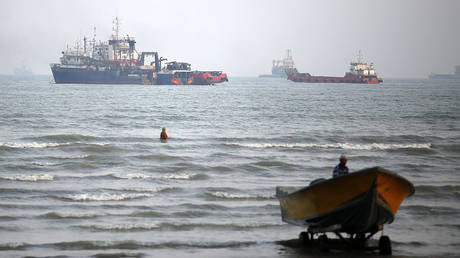
Viral videos of a tanker crashing into a luxury cruise ship look terrifying on a phone screen. Steel scrapes against steel, passengers scream from upper balconies, and millions of viewers suddenly wonder if they're watching another Titanic unfold in real time.
They aren't.
When a commercial tanker collides with a cruise vessel in a U.S. port or coastal channel, the gap between what looks catastrophic on social media and what actually threatens passenger safety is massive. Most people watch those shaky vertical clips and assume the hull is ripping open below the waterline. Having spent years analyzing maritime incident reports from the National Transportation Safety Board (NTSB) and the U.S. Coast Guard, I can tell you the reality is both less cinematic and far more technical.
Why Tanker and Cruise Ship Collisions Happen in US Waters
Big ships don't turn like cars. That sounds obvious until you look at the physics of a 100,000-ton cruise liner sharing a narrow dredged channel with a loaded chemical or petroleum tanker.
A loaded tanker moving at just 10 knots needs well over a mile to come to a complete stop. Even with harbor tugs tethered to the hull and a local harbor pilot standing on the bridge, momentum is brutal. Wind gusts act like giant hands pushing against the flat, towering sides of a modern cruise ship—naval architects call this "windage"—while underwater currents quietly shove the deeper-draft tanker in a completely different direction.
Most collisions captured on viral video happen in one of three places:
- Congested port approaches like PortMiami, Port Everglades, Galveston, or the Houston Ship Channel, where cruise terminals sit right next to busy commercial cargo and energy lanes.
- Anchored or moored positions, where a passing tanker loses propulsion or steering control and drifts into a stationary cruise ship tied to a pier.
- Tugboat handoff zones, where vessels transition from open-water navigation to tight harbor maneuvering in poor visibility or sudden squalls.
In almost every documented U.S. port allision (the maritime term for a moving vessel striking a stationary object or moored ship) or collision, mechanical failure or miscommunication between bridge teams plays a bigger role than reckless driving. A single fouled fuel filter, a tripped electrical breaker on a steering gear pump, or a delayed tugboat line can turn a routine harbor transit into front-page news within ninety seconds.
The Anatomy of Modern Hull Design
Watch any viral collision video closely. Notice where the impact actually happens.
Nearly every time, the contact occurs high above the waterline—crumpling balcony railings, tearing open decorative steel cladding, or denting lifeboat davits. It looks awful. Sparks fly, paint peels off in long ribbons, and passengers filming from Deck 10 feel a violent shudder through their shoes.
Yet the ship stays completely upright and dry inside. Why?
Modern passenger vessels and commercial tankers are built under strict International Maritime Organization (IMO) and Safety of Life at Sea (SOLAS) structural standards. Double hulls are mandatory for oil and chemical tankers operating in U.S. waters under the Oil Pollution Act of 1990. Cruise ships, meanwhile, are divided into dozens of independent watertight compartments below the bulkhead deck, reinforced with heavy internal framing and collision bulkheads at the bow.
When two massive hulls brush or collide at low harbor speeds—usually between 2 and 6 knots—the upper superstructure absorbs the kinetic energy by bending and tearing. That sacrificial crumpling actually protects the critical machinery spaces, fuel tanks, and watertight integrity lower down. You get dramatic footage of bent steel and shattered balcony glass, not a sinking ship.
What Viral Videos Miss About Maritime Safety Protocols
Social media clips always cut off right after the crunch. You hear shouting, someone yells "Oh my God," and the video loops.
What you don't see is the immediate, choreographed response happening on both bridges ten seconds later.
First, the ship's captain or officer of the watch hits the general emergency alarm or initiates a rapid damage assessment. Automatic watertight doors below deck seal shut within seconds. Engineering teams immediately check tank soundings and bilge alarms to verify zero water ingress and zero fuel leakage.
Simultaneously, the bridge team contacts U.S. Coast Guard Sector Command via VHF Channel 16. Under federal maritime regulations (specifically 46 CFR Part 4), any marine casualty involving unintended grounding, collision, allision, loss of propulsion, or property damage exceeding $75,000 requires immediate notification to the Coast Guard.
If a tanker is involved, hazardous cargo containment becomes priority number one alongside passenger safety. Coast Guard Marine Safety Units deploy response boats, boom-laying crews, and marine inspectors before the dust has even settled on the pier. Pollution booms get strung around the vessels purely as a precaution, even when no hull breach exists.
The Investigation Process Behind the Headlines
Once the viral trend dies down after 48 hours, the real work begins. And honestly, this is the part travelers should actually pay attention to.
The U.S. Coast Guard leads the marine casualty investigation, often joined by the NTSB if the incident involves major passenger vessels, serious injuries, or systemic safety questions. Investigators don't care about viral camera angles. They pull the Voyage Data Recorder (VDR)—the maritime equivalent of an airplane's black box.
A VDR captures everything:
- Every word spoken on the bridge in the hours leading up to impact
- Exact rudder angles, engine telegraph commands, and thruster outputs
- High-resolution radar overlays and Electronic Chart Display and Information System (ECDIS) tracks
- Automatic Identification System (AIS) position broadcasts from every nearby vessel
- Wind speed, water depth, and hull stress telemetry
Investigators also conduct mandatory drug and alcohol testing on all crew members directly involved in the navigation or engineering watch, per 46 CFR Part 16. If a harbor pilot was conning the vessel, state pilotage commissions open parallel inquiries into their handling of the transit.
These investigations routinely take 12 to 18 months to publish. By the time the NTSB releases its final Marine Accident Brief explaining whether a faulty governor valve or a misunderstood VHF radio call caused the crash, the public has completely moved on.
Common Misconceptions About Cruise and Tanker Collisions
When a clip titled something like "Tanker crashes into luxury cruise ship in US" blows up online, the comment sections fill up with the same predictable myths. Let's clear them up.
Myth 1: "The cruise ship's captain wasn't paying attention."
In U.S. ports, compulsory state-licensed harbor pilots board both the cruise ship and the tanker before they enter restricted channels. While the captain retains ultimate legal command of the vessel, the harbor pilot actively directs speed, course, and tugboat positioning because they know every sandbar, current eddy, and blind corner in that specific port.
Myth 2: "Tankers and cruise ships shouldn't share the same waterways."
Separating them is physically impossible in major maritime hubs. Port Everglades in Fort Lauderdale, for example, is both one of the world's busiest cruise homeports and South Florida's primary petroleum distribution hub—supplying jet fuel and gasoline to twelve counties. Vessel Traffic Service (VTS) radar centers managed by the Coast Guard actively monitor and sequence every movement to keep them apart.
Myth 3: "If a tanker hits a cruise ship, an explosion is imminent."
Modern tankers operate inert gas systems that pump low-oxygen exhaust gas into cargo tanks, keeping oxygen levels below the threshold required for combustion. Combined with double-hull separation, low-speed harbor bumps rarely penetrate outer steel plating, let alone ignite cargo holds.
Myth 4: "Passengers are stuck on a damaged ship with no legal recourse."
Cruise ticket contracts contain strict forum-selection clauses—often requiring lawsuits to be filed in Miami, Seattle, or Los Angeles within one year of an incident—but passenger injury and property claims are governed by federal maritime law and international conventions. When a third-party commercial tanker strikes a cruise ship, liability frequently shifts to the tanker's protection and indemnity (P&I) insurance club, though passengers typically file through the cruise line first.
How to Stay Safe and Protect Yourself as a Cruise Passenger
Watching a tanker drift toward your balcony isn't something you can control, but how you react during a port incident makes a huge difference.
- Take the muster drill seriously on embarkation day. Know your actual physical route to your muster station without relying on elevators, which automatically shut down during emergencies.
- Keep essential documents and medications in a small grab-bag. If a port collision forces an unexpected disembarkation or delays docking for Coast Guard inspections, having your passport, prescription meds, and phone charger on hand prevents a logistical nightmare.
- Stay clear of damaged railings and shattered glass. After a side-swipe impact, exterior deck areas are often compromised. Follow crew announcements immediately instead of leaning over broken rails to film better angles for social media.
- Document everything if your cabin or belongings are damaged. Take timestamped photos of structural damage, keep copies of onboard medical visits, and request a written incident report number from Guest Services before leaving the ship.
- Check official Coast Guard or NTSB updates rather than rumor threads. When itineraries change after a port incident, cruise lines issue formal port-of-call adjustments and refund policies based on Coast Guard clearance timelines—not social media speculation.
Verify the vessel names and port location through official U.S. Coast Guard newsroom releases whenever a dramatic ship crash clip hits your feed, because half the videos circulating online are either years-old incidents recycled for clicks or minor harbor scrapes filmed from dramatic angles.