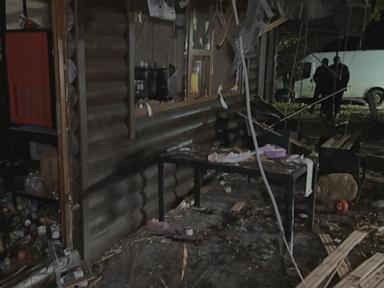
When Donald Trump declared offhandedly that Russia has been "fine on Ukraine" and "hasn't been doing much," he delivered a masterclass in calculated strategic devaluation. The statement—issued on the exact day Russian drone strikes tore through a public park in Zaporizhzhia and flattened critical power stations—was not a slip of the tongue or a lack of briefers. It was the public execution of a long-standing foreign policy framework that treats Eastern European sovereignty not as an unbreakable principle of international law, but as a secondary variable in a transactional global equation.
For decades, Western security doctrine rested on a predictable foundation: state-sponsored territorial revisionism in Europe was an absolute red line. By framing Moscow's military posture as moderate or baseline conduct, Washington isn't merely shrugging off battlefield atrocities. It is signaling to foreign capitals that American security guarantees are now variable-rate instruments, subject to immediate renegotiation whenever broader economic or diplomatic leverage presents itself.
The Devaluation Strategy in Plain Sight
To understand why an American chief executive would dismiss a multi-year war as "fine," one must look past the immediate outrage and examine the cold arithmetic of modern transactional diplomacy. Washington's current calculus hinges on decoupling separate geopolitical theaters. In this framework, concessions in Eastern Europe are treated as currency to buy stability elsewhere—specifically in the Middle East and regarding global energy markets.
When the administration praised Moscow for being "well-behaved" relative to alternative escalations, it laid bare the underlying trade. Washington wants cheap fuel domestic consumers can feel at the pump and cooperation on Persian Gulf security. Moscow wants room to maneuver in its immediate neighborhood without enduring compound American sanctions.
The rhetoric works as a psychological wedge. By publicly declaring that Russia is exercising restraint, the administration creates a false benchmark. Devastating artillery barrages and targeted energy grid destructions are redefined as standard baseline operations. Anything short of full nuclear mobilization is reframed as "fine". This subtle recalibration forces European partners into a defensive posture, shifting the debate from how to enforce international boundaries to how much destruction an allied nation is expected to absorb before calling it an emergency.
The Illusion of Restraint vs the Reality on the Ground
The gap between executive declarations and battlefield reality has reached a historic wide point. While official statements suggest a relative lull or manageable situation, data from defense monitors tells a starkly different story.
Tactical Air Operations: Up 14% month-over-month
Critical Infrastructure Strikes: 30+ energy hubs targeted weekly
Civilians Displaced (Quarterly): 120,000+
Western Military Aid Flow: Down 22% year-over-year
The term "fine" ignores the systematic degradation of civilian life. Moscow hasn't slowed its operational tempo; it has refined it. The military strategy has pivoted from wide-front territorial grabs to targeted infrastructure paralysis designed to break economic viability over years rather than weeks.
| Strategic Objective | Kremlin Action | Washington's Public Assessment | Real-World Impact |
|---|---|---|---|
| Grid Destruction | Precision drone swarms on sub-stations | "Hasn't been doing much" | Millions lose power and heat seasonally |
| Diplomatic Isolation | Parallel bilateral summits without Kyiv | "Fine on Ukraine" | Undermines allied consensus and sovereignty |
| Energy Leverage | Sanction-evading crude sales to global buyers | Transactional trade talks | Funds war chest despite Western embargos |
This divergence between rhetoric and reality isn't an oversight. It serves a specific political purpose: lowering domestic political expectations for American involvement. If the situation is framed as non-urgent, the political cost of slowing arms shipments or pressuring allies to accept unfavorable terms drops significantly.
The High Cost of Transactional Realism
The broader danger lies in the precedent this sets for global stability. When the world's primary superpower signals that aggression is acceptable as long as it remains within tolerable tactical limits, the global order does not adapt—it fractures.
European capitals are already quietly adjusting to this reality. Defense ministries across the continent are accelerating unilateral rearmament programs, recognizing that relying on American presidential rhetoric is no longer a sound national security policy. The buffer zone is no longer just Eastern Europe; it is the entire security architecture built after 1945.
By treating a full-scale invasion as an acceptable baseline, Washington may buy short-term diplomatic quiet or temporary market relief, but it pays for it by bankrupting its long-term credibility. Allies note every minimized strike and every hand-waving dismissal. Adversaries note them even faster.
A foreign policy built entirely on transactional dismissal leaves no room for principle. When everything is fine, nothing is secure.