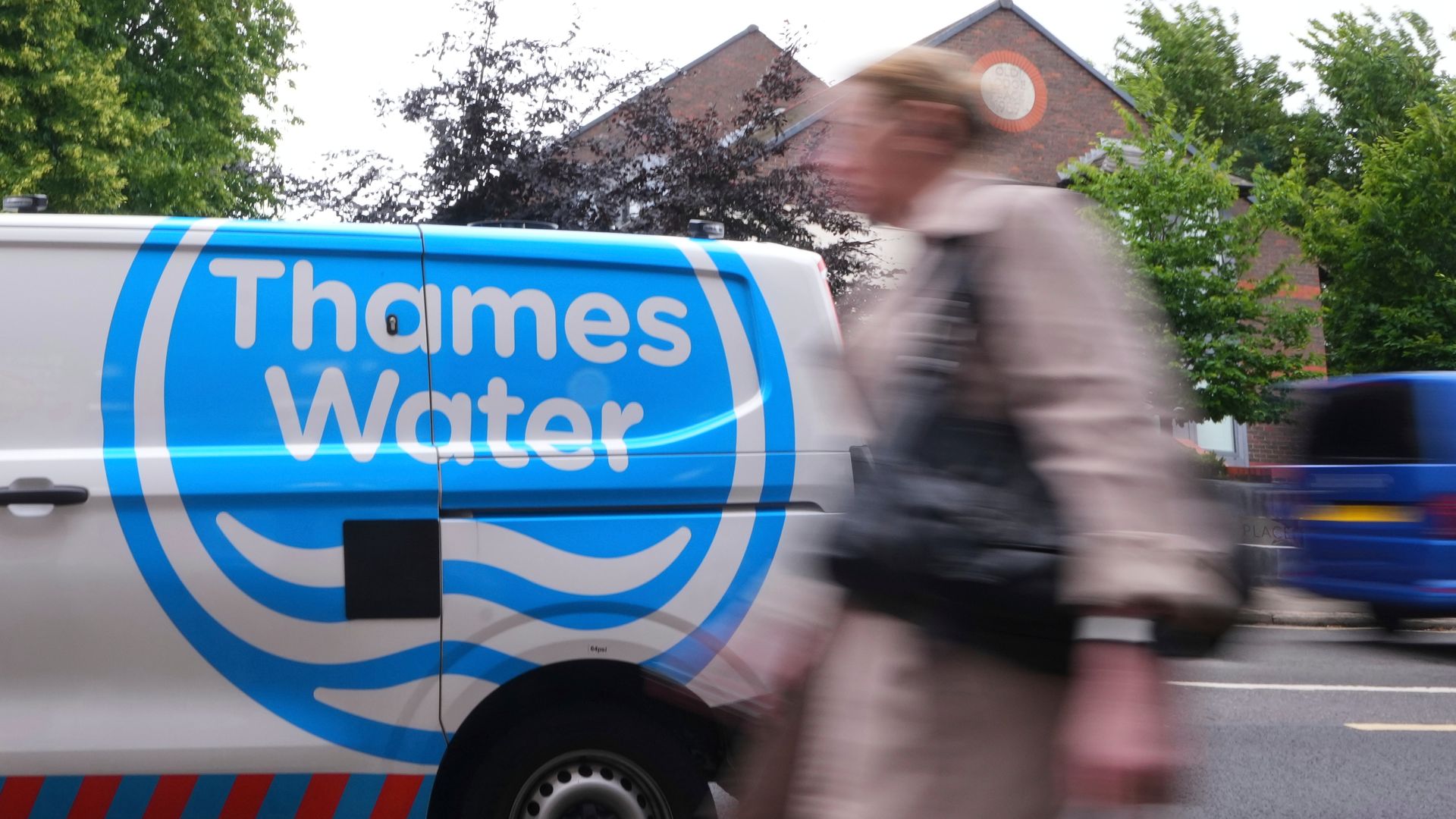
Britain’s largest water utility is rapidly running out of money, and the state is finally pushing back against a private financial fix that heavily penalizes the public. Environment Secretary Emma Reynolds formally intervened by writing to the regulator Ofwat, declaring that a proposed £10 billion rescue package by institutional lenders is fundamentally weak and unfair. The state’s sudden resistance drastically increases the likelihood of Thames Water being forced into temporary nationalisation through a special administration regime. Millions of households face massive operational uncertainty while international creditors scramble to protect their investments.
For over two years, Thames Water has tried to avoid a messy corporate collapse under the weight of an astronomical £20 billion debt pile. The newest rescue proposal, engineered by a consortium called London & Valley Water, promised to inject £3.35 billion in fresh equity and up to £6.55 billion in new debt. In exchange, the lenders demanded a highly controversial concession. They wanted Ofwat to waive all financial penalties for sewage leaks and environmental pollution for a full four years.
The state rejected this regulatory holiday. Reynolds made it clear that after 15 years of operational underperformance, escalating pollution, and rising consumer costs, the public can no longer be expected to underwrite corporate failures. The standoff exposes the profound structural cracks in the 1989 privatization model of critical British infrastructure.
The Cost of the Forgiveness Clause
At the heart of the current breakdown is a deep misalignment between private capital requirements and public accountability. The lending consortium, which includes aggressive institutional entities like Elliott Investment Management and Apollo Global Management, designed a package that prioritizes financial stabilization over immediate environmental recovery.
By demanding a four-year waiver on pollution fines, the creditors attempted to shield their incoming capital from the immediate penalties of Thames Water's systemic neglect. The math behind the deal reveals a punishing arrangement for the utility itself.
- New Equity Injection: £3.35 billion
- New Debt Facilities: Up to £6.55 billion
- Immediate Financial Fees: £749 million allocated instantly to bankers, lawyers, and restructuring advisers
- Accrued Interest to Lenders: £285 million paid straight to top-tier creditors
- Direct Restructuring Fees: £160 million directly billed to the utility
A massive portion of the initial cash infusion would never touch a water pipe or fix a leaking sewer. Instead, more than £1 billion would evaporate immediately into institutional interest payments and professional advisory fees. The government's sudden opposition stems from the realization that consumers would ultimately pay for this circular financial restructuring through heightened long-term bills and severely depressed operational performance standards.
The Special Administration Threat
The alternative to this private deal is the Special Administration Regime, a legal mechanism for temporary state control. Whitehall has spent months quietly preparing for this exact outcome, coordinating with potential insolvency specialists and mapping out the legal pathways to seize a utility serving 16 million people across London and the southeast.
[Private Rescue Plan Rejected] -> [Ofwat Public Consultation Blocks] -> [High Court Special Administration Order] -> [State Appoints Insolvency Administrators]
Lenders argue that entering state administration will trigger a massive chilling effect across the entire UK infrastructure landscape. They claim it will freeze international investment, endanger worker pensions, and throw complex supply chains into absolute chaos.
There is real merit to these warnings. Special administration does not magically erase debt; it merely freezes it while the state spends billions of pounds in public money just to keep the pumps running. The High Court would have to sign off on the process, and a three-month public consultation period would legally be required, creating an extended period of financial limbo.
A Broken Financial Architecture
To understand how Thames Water arrived at this cliff edge, one must look at the financial engineering that characterized the last two decades of its existence. Under previous international owners, the company was consistently used as a debt-yielding vehicle. Billions of pounds in loans were piled onto the utility's balance sheet, while equivalent sums were systematically extracted in the form of dividends to shareholders and aggressive executive bonuses.
The model worked perfectly for high-finance investors during an era of ultra-low interest rates. But when inflation spiked and interest rates rose rapidly, the cost of servicing that massive debt mountain became entirely unsustainable. The company has essentially been operating as a highly leveraged hedge fund that happens to manage a water network on the side.
The consortium’s proposed solution was to target a public stock market listing by 2030, effectively looking for an exit strategy before the deep, multi-decade structural work of replacing London's Victorian pipe network even begins.
The Impending Autumn Deadline
Time has completely run out for corporate maneuvering. Thames Water has explicitly stated that its existing operational runway only extends until September. If a legally binding agreement is not finalized, approved by Ofwat, and ratified by the High Court within the next few months, the company will experience a hard, uncontrolled insolvency.
Political pressure is intensifying daily. Over 100 members of parliament have signed an open letter demanding that the government abandon all market-led rescue packages and immediately move the utility into full public ownership. With regional political figures calling for a permanent 10-year renationalization plan for the entire British water sector, Thames Water is no longer just a corporate restructuring case. It has become the definitive ideological battleground for the future of public utilities.
The government still claims it prefers a market solution, but by blocking the only viable private offer on the table, it has painted itself into a corner. Lenders will not strip out the forgiveness clauses because doing so exposes their capital to immediate, balance-sheet-destroying environmental fines. The state cannot accept the forgiveness clauses without triggering a massive public backlash over corporate complicity. The resulting impasse makes an imminent state takeover look less like a worst-case backup plan and more like an unavoidable operational certainty.