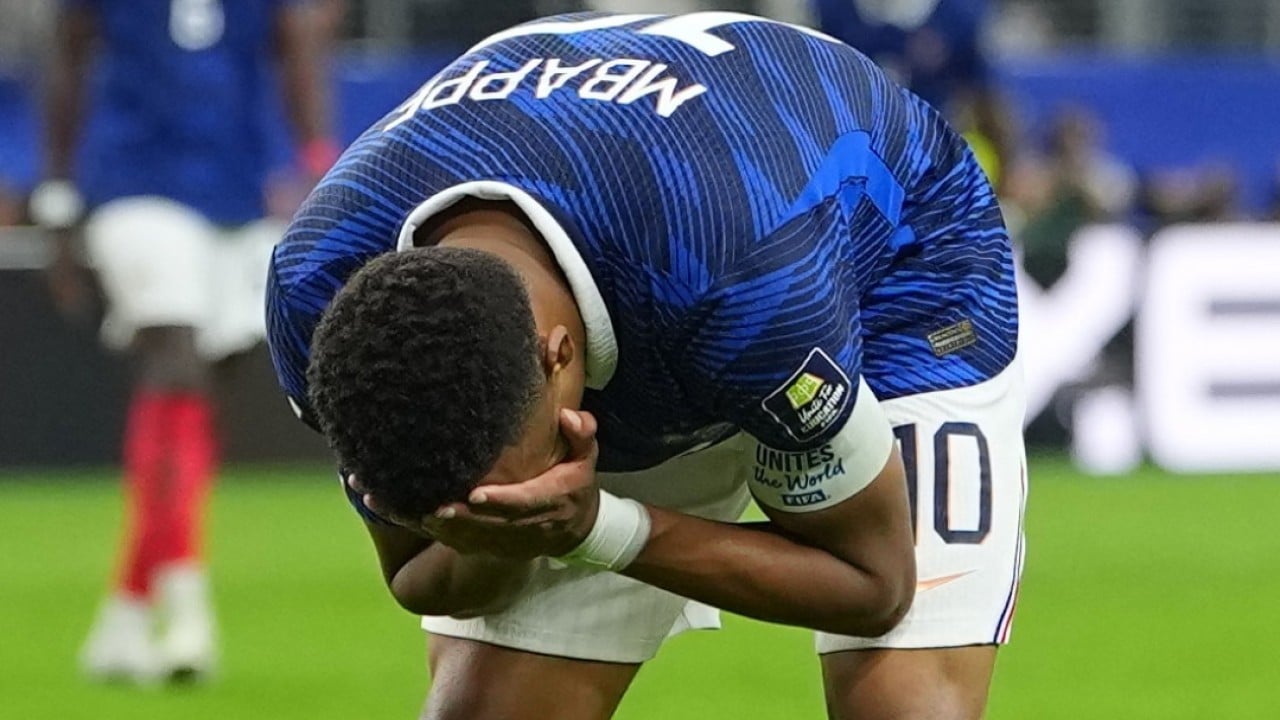
Kylian Mbappe sparked widespread outrage across Chinese social media platforms after dismissive remarks regarding the competitive level of football outside Europe—specifically targeting leagues heavily invested in by Chinese state and private capital—were perceived by fans and state-affiliated commentators as arrogant and culturally tone-deaf. The backlash escalated rapidly on Weibo, where millions of users condemned the French superstar's comments as an insult to Asian football development, threatening his lucrative commercial endorsements and merchandising footprint in one of the world’s largest consumer markets.
It is an old story in modern sports, yet the playbook never changes. A Western athlete, insulated by the immense wealth and media echo chambers of European football, offers a candid, unfiltered assessment of the global game. Within hours, that soundbite is stripped of its nuance, translated into Mandarin, and dropped into the hyper-reactive bloodstream of Chinese internet culture. Suddenly, a tactical or sporting observation becomes a diplomatic incident.
To understand why a single remark from Kylian Mbappe could ignite a boycott movement among millions of fans, you have to look beyond the pitch. You have to look at the fragile intersection of national pride, the bruised ego of Chinese football, and the ruthless economics of global sports marketing.
Anatomy of an Outrage Cycle
The mechanics of a social media storm in China operate on a hair-trigger. Unlike Western platforms, where outrage often fractures into competing tribes arguing over context, Chinese digital ecosystems like Weibo and Douyin tend to consolidate sentiment rapidly, especially when national dignity or regional respect is perceived to be at stake.
When Mbappe’s remarks surfaced, the reaction was immediate. Nationalist sports bloggers and high-traffic football accounts were the first to amplify the quotes, framing them not as a critique of league structures, but as a personal slight against Asian athletes and fans who fund the very ecosystem Mbappe profits from. The word "unacceptable" became the rallying cry.
Within twenty-four hours, the narrative hardened. Fans began posting videos of themselves discarding Real Madrid and Paris Saint-Germain jerseys bearing his name. Hashtags calling for sponsors to reconsider their partnerships with the forward trended nationwide. For a player whose brand is meticulously engineered to transcend borders, the damage was instantaneous.
Yet, if you peel back the layers of digital fury, a more complicated reality emerges. Many of the same fans expressing outrage on Weibo are acute critics of their own domestic league. For years, the Chinese Super League (CSL) has been the subject of relentless mockery from local supporters following a string of corruption scandals, financial collapses, and dismal performances by the men's national team.
So why the visceral anger when an outsider says what locals have been whispering for a decade? Because in the unwritten rules of international sports diplomacy, self-criticism is a domestic privilege. External dismissal, particularly from a superstar enjoying the pinnacle of European privilege, feels like punching down.
The Multi-Billion Dollar Tightrope
For global football icons, China is not merely a fanbase; it is a balance sheet. Over the past fifteen years, European clubs and their marquee players have treated East Asia as an essential growth market, scheduling grueling summer tours, launching Mandarin-language social media accounts, and tailoring content specifically to appease local sensibilities.
Mbappe is no exception. His commercial portfolio—anchored by global giants like Nike, Hublot, and Oakley—relies heavily on uninterrupted access to Chinese consumers. When an athlete of his stature alienates that market, corporate boardrooms in Beaverton, Geneva, and Madrid immediately go into crisis mode.
Consider the financial reality of modern sports endorsements:
- Market Vulnerability: A single misstep in China can erase years of carefully cultivated brand equity, leading to cancelled appearances and pulled advertising campaigns.
- Club Pressure: Top European clubs operate as global media conglomerates. Real Madrid, arguably the most commercially sophisticated football institution on earth, views the Chinese market as non-negotiable territory for jersey sales and broadcasting rights.
- Sponsor Skittishness: Luxury and sportswear brands rarely tolerate political or cultural friction. If an ambassador becomes toxic on Weibo, the brand will quietly pivot its marketing budget toward less controversial figures within days.
We have seen this exact movie before. When Mesut Ozil commented on political issues in Xinjiang in 2019, Arsenal FC moved with breathtaking speed to distance itself from its own star player, issuing statements on Weibo to protect its commercial interests. Similarly, when Lionel Messi failed to play during an exhibition match in Hong Kong in early 2024, the resulting backlash led to cancelled friendly matches in mainland China and a massive public relations headache that took months to subside.
Mbappe’s situation, while rooted in sporting commentary rather than politics or contractual disputes, falls into the exact same trap. In China, the boundary between sports, business, and national sentiment is virtually nonexistent.
The Eurocentric Blind Spot
There is a deeper cultural friction at play here that European athletes consistently fail to grasp. Modern football is structurally Eurocentric. The wealth, the prestige, the media coverage, and the talent are overwhelmingly concentrated in five Western European leagues. From the perspective of a player who has spent his entire career at Monaco, Paris Saint-Germain, and Real Madrid, the rest of the world can easily look like a peripheral outpost.
This insularity breeds a specific kind of blindness. When European stars speak about "real football" or the "highest level," they often inadvertently dismiss the passion, infrastructure, and history of regions that do not share UEFA's television revenues.
In Asia, however, football is viewed through a completely different lens. It is seen as a vehicle for modernization, soft power, and global integration. Billions of dollars have been poured into academies, stadiums, and broadcasting deals across China, Japan, South Korea, and Saudi Arabia—not merely for entertainment, but to prove that the continent can stand shoulder-to-shoulder with the West.
When Mbappe makes an offhand remark that diminishes the competitive integrity of non-European football, he is colliding head-on with a massive geopolitical and cultural project. To him, it is just locker-room candor. To millions of fans in Shanghai, Beijing, and Guangzhou, it sounds like colonial-era condescension dressed up in a designer tracksuit.
The Perils of Unfiltered Media in the Translation Era
Another overlooked factor in this controversy is the mechanics of modern sports journalism. Athletes today are subjected to endless microphones, podcast appearances, and rapid-fire post-match interviews. In their native language—in Mbappe’s case, French—nuance, irony, and conversational shorthand are easily understood by domestic reporters.
Once those quotes hit the international wire, however, nuance is the first casualty. A nuanced point about the tactical intensity of the UEFA Champions League compared to developing domestic leagues gets compressed into a punchy headline in English. That English headline is then translated into Mandarin by aggregators competing for clicks.
By the time the quote reaches a smartphone screen in Chengdu, the original context has completely evaporated. What remains is a stark, provocative sentence that invites maximum outrage.
The Amplification Trap
Social media algorithms are specifically designed to reward moral indignation. Posts expressing anger at Mbappe’s perceived arrogance receive exponentially higher engagement than posts attempting to explain the broader context of his interview.
Local influencers know this. Calling out a foreign superstar is a guaranteed way to boost follower counts and signal patriotic alignment. As a result, a feedback loop is created where outrage feeds upon itself, making it nearly impossible for moderate voices to gain traction. Even if a Chinese fan agrees with Mbappe’s underlying assessment of footballing quality, expressing that opinion publicly risks inviting digital harassment from nationalist trolls.
Why Crisis Management Rarely Works
Once a backlash of this magnitude reaches critical mass, traditional public relations strategies are largely ineffective. Issuing a boilerplate apology translated into Mandarin often backfires, as netizens quickly dissect the phrasing for signs of insincerity. If the apology is posted exclusively on Weibo and not on the athlete’s global Instagram or X accounts, fans immediately accuse the player of two-faced pandering—telling Chinese consumers what they want to hear while hiding the apology from Western audiences.
This is the fundamental dilemma facing Mbappe and his advisors. Silence allows the narrative to fester, potentially inflicting permanent damage on his commercial viability in Asia. Yet, a clumsy apology risks alienating his European fanbase, who might view him as capitulating to foreign censorship or internet mobs.
History suggests that the only reliable cure in these scenarios is time, combined with strategic invisibility. Athletes who find themselves in the crosshairs of Chinese social media typically lay low, halt promotional campaigns in the region, and wait for the relentless news cycle to move on to the next target.
The New Reality for Global Superstars
The days when a footballer could simply show up, score goals, and collect endorsement checks from every corner of the globe without regard for cultural friction are over. The democratization of media means that every word spoken in a mixed zone in Paris or Madrid is instantaneously broadcast to living rooms in Tokyo, Lagos, Rio de Janeiro, and Beijing.
Mbappe is arguably the most media-trained athlete of his generation. Since his teenage years, he has navigated intense scrutiny with remarkable poise, managing his image with the precision of a seasoned politician. That makes this stumble all the more revealing. Even the most carefully curated personal brands are vulnerable when they step outside the cultural assumptions of their home continent.
For the executives managing Mbappe’s empire, the lesson is stark. Global reach requires global literacy. Until European football stars—and the massive commercial machines behind them—learn to recognize how their words land outside the Western bubble, these firestorms will continue to erupt with predictable regularity. And in an era where sports, money, and digital nationalism are permanently fused, a single careless sentence will always carry a multi-million-dollar price tag.