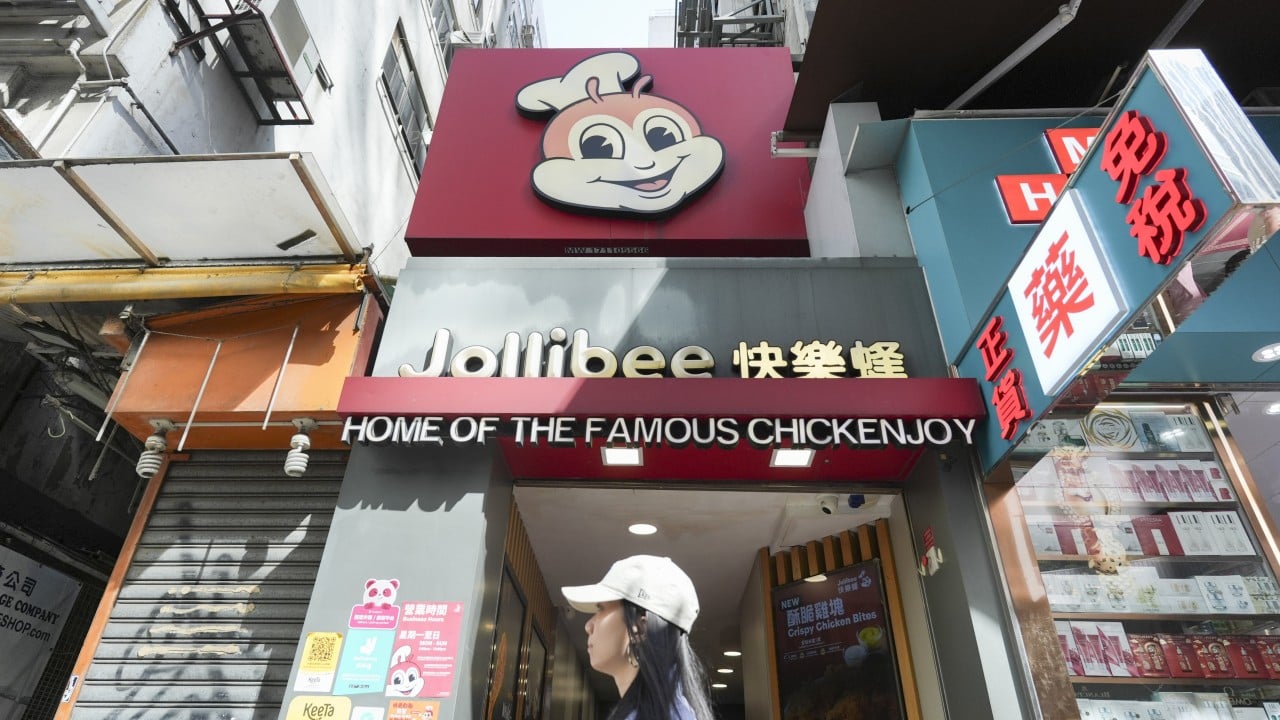
Jollibee Foods Corporation made a quiet calculation behind closed doors in Manila. Wall Street did not understand the chicken.
When the Philippine fast-food powerhouse announced plans to carve out its international portfolio into a separate vehicle named Jollibee Foods Corporation International (JFCI), the corporate prospectus pointed squarely toward a New York debut. It was the conventional playbook for any Asian multinational seeking global prestige. New York offered massive institutional depth, endless liquidity, and the psychic validation of trading alongside Western category killers.
Then reality set in. By September, the board executed a sharp pivot. They traded the New York Stock Exchange for the Main Board of the Hong Kong Stock Exchange.
This was not a retreat. It was a cold, quantitative admission that valuation multiples depend entirely on whether the people buying the shares actually eat the product.
The Valuation Penalty of Distance
Every multi-brand restaurant operator expanding out of its home market faces a steep perceptual penalty. Jollibee operates more than 10,700 stores across 33 countries, managing a sprawling collection of brands that includes Tim Ho Wan, Coffee Bean & Tea Leaf, and Yonghe King. Yet to a generalist portfolio manager sitting in Manhattan or Boston, a Filipino fast-food empire famous for sweet-style spaghetti and fried chicken looks like an exotic outlier.
In New York, JFCI risked becoming a low-liquidity curiosity. Foreign restaurant chains frequently struggle to capture analyst mindshare when competing against domestic behemoths with massive market caps. Wall Street analysts build models based on predictable domestic benchmarks. They understand McDonald's, Yum Brands, and Chipotle. When a complex Asian operator with a fragmented international footprint enters the mix, the valuation math breaks down. Analysts apply a complexity discount.
Hong Kong offers a completely different ecosystem. The local exchange features a dense, mature universe of listed Asian consumer and restaurant companies. Institutional investors in the region do not need to be educated on the cultural resonance of Asian quick-service brands or the velocity of urban expansion in Vietnam, China, and the Philippines. They already own the underlying thesis.
Hong Kong provides immediate peer reference points. When a market contains established comparables, price discovery becomes organic rather than speculative.
The Architectural Anatomy of the Split
Executing a cross-border corporate surgery of this magnitude requires removing administrative friction before ringing any opening bells. Jollibee has spent months dividing its domestic anchor from its planetary ambitions. The parent company stays firmly anchored on the Philippine Stock Exchange, protecting the domestic cash cow that generates steady, predictable pesos from local market dominance.
Meanwhile, JFCI takes the heavy baggage and high-growth potential of the global portfolio. Running that division requires a specific type of financial architecture. To helm this newly minted entity, the board tapped Richard Chong Woo Shin, transitioning him from his dual post as chief financial and risk officer of the parent group. Shin brings three decades of regional consumer goods finance experience across Asia.
This appointment signals a departure from pure brand-building toward rigorous capital allocation. International expansion is an expensive endeavor. Scaling supply chains across North America, Europe, and urban Asian centers burns through liquidity fast. A Hong Kong listing places JFCI closer to regional capital pools that understand the long-term gestation period required for international food service scaling.
The Broader Capital Flows Shift
Jollibee's pivot reflects a wider recalibration of how Asian enterprises view Western exchanges. For years, US listings served as the default gold standard for global ambition. Regulatory compliance costs under Sarbanes-Oxley, combined with the escalating geopolitical friction between Washington and Beijing, have altered the risk-reward calculus.
Hong Kong has positioned itself aggressively to capture this exact tier of cross-border corporate migration. Total proceeds from Hong Kong initial public offerings have surged past forty-five billion dollars, marking one of the strongest stretches for the city's exchange in recent history. The venue is flooded with institutional liquidity specifically targeting Asian consumption stories.
By listing in Hong Kong, JFCI gains direct access to regional funds that view its geographic footprint as a strategic advantage rather than a logistical risk. Brand recognition across Asia is immense. Millions of consumers already interact with Jollibee group properties daily. That baseline familiarity translates directly into institutional confidence.
Yet the strategy carries inherent operational hazards. Hong Kong markets remain sensitive to regional macroeconomic fluctuations and shifts in mainland consumer sentiment. If JFCI fails to accelerate its North American footprint while growth moderates in its core Asian territories, the valuation safety net could dissolve rapidly.
The chicken must fund its own voyage. Wall Street would have punished any stumble with algorithmic mercilessness. Hong Kong offers a more patient audience, but the numbers must still balance on the tray.
Jollibee Shifts International Unit Listing To Hong Kong Stock
An overview of Jollibee's strategic shift from a United States listing to the Hong Kong Stock Exchange for its international business unit.
http://googleusercontent.com/youtube_content/1