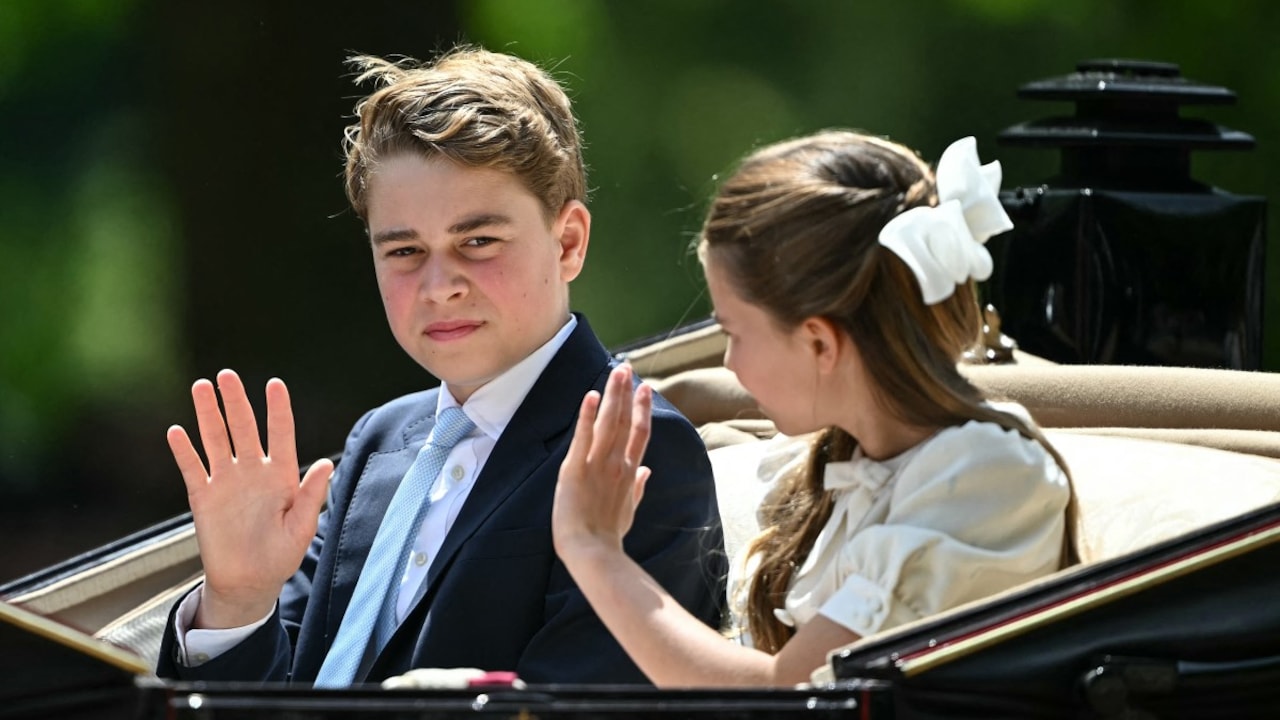
When Prince George crossed the threshold into adolescence on July 22, 2026, Kensington Palace followed a well-worn playbook. Official portraiture showed a smiling 13-year-old in a dark suit with an open-neck shirt, while accompanying video footage captured a family day out on the beach. Yet beneath the slick public relations campaign lies a significant operational shift in how Great Britain trains its future kings. George's upcoming enrollment at Eton College in September marks the true beginning of a grueling, decades-long monarchy trial.
The monarchy faces a structural dilemma. For generations, royal education oscillated between the punishing outdoor discipline of Gordonstoun and the traditional institutional polish of Eton. When Prince William entered Eton in 1995, he did so against the backdrop of a bitter, highly public marital collapse between his parents. The Windsor establishment treated his schooling as an island of stability amid a press war.
For George, the strategic calculus looks entirely different. The Prince and Princess of Wales have attempted to construct a bubble of suburban normalcy around Adelaide Cottage in Windsor. But normalcy is an illusion when a child is second in line to a crown.
The Architecture of Isolation
Eton College charges upwards of £63,000 annually. It operates under a fierce boarding structure that enforces complete immersion. While the school sits just ten minutes from Windsor Castle, the house masters maintain strict boundaries regarding parental contact and weekend departures.
George will not enjoy the casual flexibility of dropping home for dinner whenever he pleases. He enters an environment governed by 600-year-old customs, black tailcoats, and relentless peer scrutiny.
Privately, senior court officials view this transition with equal parts relief and anxiety. On one hand, Eton provides a proven security umbrella and a historical pact of press restraint during term time. On the other hand, it represents the first major break in the carefully curated nuclear family unit William and Catherine built to protect their eldest son.
A Digital Age Inheritor
Previous heirs faced tabloid photographers hiding in bushes. George faces classmate smartphones, encrypted messaging apps, and instant global leaks.
The Palace cannot police every teenager with a camera phone in a boarding house. While Eton maintains strict rules on digital devices, the reality of managing an heir in a hyper-connected environment creates unprecedented security challenges. Every private moment, every off-guard comment, and every teenage misstep carries potential institutional risk.
The institution has quietly adjusted its training strategy. Rather than shielding George completely from statecraft until his university years, royal aides have systematically exposed him to high-pressure public settings over the past eighteen months. From the pressure cooker of state occasions to high-profile sporting events in the Royal Box at Wimbledon, his public appearances are deliberate rehearsals for a lifetime of public scrutiny.
The Shadow of Monarchy Streamlining
The modern British public shows decreasing patience for an expansive royal apparatus funded by taxpayer money. King Charles III has made no secret of his desire for a slimmed-down core of working royals.
That reality leaves George with a vastly smaller supporting cast than any heir before him. By the time he reaches the throne, the burden of head-of-state duties will rest squarely on his shoulders, supported by a fraction of the working family members available to previous generations.
Eton is designed to instill a specific brand of quiet authority. Yet whether a 15th-century elite institution can adequately equip a future king to head a multi-ethnic Commonwealth in the mid-21st century remains an open question.
The crown is betting everything on a hybrid model of upbringing. A childhood rooted in domestic intimacy, combined with the classic furnace of elite private education. As George steps onto the playing fields of Eton this autumn, the protective wall constructed by his parents begins to recede, leaving a thirteen-year-old face to face with the apparatus of statehood.