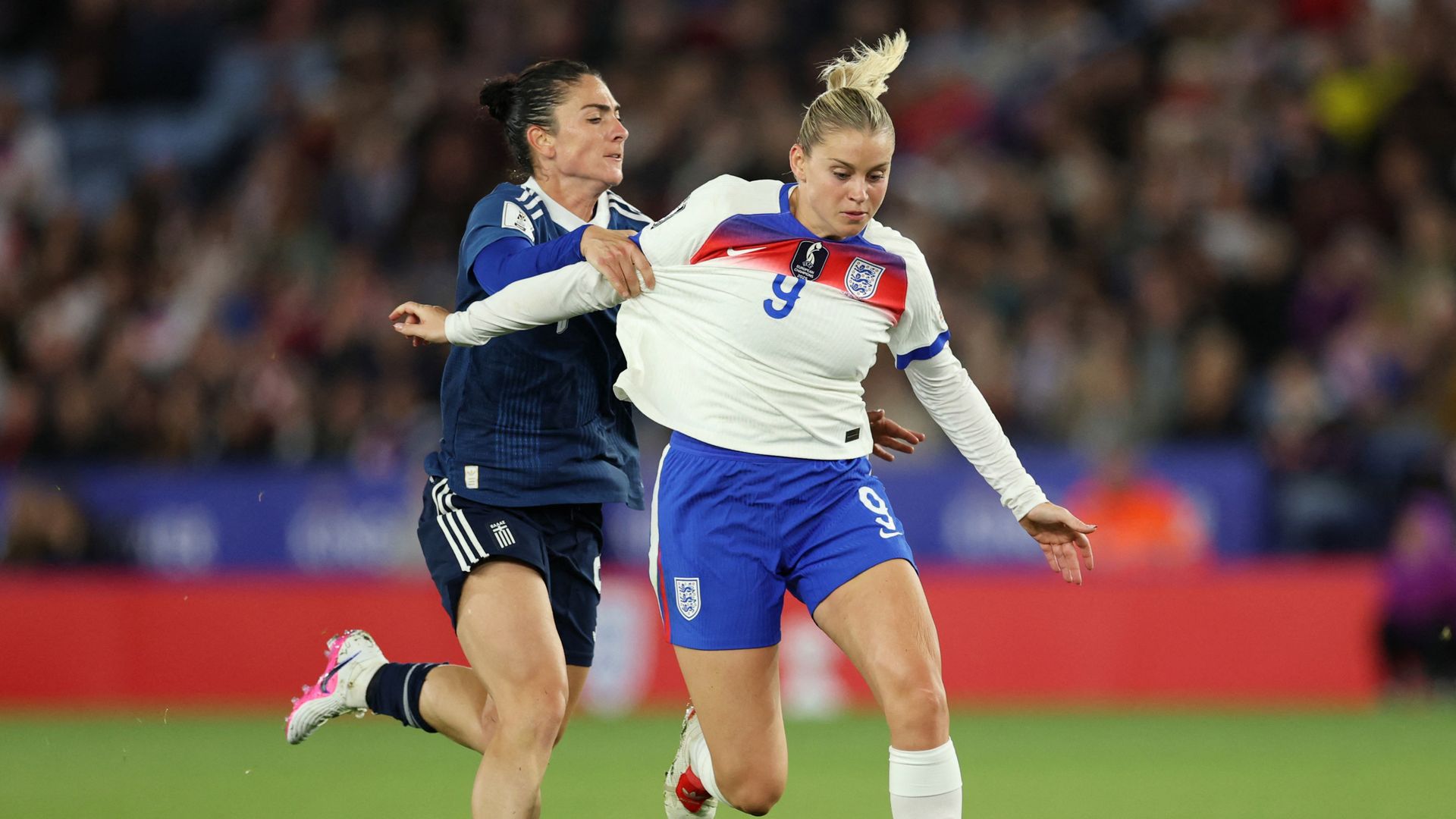
FIFA doubled the Women’s World Cup prize pool to $110 million for the 2023 tournament in Australia and New Zealand, and it still left female players earning roughly a quarter of the $440 million distributed at the 2022 men’s event in Qatar. While governing bodies celebrate incremental raises as historic victories for gender equity, the underlying financial architecture of international football tells a far more calculated story. The persistent gap is not merely a reflection of market demand; it is the result of decades of unbundled broadcast rights, lopsided commercial valuation, and a federation governance structure that treats women’s football as a charity rather than a standalone revenue engine.
Headline numbers lie. When FIFA President Gianni Infantino stood before cameras to announce the jump from $30 million in 2019 to $110 million in 2023—or $152 million when accounting for preparation funds and club benefits—the press releases framed the move as a massive step toward parity by 2027. Yet context ruins the celebration. In Qatar, the winning men’s federation, Argentina, took home $42 million alone. The entire prize pot for all 32 teams at the Women’s World Cup barely exceeded double what a single men’s champion collected.
The Structural Illusion of Percentage Growth
Percentage increases are the oldest public relations trick in sports governance. If you start from near zero, doubling or tripling a figure looks heroic on a press release while leaving the actual dollar gap wider than ever.
Consider the trajectory over the last decade. In 2015, the Women’s World Cup total prize pool sat at $15 million. By 2019 in France, it doubled to $30 million. Meanwhile, the men’s pot jumped from $358 million in 2014 to $400 million in 2018, and then to $440 million in 2022. Every time FIFA announces a percentage surge for the women’s game, the absolute cash chasm between the two tournaments grows larger. In 2015, the gap was $343 million. By the 2022–2023 cycle, the gap stood at $330 million—virtually unchanged despite eight years of supposed progress and unprecedented growth in global viewership.
This financial sleight of hand relies on public unfamiliarity with how prize money actually flows. FIFA does not write checks directly to athletes. It wires funds to national member associations. Those federations then decide how much goes toward player bonuses, coaching staff, administrative overhead, or youth development.
To combat federations pocketing the cash, FIFA introduced direct-to-player payment guarantees in 2023, promising every participating athlete at least $30,000, rising to $270,000 for members of the winning squad. It was a necessary intervention. Historically, players from nations like Nigeria, Jamaica, and South Africa had to stage strikes or threaten boycotts just to collect basic appearance fees promised by their own football associations. By bypassing local administrators, Zurich ensured the money reached the pitch, though the total pool remained constrained by how FIFA values its own property.
How Unbundling Exposed FIFA’s Valuation Problem
For decades, FIFA sold the Women’s World Cup as a free bonus thrown into men’s broadcast packages. Media networks bought the men’s tournament at astronomical prices and received the women’s rights at little to no extra cost, often burying matches on secondary channels with minimal production value. Because the tournament generated no standalone balance sheet, FIFA executives routinely argued that the women’s game simply did not bring in enough money to justify higher payouts.
That excuse collapsed when FIFA finally unbundled the rights ahead of the 2023 tournament. Suddenly forced to sell the Women’s World Cup on its own merits, FIFA discovered that European broadcasters—accustomed to getting the product for free—offered bids that Infantino publicly derided as a "slap in the face." Networks in the United Kingdom, Spain, Italy, Germany, and France initially offered between $1 million and $10 million, compared to the $100 million to $200 million they paid for the men’s event.
The European Broadcast Standoff
The standoff revealed an uncomfortable truth about sports economics. Broadcasters claimed that unfavorable kick-off times in Australia and New Zealand limited prime-time advertising inventory in Europe. They argued that commercial sponsors had not yet committed the budgets needed to recoup high licensing fees.
Infantino threatened a media blackout across Europe’s five biggest football markets just weeks before the opening match. Eventually, the European Broadcasting Union stepped in to broker a compromise deal, saving the broadcast schedule at the eleventh hour. Yet the entire episode exposed the flaw in FIFA’s historical business model. By failing to cultivate standalone commercial value for thirty years, the governing body created a self-fulfilling prophecy: low investment yielded low broadcast fees, which in turn served as the justification for low prize money.
Revenue Generation Versus Distribution
When sports executives defend the pay gap, they almost always point to the revenue-sharing ratio. During the 2019–2022 financial cycle, FIFA generated roughly $7.6 billion in total revenue, overwhelmingly driven by the men’s World Cup in Qatar. Distributing $440 million to the 32 competing men’s teams represented roughly 6 to 7 percent of total cycle revenue, or around 10 to 12 percent of the specific tournament’s direct commercial intake.
By contrast, the 2023 Women’s World Cup generated over $570 million in direct revenue—breaking even and turning a profit for the first time in the tournament's history, according to FIFA’s own financial reporting. Distributing $110 million in prize money meant female players received roughly 19 percent of the tournament's direct revenue. On a purely proportional basis, women actually received a larger slice of their tournament’s specific pie than the men did.
That statistic is the ultimate corporate shield. It allows administrators to claim mathematical fairness while ignoring the structural handicap that keeps the women's pie small. A startup starved of venture capital for thirty years cannot be compared fairly to a conglomerate backed by billions in infrastructure, marketing, and prime-time broadcast slots.
Where the Money Actually Goes Inside Zurich
Understanding FIFA’s prize structure requires looking at its broader cash reserves and political priorities. FIFA is a non-profit association registered under Swiss law, a status that grants it significant tax advantages while obligating it to reinvest surplus funds into global football development. At the end of the 2022 financial cycle, FIFA sat on cash reserves exceeding $3.9 billion.
Money is not scarce in Zurich. Allocation is simply a political choice.
Every four years, FIFA distributes billions of dollars through its Forward Development Programme, sending equal grants to all 211 member associations regardless of size or competitive pedigree. Whether a nation is Brazil or a tiny island territory with a population of ten thousand, each federation gets the exact same vote in FIFA presidential elections—and the exact same baseline development check.
Raising Women’s World Cup prize money benefits only the 32 nations—and soon 48—that qualify for the tournament. Increasing Forward grants benefits all 211 voters. In the cold calculus of international sports politics, keeping 211 federation presidents happy secures re-election far more reliably than achieving wage parity for elite female athletes.
The Domestic League Bottleneck
International tournaments happen once every four years, lasting roughly a month. Relying on World Cup prize money to sustain professional women’s football is like trying to fund a hospital using a single annual charity gala.
The real economic engine of men’s football is the club ecosystem—the Premier League, La Liga, the Champions League—where players earn weekly salaries running into hundreds of thousands of dollars, rendering World Cup bonuses almost negligible to top stars. For Lionel Messi or Kylian Mbappé, World Cup prize money is a pleasant bonus. For a midfielder on the Colombian or Moroccan women’s national team, a World Cup payout can represent five years of club wages.
Because domestic women’s leagues in most countries still operate on razor-thin budgets, poor stadium infrastructure, and limited television exposure, players depend disproportionately on national team payouts to survive as full-time professionals. When FIFA keeps the World Cup pot at $110 million, the consequences hit far harder than when it caps the men’s pot.
The Hypothetical Equalization Scenario
To understand the scale of the financial gap, consider a hypothetical scenario where FIFA decided tomorrow to equalize the prize pools using its existing reserves. Pulling $330 million from a $3.9 billion cash reserve to match the men’s $440 million payout would reduce FIFA’s rainy-day fund by less than 8.5 percent. It would not bankrupt the organization, stall youth pitches in developing nations, or jeopardize operational budgets.
FIFA chooses not to do this because doing so would break the sacred link between commercial revenue and athlete compensation—a precedent that commercial partners and conservative member associations fiercely resist. Once a governing body subsidizes prize money independently of broadcast returns, it opens the door to endless demands for equal pay across youth tournaments, futsal, and beach soccer.
The 2027 Target and the Expansion Trap
FIFA has publicly stated an ambition to achieve equal prize money for the men’s World Cup in 2026 and the Women’s World Cup in 2027. On paper, the timeline sounds definitive. In practice, the math is moving against the women’s game once again.
In 2026, the men’s World Cup expands from 32 to 48 teams across the United States, Canada, and Mexico. With 104 matches instead of 64, and massive North American commercial sponsorships already locked in, FIFA projects total cycle revenues to smash through the $11 billion barrier. Consequently, the men’s prize pool for 2026 is expected to surge well past $600 million, potentially approaching $700 million.
Meanwhile, the 2027 Women’s World Cup in Brazil remains a 32-team tournament. To match a $650 million men’s pot, FIFA would have to increase the Women’s World Cup prize money nearly sixfold in a single four-year cycle—jumping from $110 million to $650 million.
Unless broadcast rights in Europe and Asia suddenly quintuple in value overnight, matching the 2026 men’s payout in 2027 will require massive direct subsidies from FIFA’s central coffers. Either Infantino will have to dip deeply into Zurich’s cash reserves to honor his public rhetoric, or the federation will quietly redefine "equality" to mean equal percentage shares of revenue rather than equal dollar amounts.
What Genuine Parity Actually Requires
Throwing a lump sum of cash at a tournament every four years fixes symptoms while ignoring the disease. Even if FIFA writes a $600 million check in 2027, the structural inequities embedded in global football will remain intact unless the underlying commercial machinery changes.
True financial parity requires separating women’s commercial rights completely from men’s sponsorship packages—not just in broadcast deals, but across official partners like Adidas, Coca-Cola, and Visa. For years, corporate sponsors received global Women’s World Cup marketing rights bundled into their primary men’s contracts, meaning FIFA never had to build a dedicated sales force to monetize the women’s tournament independently. Creating standalone sponsorship tiers forces corporations to pay market value for access to female audiences rather than treating women's sports as a free add-on.
Equally critical is enforceable transparency at the national federation level. Direct player payments in 2023 proved that FIFA can bypass corrupt or negligent local administrators when it chooses to. Expanding those controls to mandate equal travel conditions, medical staffing, training facilities, and maternity protections ensures that prize money translates into genuine professional standards rather than disappearing into federation bureaucracy.
Until commercial independence replaces bundled charity, every announcement of "doubled" prize money will remain an exercise in creative accounting—celebrating how fast the numbers are growing while quietly avoiding how far behind they still sit.