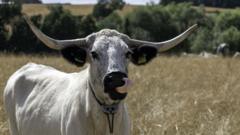
Rare heritage cattle breeds are quietly taking over modern rewilding projects across the countryside, transforming how conservationists manage overgrown land and degraded ecosystems. Estates that once relied entirely on mechanical machinery and heavy chemical interventions now turn to primitive livestock to restore natural soil chemistry, control invasive plant species, and kickstart native biodiversity. This is not just a romantic nod to the agricultural past. It is a calculated, hard-nosed operational strategy designed to let animals do the heavy lifting of habitat repair.
For decades, conservation management followed a sterile, highly controlled playbook. Fences went up, sheep and cattle were cleared off marginal lands to prevent overgrazing, and teams of workers hauled brush or sprayed aggressive weeds. The unintended consequence was predictable. Without natural herbivores trampling the ground, churning the soil with their hooves, and selectively browsing vegetation, many ecosystems grew stagnant. Grasslands choked under thick blankets of dead thatch, scrub encroachment squeezed out rare flora, and invertebrate populations crashed because the micro-habitats they relied on simply vanished.
Enter the heavy lifters of the animal kingdom. Ancient and hardy cattle breeds, often characterized by their long horns, thick coats, and robust constitutions, possess survival traits that modern commercial livestock breeders bred out centuries ago. These animals do not require pampering, heated barns, or expensive feed supplements. They survive harsh winters, tolerate poor-quality forage, and actively target woody growth that conventional cows ignore. When introduced to neglected estates, they behave less like domestic farm animals and more like the wild megafauna that historically shaped the regional landscape.
The Mechanics of Natural Grazing
To understand why primitive cattle succeed where mechanical clearing fails, you have to look at the ground beneath your feet. Traditional lawn-mower style conservation creates a uniform, flat environment that lacks structural diversity. Heavy cattle break this monotony through targeted disturbance. Their hooves break up hard-packed soil crusts, creating micro-depressions that trap rainwater and seeds. This hoof action acts as a natural tiller, allowing dormant wildflower seeds buried deep in the dirt to finally make contact with sunlight and moisture.
Furthermore, these animals practice what ecologists call mosaic grazing. Instead of chewing a pasture down to an absolute billiard-table flatness, they graze patchily. They select certain grasses while avoiding others, trample patches of briars, strip bark from aggressive scrub, and leave behind a chaotic patchwork of short turf, tall tussocks, bare earth, and dung piles. Every single one of these disturbances creates a distinct ecological niche. Dung attracts specialized beetles, which in turn draw foraging birds. Bare patches become nurseries for native orchids and rare insects.
The breeds deployed in these projects are chosen with clinical precision. Conservationists frequently utilize types like the English Longhorn, Highland, Dexter, or primitive cattle reconstructions like Tauros and Heck cattle. Each brings specific physical adaptations to the table. Longhorns possess the reach to strip woody saplings. Highlands can push through dense bracken. Their gut microbiomes are uniquely adapted to process coarse, fibrous vegetation, converting low-quality brush into high-fertility organic fertilizer distributed evenly across the landscape.
Economic Realities and Land Management Budgets
Conservation is chronically underfunded. Every hour spent operating a tractor, buying diesel, or paying a contractor to clear brush drains resources that could be directed elsewhere. Introducing rare cattle introduces a self-sustaining economic model to estate management. Once the initial fencing and water infrastructure are established, the operational costs drop significantly compared to mechanical alternatives.
The animals breed, maintain their own health under minimal veterinary supervision, and manage the land twenty-four hours a day without demanding overtime wages. In some cases, estates offset conservation costs entirely by selling high-end, conservation-grade beef produced from animals that lived completely natural, outdoor lives. Consumers increasingly pay a premium for meat tied to ecological restoration, viewing the purchase as a direct investment in habitat repair.
Yet, this approach is far from a magic bullet. Managing primitive cattle on unfenced or semi-wild estates presents distinct liabilities. These animals are not docile dairy cows accustomed to being nudged through a milking parlor twice a day. They retain strong maternal instincts, sharp horns, and unpredictable temperaments. When members of the public wander onto rewilding estates through public footpaths, friction inevitably arises. Estate managers must constantly balance the ecological benefits of wilder livestock against the very real legal risks of public encounters with semi-feral horned beasts.
Regulatory Hurdles and Resistance
The path to widespread adoption is littered with bureaucratic red tape. Agricultural ministries and food safety agencies operate under frameworks designed for intensive, indoor farming, not extensive, low-intervention rewilding. Bureaucrats struggle to classify herds that live outdoors year-round without standard identification tags or regular handling. Disease testing requirements can turn into logistical nightmares when you are trying to round up twenty half-wild cattle roaming across a thousand acres of dense woodland and bog.
Traditional livestock farmers can also be intensely skeptical. Many view the deployment of primitive breeds on marginal land as a romantic indulgence by wealthy landowners who do not understand practical agriculture. Local farming unions frequently raise concerns about biosecurity, arguing that under-managed herds could act as reservoirs for bovine diseases like tuberculosis. Navigating these cultural and political fault lines requires immense diplomatic skill from estate directors who must convince skeptical rural communities that rewilding is an asset, not a threat to local agricultural heritage.
The genetics of these animals represent a living library of climate resilience. Modern commercial breeds have been optimized for controlled, indoor environments where temperatures are regulated and feed is standardized. Primitive breeds, by contrast, carry genetic variants that allow them to endure extreme weather fluctuations, parasite loads, and nutritional stress. As regional climates grow more erratic, retaining these hardy genotypes becomes an insurance policy for future land management.
Measuring Real Ecological Impact
Skeptics often demand hard proof. Does letting rare cattle roam an estate actually increase biodiversity, or is it merely an expensive aesthetic trend for affluent landowners? Monitoring programs across various pioneering estates provide a nuanced answer. Where stocking densities are kept low and rotational grazing is carefully monitored, the results speak for themselves. Butterfly populations rebound as host plants reappear in the disturbed soil. Ground-nesting birds find ideal cover in the varied vegetation heights created by patchy grazing. Soil organic matter increases measurably over a five-year period, boosting the land's capacity to absorb heavy rainfall and prevent downstream flooding.
Conversely, mistakes happen. Overstocking an estate can quickly reverse these gains, turning a diverse habitat into a heavily eroded mud pit. The margin between effective ecological restoration and traditional overgrazing is razor-thin. It requires experienced herdsmen who understand animal behavior and plant physiology well enough to move the cattle before the damage outweighs the benefits. The romantic idea of simply turning animals loose and walking away is a dangerous fantasy; true rewilding demands active, observant stewardship.
Ultimately, the integration of rare cattle into modern landscape restoration represents a humbling realization. Human engineering and heavy machinery cannot easily replicate the subtle, complex interactions that evolved over millions of years between large herbivores and their habitats. By stepping back and letting these ancient breeds resume their biological roles, estates are discovering that the most effective tool for repairing the future of our countryside is rooted deep in the past.