The humidity in southern Florida does not roll in; it drops like a wet wool blanket over your mouth. At 4:00 PM outside the Hard Rock Stadium, the air was ninety degrees and thick enough to chew.
Imagine standing in that heat while wearing heavy, dark green wool socks pulled up to your knees, a thick denim kilt, and a replica football shirt drenched in a combination of condensation and spilled imported lager.
This was the reality for Callum MacLeod. He is a forty-two-year-old bricklayer from Paisley who had spent his life savings on a plane ticket to watch Scotland play a friendly match against Brazil in Miami. Callum did not look out of place. Around him, six thousand other Scots were transforming a concrete parking lot in America into a sun-baked outpost of the Caledonian diaspora.
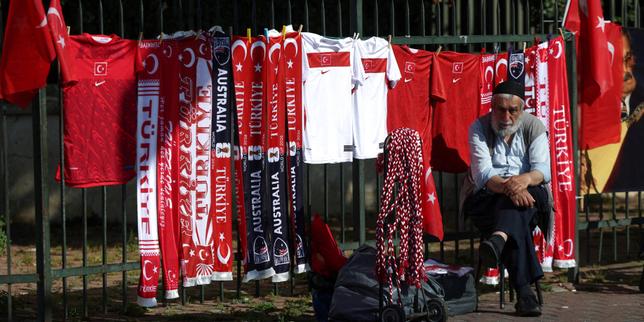
They call themselves the Tartan Army. To the uninitiated, they look like a roving festival of harmless eccentricity. They carry inflatable West Highland terriers, wear oversized tam o' shanter hats with fake orange hair attached, and possess an inexplicable ability to remain cheerful while losing. But if you look past the novelty kilts, you find something much older and heavier. You find a deep-seated, generational coping mechanism disguised as a football supporter's club.
The competitor headlines summarized the event with sterile efficiency: fans gathered, they watched a match, they gave a verdict. They called it "Typical Scotland."
But they missed the entire point of why six thousand people would cross an ocean for a game that did not matter.
The stakes were completely invisible to the local American security guards watching the pre-match tailgate with bewildered amusement. To those guards, it was just a soccer game between a global superpower and a small northern nation. To the fans, it was a pilgrimage to test an ancient thesis: can Scottish identity survive under a clear blue sky?
The Anatomy of the Pessimist
Scotland’s relationship with football is a masterclass in emotional masochism.
For decades, the national team has operated under a predictable, cruel cycle. They look brilliant when everything is stacked against them. They look utterly hopeless when victory is within reach. It is a psychological condition so distinct that it has its own vocabulary in the Scottish press. It is the glorious failure.
Callum explained it while trying to fan himself with a soggy cardboard coaster. "If we play Brazil in Glasgow on a freezing Wednesday night in November, we might scrape a 1-0 win because the Brazilians don't want to get kicked in the shins while it's snowing sideways," he said. "But put us in the sunshine? Put us in paradise? We don't know what to do with ourselves. We get confused."
There is a historical truth to this anxiety. Scotland was the birthplace of the modern passing game, yet the modern national team has spent the last thirty years trapped in a purgatory of near-misses and qualification disasters. They are the team that famously beat the Netherlands in 1978 with one of the greatest individual goals in World Cup history, only to go home in the first round anyway because they had already lost to Peru and drawn with Iran.
The match in Miami was supposed to be a celebration—a glamorous exhibition against the five-time world champions under the neon lights of a global entertainment hub. But for the traveling supporters, the setting itself felt like a trap.
Sunshine breeds optimism. Optimism, to a Scottish football fan, is a dangerous, toxic emotion that leads directly to heartbreak.
A Language Written in Yellow and Blue
When the stadium gates finally opened, the contrast inside the bowl was stark. On one side stood the yellow and green wall of the Brazilian support. They brought samba drums, enormous banners of Pelé, and an effortless, fluid grace that seemed perfectly synchronized with the Miami climate. They looked like they belonged in the tropics because they did.
On the other side was a sea of deep navy blue and tartan. The Scots did not have samba drums. They had bagpipes.
The sound of a bagpipe inside a modern American stadium is an auditory anomaly. It is piercing, mournful, and aggressive all at once. As the piper struck up " Loch Lomond," the six thousand Scots in the corner began to sing. The sound did not bounce off the roof; it seemed to absorb into the plastic seats and the concrete rafters.
Consider the sheer absurdity of the scenario. The players on the pitch were multi-millionaires who spent their weeks playing in London, Turin, and Munich. The fans in the stands were bartenders, teachers, and mechanics who had taken out credit card debt to be there. Yet, when the whistle blew, that distance evaporated.
The game went precisely how everyone knew it would go.
Brazil played with the casual arrogance of a cat toyed with a mouse. Their midfielders moved the ball with short, rhythmic passes that made the Scottish defenders look like they were running through wet cement. By the twentieth minute, Brazil was leading 1-0 through a goal that looked so simple it felt like an insult. A quick flick of the heel, a burst of acceleration, and the ball was in the back of the net.
In the stands, the Tartan Army did not boo. They did not scream at the manager. They simply leaned into the familiarity of the disappointment.
"Typical Scotland," a voice shouted from three rows behind Callum. It was not an angry shout. It was a statement of relief. The universe was operating according to its established laws. The sky was blue, the water was wet, and Scotland was losing to Brazil in the heat.
The Mid-Game Exorcism
There is a specific moment in every Scottish football match where the expectation of victory dies, and the true party begins. It usually happens around the sixty-minute mark when the scoreline becomes unredeemable.
In Miami, that moment arrived when Brazil scored their third goal. It was a beautiful, soaring strike from thirty yards out that left the Scottish goalkeeper stranded. It was the kind of goal that makes neutral fans applaud and home fans leave early.
The Scots stayed. In fact, they grew louder.
This is the human element that sports writers who rely on statistics fail to capture. The defiance of the Tartan Army is not about football; it is about community preservation. When your national history is defined by emigration, clearance, and political compromise, a football stadium becomes the only place where the nation exists in its purest form. For ninety minutes, that corner of the Hard Rock Stadium was the most densely populated Scottish town on Earth.
They began to sing "Flower of Scotland," a song about a medieval battle fought against the English in 1314. To hear thousands of sunburned men and women sing about sending King Edward's army home, while standing in a stadium named after a rock-and-roll restaurant chain in Florida, is to understand the true definition of surrealism.
The Brazilian fans stopped drumming to watch. They were used to winning. They were used to their opponents growing quiet and sullen. They did not understand why the people who were being thrashed on the scoreboard were dancing in the aisles.
The Meaning of the Miami Downpour
Then came the rain.
It did not drizzle. The sky over Miami simply opened up in the eighty-fifth minute and dropped an ocean on the stadium. It was a classic tropical downpour—sudden, violent, and warm.
The American spectators in the expensive seats along the sidelines immediately scattered for the concourses, terrified of ruining their clothes or their hair. The Brazilian fans pulled out plastic ponchos.
The Scots stood up and took off their shirts.
For the first time all day, they looked comfortable. The warm Florida rain washed away the sweat, the sunscreen, and the stickiness of the afternoon. It transformed the stadium into something resembling a Saturday afternoon in Aberdeen or Greenock, if only you closed your eyes and ignored the temperature of the water.
The final whistle blew. Brazil 4, Scotland 0. A comprehensive, undisputable demolition.
As the players walked off the pitch, dripping wet and exhausted, they walked over to the corner where the navy blue jerseys were packed together. The fans were still singing. They were wet to the bone, their kilts weighed three times what they had in the morning, and they faced a long, damp walk back to the rental cars and shuttle buses.
Callum MacLeod stood in the front row, his arms draped around two strangers he had met three hours earlier over a cooler of domestic beer. His face was bright red from the sun, his boots were ruined, and he had just watched his team get thoroughly outclassed by a superior football nation.
He looked happier than he had all week.
"People think we come here expecting to win," he said, wiping a mixture of rain and sweat from his forehead as the stadium lights reflected off the flooded pitch. "We don't. We come here to find out who we are when we're far from home. Turns out, we're the exact same people. Just a bit wetter."
The stadium slowly emptied, leaving behind thousands of discarded plastic cups and the faint, unmistakable smell of damp wool drying in the tropical night. The Florida night. The Florida night. The Florida night.