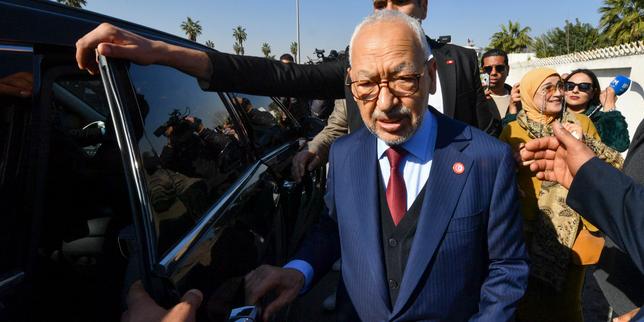
Western media loves a simple narrative. A high-profile political prisoner falls ill in a developing nation, and the international news cycle instantly cranks out predictable headlines. Headlines frame the event as an impending martyrdom, a sign of an autocratic regime pushing its main rival to the brink, or proof that political Islam is being crushed under a heavy boot.
The coverage following reports that Ennahda leader Rached Ghannouchi’s health reached a critical state while incarcerated in Tunis follows this exact blueprint. Lawyers raise the alarm, foreign ministries express concern, and mainstream outlets syndicate identical reports warning of a humanitarian catastrophe.
This surface-level reporting completely misses the real story.
Focusing entirely on personal health reports from defense attorneys distracts from the broader political reality unfolding across North Africa. Treating a prisoner's health update as the primary story obscures the actual structural shift happening in Tunisia: the total collapse of the post-2011 political class and the complete irrelevance of the foreign pressure playbook.
The Defense Attorney Playbook vs. Political Reality
When an incarcerated political figure falls ill, public defense teams have a specific job. They mobilize public opinion, rally foreign diplomatic pressure, and force the government onto the back foot.
Calling a medical condition "critical" is a standard legal and media tactic used globally to shift focus from courtroom proceedings to human rights forums. Yet, foreign correspondents regularly report these statements as neutral, objective facts without analyzing their tactical purpose.
I have watched observers fall into this trap repeatedly across regional power struggles. The moment a political figure is detained, every medical update becomes a diplomatic leverage point. Framing health alerts as pure geopolitical crises ignores basic legal strategy:
- International Pressure: Defense teams use health reports to trigger statements from the UN, EU, and foreign governments.
- Domestic Mobilization: Reports of deteriorating health aim to re-energize a dormant domestic political base.
- Shifting the Ground: Medical emergencies reframe complex legal or anti-corruption charges into straightforward humanitarian questions.
Calling out this media dynamic does not mean dismissing human rights or medical care in detention facilities. Medical attention is a fundamental right regardless of charge or status. However, treating defense statements as unexamined geopolitical facts is bad journalism. It substitutes legal PR for real analysis.
Why the "Democracy Backsliding" Narrative Failed
For years, international commentators argued that targeting figures like Ghannouchi would ignite widespread public outrage in Tunisia. Western analysts insisted that the Tunisian public would take to the streets if the symbols of the post-2011 revolution were dismantled.
That narrative failed completely.
When Ghannouchi was arrested in 2023, the mass uprising predicted by Western think tanks simply did not happen. The streets remained quiet. Why? Because the international press mistook parliamentary horse-trading for genuine institutional popularity.
While Washington and Brussels viewed Ennahda as a symbol of moderate political Islam and democratic compromise, a vast majority of Tunisians viewed the party as a key architect of a decade defined by economic stagnation, political gridlock, and corruption.
The political establishment that governed Tunisia after 2011 failed to deliver on basic economic promises. Inflation soared, youth unemployment persisted, and public services deteriorated. When President Kais Saied moved to consolidate power and dismantle parliament, he was not acting in a political vacuum. He was capitalizing on widespread public exhaustion with the political elite.
The ongoing focus on individual elite figures misses what average Tunisians actually care about. The general public is not tracking the daily statements of political defense committees; they are tracking the cost of food, the availability of basic supplies, and the stability of the national economy.
The Myth of Western Diplomatic Leverage
Another major flaw in current reporting is the assumption that foreign condemnation still holds significant weight in Tunis.
For decades, the standard playbook for international media was to highlight human rights concerns, prompt a statement from the US State Department or European External Action Service, and wait for the target government to cave under economic or diplomatic pressure.
That era is over.
Tunisia's current administration has repeatedly demonstrated that foreign diplomatic pressure carries little weight in domestic policy. In fact, pushback from Western institutions often serves as useful political fodder for Saied, allowing him to position himself as a defender of national sovereignty against external interference.
When international outlets generate headlines demanding immediate international intervention every time a political prisoner’s health is mentioned, they fail to recognize three key geopolitical shifts:
- Sovereignty Posturing Works: Rejecting foreign lectures plays extremely well with domestic audiences tired of perceived Western patronizing.
- Alternative Financial Partners: North African nations are increasingly diversifying their economic partnerships, reducing their dependence on traditional Western aid packages tied to governance metrics.
- Regional Realities: Neighboring states prioritize regional stability and border security over the preservation of specific political parties or ideological movements.
Moving Beyond Simple Binaries
If we want to understand what is actually happening in Tunisia, we have to drop the simplistic binaries. The situation is not a simple movie plot featuring good-guy democrats versus bad-guy autocrats. It is a complex historical reset.
The post-revolution era led by Ennahda and its coalition partners failed to build lasting, functional economic institutions. The current regime's centralizing of power is a direct consequence of that institutional failure.
Focusing solely on medical updates and legal press releases keeps foreign observers stuck in a loop of outrage, missing the core structural issues:
- Economic Failure is Political Failure: A political system that does not improve standard of living will eventually lose its legitimacy, no matter how democratic its constitution looks on paper.
- Elites Are Out of Touch: The political class that dominated post-2011 Tunisia completely misjudged the public's patience and appetite for ideological debates over economic stability.
- Foreign Dictates Are Dead: The assumption that Western nations can micromanage North African political outcomes through press statements is an outdated relic.
Stop analyzing North African politics through the narrow lens of Western press releases and legal defense updates. The story in Tunis is not just about a single political leader in a prison cell; it is about the final collapse of a decade-long political experiment that lost the trust of its own people.


