Cold.
It settles into your knuckles first, right through the wool of a cheap souvenir glove, before climbing up your forearms and tightening the muscles along your jaw as November creeps across the Canadian prairies. Anyone who has stood inside a late-season Canadian Football League stadium knows that autumn air on the northern plains does not merely chill you; it tests your memory, your patience, and whatever stubborn loyalty brought you out of a warm living room on a Saturday afternoon. You might also find this connected article useful: The Utility Player Trap Why Versatility Can Stall an NBA Career.
The headline on a rival sports wire might read like a bank statement: Bombers can secure CFL playoff spot with victory. Clean. Efficient. Forgettable. Five seconds of scrolling and you have already moved on to something else, because a dry sentence about clinching scenarios tells you nothing about what a playoff berth actually costs when a team's window of dominance is colliding with the unforgiving clock of a long football season.
I have watched enough late-autumn football in Winnipeg and across the CFL to know that "clinched" is a word outsiders love and insiders treat with suspicion. Outsiders see a checkmark next to a team name in the standings and think the hard part is finished. Players and coaches know better. A playoff spot in the CFL is not a vacation pass; it is an invitation to survive four more weeks of bruising, high-tempo, three-down football where a single dropped pass or a bad punt in crosswinds can turn a contender into an off-season footnote. As extensively documented in latest reports by ESPN, the implications are worth noting.
When Standing Scenarios Stop Being Math
Consider what happens next: a team enters the closing stretch of the schedule knowing that one victory locks up a postseason ticket, yet the locker room feels tighter than it did in July. Why? Because July is full of promise and hypotheticals, while late autumn is made of sore ribs, taped ankles, and scoreboard watching.
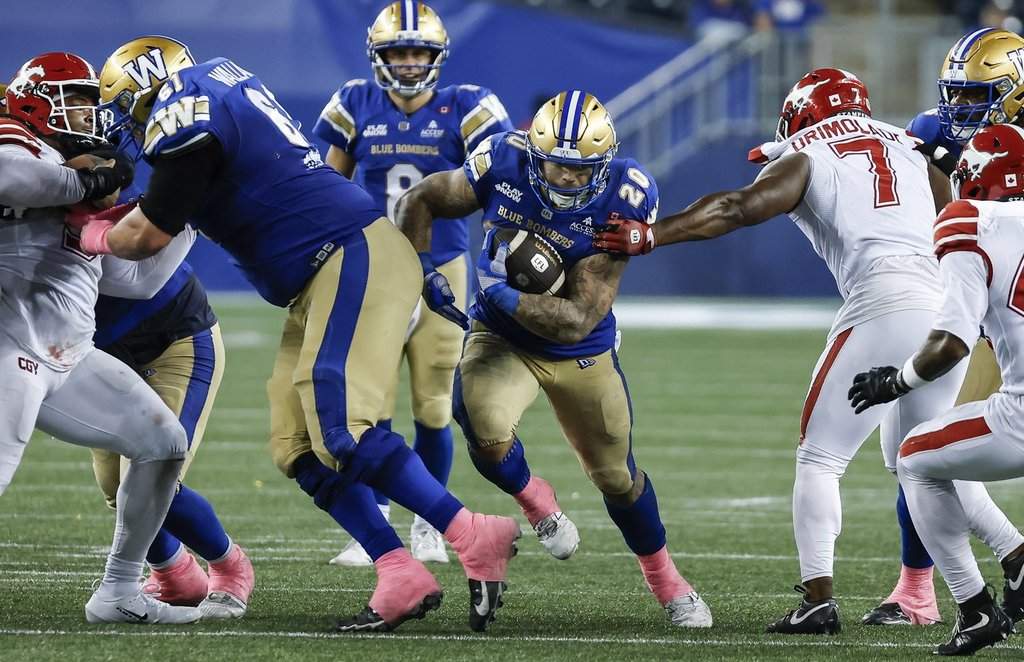
To make the math tangible—and let me be clear, this is a hypothetical scenario built to show how late-season CFL standings pressure plays out in a typical autumn stretch—imagine a veteran slotback named Dan sitting on a folding stool near the equipment room after a brisk Wednesday walk-through. Dan has played in enough seasons to know how quickly a two-game cushion evaporates in a league where every team plays eighteen regular-season games and parity bites hard in October. If the Winnipeg Blue Bombers win on Saturday, they punch their ticket to the postseason on their own terms, without praying for out-of-town help or tiebreakers. If they lose, the dressing room has to carry that weight into another week while rivals across the division keep clawing for air.
Metaphorically, a late-season clinch scenario is like walking across a frozen river when the ice still groans underfoot. You can see the far bank. Everyone tells you the ice is thick enough. Still, you listen to every crack beneath your boots because you have seen what happens when someone gets cocky twenty yards from shore.
Why does a single victory carry such disproportionate gravity in the CFL compared to some other sports? Part of it comes down to the structure of the game itself. A 110-yard field, 55-yard end zones, twelve players a side, and only three downs to gain ten yards leave almost nowhere to hide. Offenses move fast, special teams play huge roles on long returns and singles, and momentum swings in chunks of ten or fourteen points rather than dribbling away slowly. When a team has the chance to clinch a playoff spot with a win, that urgency bleeds into every possession. You do not play conservatively when a single loss keeps you looking over your shoulder. You play to close the door.
The Invisible Stakes Behind Blue and Gold
Fans who only glance at standings often ask a fair question: if a team has already built a solid body of work over the season, why does clinching a playoff spot right now matter so much? Couldn't they just back in later or rest a few banged-up starters?
Backing in is a dangerous habit in Canadian football. Once the postseason begins, there is no room for a slow first half or an emotional hangover. A team that clinches with a victory earns something psychological that no point differential can measure: control. Control over their own preparation. Control over when to manage reps for veterans whose legs have absorbed months of turf and frost.
I have sat in press boxes and stands during tense October and November afternoons where the crowd wasn't cheering a routine first down so much as exhaling after a stop on second-and-long. You hear the crunch of shoulder pads from fifty rows back when the wind dies down. You smell stale coffee, hot chocolate, and damp wool mixed with the faint metallic tang of stadium turf. In those moments, the Blue Bombers are not just a roster of quarterbacks, receivers, linemen, and defensive backs. They are a shared civic rhythm. In a city like Winnipeg, where winter looms large and pride runs deep, football in the fall gives people a reason to gather, argue over play-calling, and believe that grit still counts for something.
Yet there is vulnerability in admitting how uncertain late-season football truly is. Even when a team has the clearest path to clinching a playoff spot with a victory, nothing in sport is guaranteed until the final whistle sounds. A tipped ball at the line of scrimmage. A penalty on third down. A kicker lining up into a gusty breeze that wasn't there during pregame warmups. Anyone who claims a clinch is a foregone conclusion either hasn't watched much CFL football or has a remarkably short memory.
Why One Game Can Change the Mood of a Season
Another question people often ask when they see a "win and you're in" or "win and you clinch" headline is how coaching changes in the final stretch of the regular season. Do coaches open up the playbook, or do they tighten everything down?
In my experience watching seasoned CFL staffs navigate high-stakes games, the best coaches do not reinvent their identity in November; they sharpen it. They lean into what works under pressure—stronger protection for the quarterback, disciplined coverage lanes, and situational awareness on every down. When a victory secures a playoff spot, the coaching staff wants their players attacking the moment rather than tiptoeing around the fear of losing.
Think back to the broader history of the league. Across decades of CFL history, dynasties and resilient contenders alike have been forged in games that looked ordinary on paper but felt heavy in the gut. A postseason berth is the threshold, not the summit—nobody hoists the Grey Cup in October—but crossing that threshold early gives a dressing room room to breathe and focus on the bigger prize ahead.
Still, you cannot fake urgency. Players can spot a team going through the motions from across the field. When the Bombers have the chance to clinch a playoff spot with a victory, the real test is whether they treat the game like a championship final rather than a formality. If they bring physicality from the opening kickoff, stay out of penalty trouble, and finish drives when they cross midfield, the standings take care of themselves.
What Lingers After the Final Whistle
Sports coverage loves neat labels. Clinched. Eliminated. Contender. Pretender. Those words make it easy to sort teams into tidy boxes and move on to the next headline.
The truth is messier and far more human. Behind every playoff berth is a string of quiet mornings—ice baths, film sessions in darkened rooms, family schedules rearranged around road trips, and fans braving biting wind just to feel connected to something bigger than their own routine. A single victory that locks up a postseason spot does not erase the bruises of a grueling season, nor does it promise what happens next week.
It simply buys the right to keep fighting together under the stadium lights, breath steaming in the cold prairie air, while the whole city holds its breath for one more play.