The United Kingdom and the European Union have agreed to dismantle routine post-Brexit border checks on food, plants, and animal products through a bilateral veterinary and sanitary agreement. By aligning British agrifood standards with European Union rules, the pact eliminates mandatory export health certificates, physical border inspections, and costly administrative delays that have choked cross-Channel trade since 2021. For consumers and supermarkets, this removes a persistent inflationary tax on fresh groceries. Politically, however, the deal carries an unmistakable price tag, requiring London to accept dynamic regulatory alignment with Brussels and oversight from European judges in exchange for frictionless access to its largest trading partner.
Border friction did not vanish because diplomats suddenly discovered goodwill. It disappeared because the economic math had become impossible to defend. For another view, check out: this related article.
When the Trade and Cooperation Agreement took effect at the start of 2021, the UK left the EU single market and customs union. Overnight, a lorry carrying cheddar cheese from Somerset to Paris faced the same bureaucratic scrutiny as a container ship arriving from South America. Every consignment of animal or plant products required an Export Health Certificate signed off by an accredited veterinarian, alongside customs declarations and entry notifications. The EU imposed its full suite of sanitary and phytosanitary checks immediately. Britain, recognizing that its ports lacked the physical infrastructure and staffing to inspect incoming European food without causing immediate supermarket shortages, delayed its own import controls five separate times.
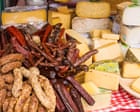
When London finally began phasing in its Border Target Operating Model in 2024, the true cost of regulatory divergence landed squarely on British businesses and households. Importers faced new common user charges at ports like Dover and Folkestone, even on lorries that were never physically pulled over for inspection. Small and medium-sized specialty food exporters—artisanal cheesemakers, boutique charcuterie producers, and seed merchants—found that paying hundreds of pounds per shipment for veterinary paperwork wiped out their profit margins entirely. Many simply stopped exporting to the continent. Related reporting on this matter has been shared by The New York Times.
The Anatomy of Sanitary Friction
To understand why food trade proved so intractable after Brexit, you have to look at how modern agrifood supply chains operate. Unlike manufactured goods, fresh produce, meat, dairy, and live plants decay on a ticking clock. A delay of twelve hours at a border control post does not merely add storage costs; it can render an entire shipment unsellable.
Sanitary and phytosanitary rules—often shortened to SPS standards—exist to prevent the spread of animal diseases like foot-and-mouth, African swine fever, and avian influenza, as well as plant pests and foodborne pathogens. Within the EU single market, these risks are managed internally through uniform legislation, shared surveillance databases, and mutual trust among national regulators. Once a product is cleared at its point of origin, it moves freely across internal borders without stops.
Leaving that single regulatory zone meant the UK instantly became a "third country" under EU law. Even though British food safety standards were identical to European standards on the day of departure, legal equivalence evaporated. Without a dedicated veterinary agreement, the EU treated British sausages, chilled meats, and bivalve mollusks as potential biosecurity threats. Certain products, such as chilled minced meat and seed potatoes, were banned outright from entering the bloc.
The Asymmetry of Trade Flows
The pain was never evenly distributed. Britain imports roughly forty percent of the food it consumes, and the vast majority of those imports originate in the European Union. Spain supplies winter salads; the Netherlands provides tomatoes, peppers, and dairy; Ireland sends beef and cheddar; France and Italy supply wine, baked goods, and fresh produce.
Conversely, the EU relies on the UK for a much smaller fraction of its total food supply, though specific sectors—such as Scottish salmon, British lamb, and Irish Sea fisheries—depend heavily on continental buyers. This structural imbalance meant that when Britain finally implemented its own import checks, it was effectively taxing its own consumers to inspect food coming from its primary suppliers. Industry bodies estimated that full implementation of border controls added billions of pounds in cumulative compliance costs, feeding directly into food price inflation at a time when household budgets were already stretched thin.
What Dynamic Alignment Actually Means
Eliminating border checks requires more than a handshake and a promise to keep food safe. Brussels has consistently maintained a strict hierarchy of market access: the fewer the checks at the border, the closer the alignment behind it.
Under the new SPS agreement, the UK commits to dynamic alignment with EU agrifood legislation. In plain terms, whenever Brussels updates its rules on pesticide residues, food additives, animal welfare during transport, or packaging standards, London must update its domestic laws to match. This is not a static snapshot of rules agreed upon today; it is an ongoing obligation to track European regulatory evolution in real time.
For years, opponents of a veterinary deal argued that dynamic alignment reduces Britain to a "rule-taker." That critique is factually accurate. Under this framework, the UK surrenders the theoretical freedom to diverge from EU food regulations in the future. If Brussels bans a specific preservative or alters labeling requirements for organic produce, British farmers and food manufacturers must comply if they want to preserve frictionless trade.
The Court of Justice Question
The most politically sensitive mechanism inside any deep EU-UK agreement is dispute resolution. European Union law is interpreted exclusively by the Court of Justice of the European Union (CJEU). Whenever a non-member state enters into an arrangement that relies on uniform application of EU single market rules—as Switzerland does through its bilateral treaties, or as Northern Ireland does under the Windsor Framework—Brussels insists that the CJEU retains the final say on what EU law means.
To navigate this red line, negotiators relied on established legal architecture. In the event of a dispute over whether Britain has properly implemented a new European food safety rule, an independent arbitration panel handles the trade disagreement. However, if that dispute hinges on a question of interpreting EU law itself, the panel must refer that specific legal point to the CJEU for a binding ruling.
Supporters view this as a pragmatic legal technicality that unlocks billions in trade without rejoining the single market. Critics see it as a quiet reversal of one of Brexit's foundational promises—ending the jurisdiction of European courts over British economic life. Both interpretations describe the exact same mechanism; the difference lies entirely in which political trade-off a voter values more.
The Hidden Consequences for Global Trade Deals
Choosing alignment with Brussels inevitably narrows London's room for maneuver elsewhere. Trade policy is a zero-sum game when it comes to regulatory standards; a country cannot simultaneously allow conflicting food production rules without erecting internal barriers to police them.
During the post-Brexit years, the UK pursued independent free trade agreements with countries outside Europe, notably Australia and New Zealand, and acceded to the Comprehensive and Progressive Agreement for Trans-Pacific Partnership (CPTPP). Those deals were championed as proof that Global Britain could strike nimble trade pacts tailored to its own priorities.
Yet agriculture remained the sharpest sticking point in every negotiation. Countries like the United States, Brazil, and Australia maintain vastly different agricultural production standards than the European Union. American poultry producers routinely use chlorine washes to reduce pathogens, while cattle ranchers widely employ growth-promoting hormones. The EU bans both practices on precautionary grounds.
By locking British agrifood regulations into dynamic alignment with Brussels, London effectively closes the door on any future trade deal—particularly with Washington—that demands mutual recognition of non-EU agricultural standards. You cannot import hormone-treated beef under a bilateral trade deal and simultaneously maintain an open, check-free border for meat products with the European Union. Brussels would immediately reimpose border controls to prevent non-compliant products from leaking into the single market via Britain.
The Northern Ireland Dimension
One of the strongest practical arguments in favor of the agreement has nothing to do with Dover or Calais. It concerns the Irish Sea.
Under the Windsor Framework, Northern Ireland remained aligned with EU single market rules for goods in order to avoid a hard border on the island of Ireland. While that preserved peace and seamless north-south trade on the island, it created a regulatory boundary between Great Britain and Northern Ireland. Goods moving from England, Scotland, or Wales into Belfast had to pass through green and red lanes, complete customs paperwork, and comply with EU labeling rules—including the notorious "Not for EU" stickers slapped onto British supermarket products.
A UK-wide veterinary and SPS agreement largely dissolves the practical need for those internal UK checks. If Great Britain follows the same agrifood rules as Northern Ireland, a lorry carrying sausages from Manchester to Belfast no longer crosses a regulatory divide. For unionist politicians and retailers operating across the UK, removing friction in the Irish Sea represents one of the most tangible benefits of the entire pact.
Winners, Losers, and the Fine Print
Every major trade adjustment redistributes costs and benefits across an economy. While supermarkets and logistics firms celebrate the removal of red tape, the transition creates distinct pressures across different sectors.
- Fresh Produce Importers and Supermarkets: Major grocery chains stand to gain immediately. Eliminating border inspection fees, veterinary certificates, and customs delays reduces working capital requirements and cuts spoilage rates on perishable goods. Consumers should see downward pressure on food price inflation, though supermarkets rarely pass on one hundred percent of cost savings overnight.
- British Livestock and Dairy Exporters: Producers of lamb, beef, shellfish, and specialty cheeses regain seamless access to a market of 450 million affluent consumers. Small exporters who were priced out of Europe by fixed per-consignment veterinary fees can resume shipping mixed pallets without prohibitive overhead.
- Biotech and Agritech Innovators: This sector faces the sharpest constraint. Following Brexit, England passed the Genetic Technology (Precision Breeding) Act, creating a more permissive regulatory pathway for gene-edited crops and livestock than the EU's historically restrictive framework. Under dynamic alignment, London will have to either curb its domestic rollout of precision-bred foods or negotiate complex carve-outs to prevent gene-edited products from entering European supply chains.
- Border Infrastructure Operators: Private companies and port authorities that invested tens of millions of pounds building massive border control posts—such as the vast inland facility at Sevington in Kent—face the prospect of owning underutilized assets. The British government spent hundreds of millions of pounds constructing inspection facilities that an SPS agreement renders largely redundant for EU trade.
Why It Took Five Years to Reach the Obvious Solution
If a veterinary agreement makes overwhelming economic sense, why did it take half a decade of disruption to achieve? The answer lies in the collision between political identity and commercial reality.
For several years following the 2016 referendum and the 2020 departure, any form of regulatory alignment with Brussels was treated in Westminster as a betrayal of democratic sovereignty. Policymakers prioritized theoretical autonomy—the freedom to diverge—over the practical utilization of existing trade corridors. The working assumption was that businesses would adapt to the new friction, find alternative suppliers outside Europe, and absorb the transitional costs.
Reality proved stubborn. Supply chains built over forty years of single market membership did not reorganize themselves around distant ports. Geography remained undefeated; Calais is still twenty-one miles from Dover, and fresh raspberries still rot in forty-eight hours. As businesses absorbed hundreds of millions of pounds in unproductive compliance expenses, trade volumes stagnated while domestic food inflation surged to multi-decade highs.
At the same time, Brussels had little incentive to offer bespoke concessions while political rhetoric in London remained confrontational. The European Commission viewed the Trade and Cooperation Agreement as a settled baseline and repeatedly reminded British negotiators that cherry-picking single market benefits without accepting single market obligations was off the table.
The Structural Reality of Trade-Offs
A change in political leadership in London shifted the calculus from ideological purity to economic growth, while shifting geopolitical pressures—from war in Eastern Europe to transatlantic trade volatility—convinced Brussels that closer economic cooperation with a key security partner served mutual interests.
Still, the agreement should not be mistaken for a painless return to the pre-2016 status quo. Britain remains outside the EU customs union. Rules of origin requirements still apply to manufactured goods, financial services remain largely governed by unilateral equivalence decisions, and freedom of movement for workers has not returned. A British lorry driver still faces limits on how many cabotage operations they can perform inside the EU, and customs declarations for non-agrifood goods have not vanished.
Furthermore, dynamic alignment demands constant institutional discipline. British civil servants and industry groups will have to monitor legislative proposals working their way through the European Parliament and Council without having a British minister in the room to cast a vote or table an amendment. Influence must now be exerted upstream through technical working groups, industry associations, and diplomatic persuasion rather than formal legislative power.
The deal proves that you can remove the physical checkpoints at Dover, scrap the veterinary certificates, and let lorries roll freely onto cross-Channel ferries once again—provided you are willing to accept that the rules governing what is inside those lorries will forever be written in Brussels.