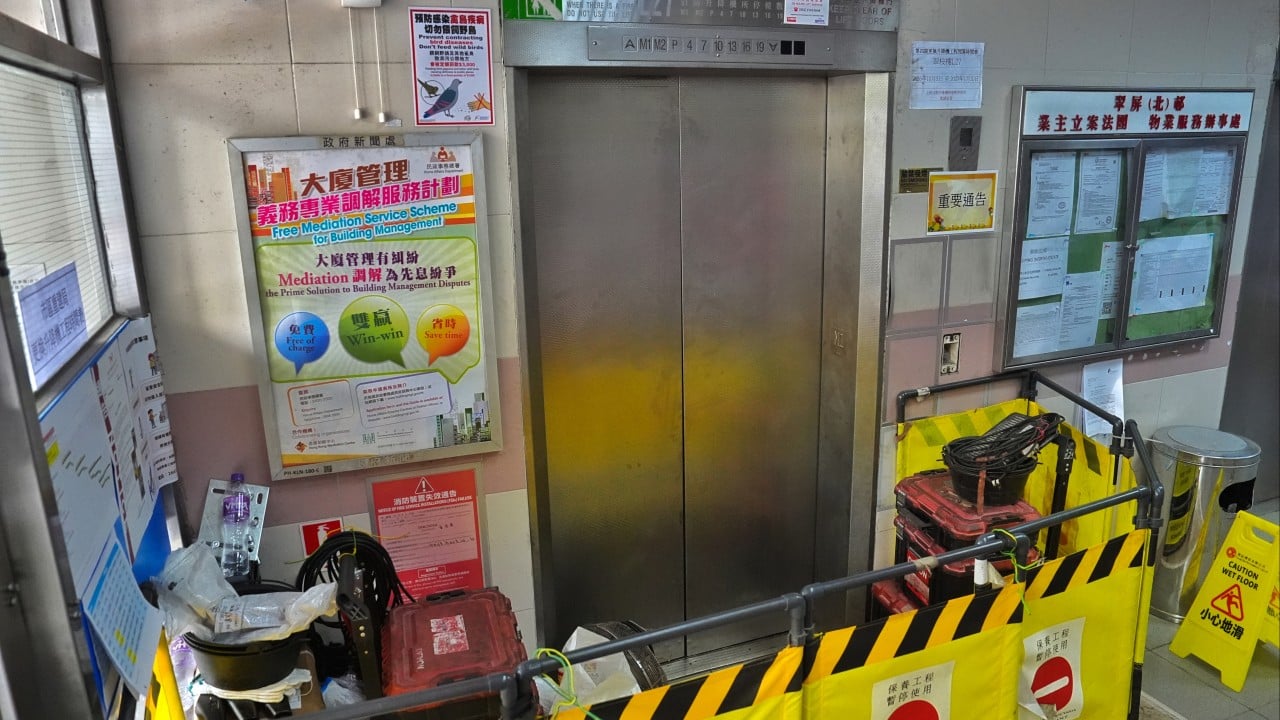
The chime is supposed to mean relief.
You step into a lift after a twelve-hour shift on a hospital ward, or with an elderly parent leaning heavily against your shoulder, or with grocery bags cutting into your palms, and the doors slide shut with a reassuring thud. You press a button. You trust gravity to behave, cables to hold, brakes to catch, and a stamp of approval somewhere in a government file to mean that someone with sharper eyes than yours has already checked the math.
In Hong Kong, a city built straight up into the clouds, that trust is not a luxury. It is the oxygen of vertical life. More than seven million people live, work, heal, and age inside towers where a broken lift does not merely inconvenience you—it strands you. And yet, over the autumn of 2026, a quiet, grinding series of failures exposed how fragile that trust can become when paper promises replace physical proof.
Four out of twenty-eight.
That was the number that made people stop and stare in August 2026 when word spread about the lifts in the new clinical block of Queen Mary Hospital. Twenty-eight lifts in a major clinical building, and only four working properly. Later investigations by the Development Bureau would show that all twenty-eight had suffered malfunctions or deviations to varying degrees—four of the shafts warped badly enough that walls had to be chiseled out and narrower cars brought in, while the remaining twenty-four needed work of their own. Within weeks, another scandal broke around Taizoom Elevator Company, with allegations of falsified safety declarations across dozens of lifts and inspections turning up missing fire-resistant door frames in close to ninety percent of checked installations.
Suddenly, a technical argument about licensing rules and audit trails became personal. Because when a lift shudders, stalls, or carries a signature that was never earned on site, the danger is never just mechanical. It is human.
What Happens When Trust Becomes a Shortcut
To see how a system bends long before a cable snaps, picture a hypothetical resident—let's call her Mrs. Chan—waiting beside a bank of hospital lifts with her husband, whose knees ache with every step and whose breathing grows shallow on stairs. (Note: Mrs. Chan and her husband are hypothetical characters created to illustrate the human stakes of lift reliability.) She watches a lift arrive, hesitates at a rough shudder or a stalled door, and wonders the same quiet question thousands of people ask themselves every day: If the light is green and the certificate is signed, why does this feel wrong?
That question goes straight to the heart of Hong Kong's debate over engineer accreditation and safety checks.
In a dense vertical city, authorities rely heavily on registered engineers and contractors to certify that installations meet safety standards. On paper, that division of labor makes sense. Inspectors cannot stand inside every shaft around the clock. When the system works, an accredited engineer acts as a clear-eyed gatekeeper—someone whose professional reputation and legal standing rest on walking the shaft, testing the doors, checking alignment, and refusing to sign off until every tolerance is right.
Roughly speaking, a lift shaft is like a tailored suit cut for a runner: if the fabric pulls crooked at the seam, the stride falters even before the runner hits full speed. (This is a metaphor comparing lift shaft geometry and guide rail alignment to tailored clothing.) At Queen Mary Hospital's new clinical block, the Development Bureau's investigation found shaft walls with serious dimensional and vertical deviations, unauthorized hacking into concrete that damaged reinforcing bars, crooked guide rails, and imbalanced cars. Worse still, investigators found that approvals and reviews had leaned on photos submitted by contractors rather than thorough on-site verification, while early warning signs had not been chased down firmly enough.
A stamp on a page does not straighten a crooked rail.
And when a signature comes too easily—or when oversight trusts self-certification more than physical inspection—the whole chain weakens. In September 2026, a former registered lift engineer tied to the Queen Mary Hospital case was sentenced to 160 hours of community service for improperly issuing a safety certificate and submitting false or misleading documents, with registration revocation following. By October and November, the Taizoom case and wider audit findings pushed experts and advisory committee members to argue openly that self-reporting and light-touch checks leave too much room for error.
The Invisible Stakes Behind Every Closed Door
It is easy for a scandal like this to get lost in acronyms and bureaucratic charts. The Architectural Services Department. The Electrical and Mechanical Services Department. Subcontractor tiers. Licensing boards.
None of those phrases carry weight until you picture the people behind them.
Think of a hypothetical junior lift technician—let's call him Ken—standing at the base of a shaft late on a humid evening, grease under his fingernails, listening to a faint metallic scrape that doesn't sound right. (Note: Ken is a hypothetical character introduced to ground the frontline pressures of installation and maintenance work.) Maybe he spots an irregular bracket cut or a tight clearance. Maybe he feels the pressure of a tight handover schedule from above. When corners are cut upstream, the person holding the wrench at the bottom is often the first to hear the warning and the last to be heard if nobody above wants bad news.
Now think of the other side of that door.
In a hospital, a delayed or unreliable lift is not just a facility headache; it slows movement between wards, clinical spaces, and care teams. In a residential block, a lift out of service traps older neighbors on upper floors or forces families to carry groceries and strollers up flight after flight. And when fire-resistant door frames are missing—as inspections in the Taizoom fallout found in nearly ninety percent of checked lifts—the risk reaches far beyond a stuck cab into fire compartmentalization itself.
Scary. Confusing. Easy to brush off until it happens to your building.
I have stood in crowded lobbies watching people stare at a dead indicator board while a line stretches toward the stairs, feeling that sudden spike of helplessness when a machine you count on every single day simply stops cooperating. You don't need an engineering degree to feel how fast convenience turns into vulnerability when vertical transport fails.
Why Accreditation Alone Cannot Carry the Weight
Calls to tighten engineer accreditation and review inspection regimes are not coming out of nowhere. When multiple cases surface close together—first the Queen Mary Hospital clinical block revelations, then the Taizoom enforcement wave and audit findings—people naturally ask whether the bar to earn and keep a signature is high enough.
Tighter licensing matters. If an engineer's stamp carries real authority, the standard to hold that credential has to match the weight of the public's safety. If someone signs off carelessly or falsifies records, the consequences have to be swift, unmistakable, and real.
Yet raising accreditation standards by itself will not solve everything if the surrounding system rewards speed over thoroughness.
Think of a lock on a heavy door. (This is a metaphor for safety oversight and verification layers.) A strong deadbolt is essential, yet if the door frame is warped or nobody checks whether the bolt actually engages before walking away, the lock cannot hold on its own. In Hong Kong's lift controversy, critics and advisors have pointed to several weak links working together: reliance on photos or self-declarations rather than independent physical checks, gaps between departments handling building construction and lift regulation, and uneven follow-through once flaws are spotted.
Adding an independent middle check—such as third-party inspection—has been floated by safety advisors as one way to strengthen what has often been described as an integrity-based regime. Requiring photo evidence during installation and stepping up audits are other steps already being examined or rolled out.
Still, any rule is only as strong as the habit behind it. Photos can be staged. Checklists can be ticked by rote. Real safety lives in someone physically looking at the shaft, testing the ride, checking the fire rating, and having the spine to say no, this isn't ready yet even when everyone wants the project signed off on time.
Rebuilding Confidence From the Shaft Up
Accountability has to reach higher than a single scapegoat on the ground.
When an entire bank of hospital lifts fails to run smoothly after handover, blaming one person—or treating the problem as a minor snag—misses the bigger picture. Public confidence doesn't come back because a press release promises a review. It comes back when people see clear answers to hard questions: Who approved the work? Why weren't early red flags resolved before handover? What changes so the next building doesn't repeat the same mistakes?
The pressure on engineers, contractors, and regulators right now is intense, and rightly so. Vertical cities run on unseen precision. Every time a lift glides quietly from floor to floor and the doors open cleanly onto the right landing, dozens of unseen parts—cables, counterweights, rails, brakes, sensors, fire doors, and human judgments—have all worked in harmony.
Quiet.
That is the sound a lift makes when nobody has to think about it—and the sound every resident, patient, and worker in a high-rise city deserves to hear when the doors pull shut.