At 3:00 AM in Brussels, the coffee tastes like burnt cardboard and the fluorescent lights hum with a frequency that vibrates behind your eyes.
For four years, that specific hour was when the phones on the fifth floor of the Berlaymont building started buzzing. A single post on a social media platform, typed out from a gold-plated residence across the ocean, could instantly invalidate six months of painstaking trade negotiations. Treaties drafted in quiet rooms by exhausted diplomats would suddenly wobble on the edge of a cliff.
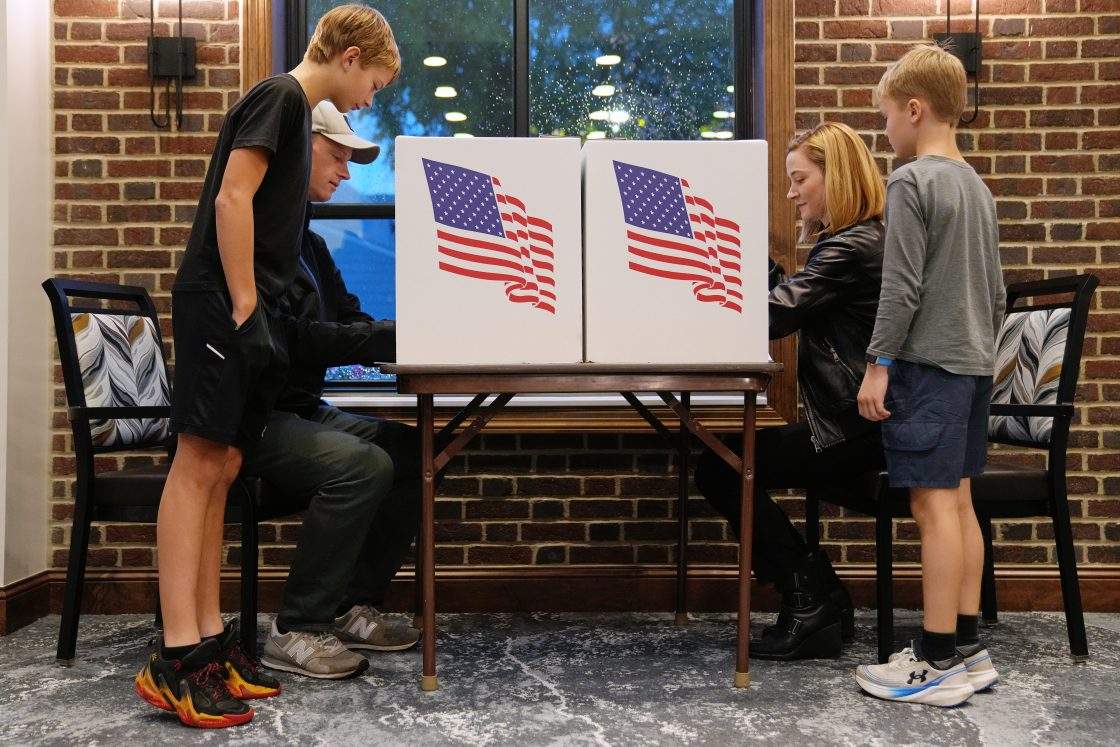
Then came a Tuesday in November. And by Wednesday morning, the maps on the television screens had bled a different color.
When the results of the American midterm elections solidified into a decisive Republican rout, the official statements from foreign capitals were masterpieces of diplomatic restraint. Prime ministers offered polite nods to the "vitality of American democracy." Foreign ministries issued boilerplate pledges to work with "all branches of the United States government."
If you only read the press releases, you would think the world barely blinked.
You would be wrong.
Behind closed doors, in the wood-paneled offices of Berlin, Ottawa, Paris, and London, the reaction was visceral. It was the collective, shaky exhale of people who had spent years bracing for an impact that had just been partially deflected. For the world leaders who had publicly clashed with Donald Trump—who had endured the nicknames, the tariff threats, and the sudden ambushes at international summits—the shifting balance of power in Washington was not merely an American domestic story. It was a sudden change in the weather system governing their own survival.
The Architecture of Anxiety
To understand why a congressional race in Ohio or Pennsylvania keeps a cabinet minister awake in Stockholm, you have to understand how modern alliances actually work. We tend to think of foreign policy as a grand chessboard moved by rational giants. In reality, it is closer to a high-wire act performed in a crosswind.
Consider a hypothetical scenario—let us call it the midnight tariff test—to see how fragile this balance truly is. Imagine you are the trade minister of a mid-sized European nation. Your country’s economy relies heavily on exporting precision machinery and automotive parts to the United States. Three hundred thousand jobs in your homeland depend on a predictable tax rate at American ports. Suddenly, because of a dispute over defense spending or a perceived slight at a press conference, the White House threatens a twenty-five percent tariff on your goods, effective Friday.
When one branch of the American government holds unchecked sway, you have nowhere to turn. You must either capitulate to demands that will ruin you politically at home, or watch your domestic manufacturing sector collapse in real time.
This was the precise trap that world leaders had navigated throughout the Trump presidency and feared would tighten if his party consolidated power. When voters handed control of Congress back to the opposition, the architecture of American power shifted back toward friction. And in diplomacy, friction is safety.
I remember standing in the press pen outside a NATO summit in Brussels years ago, watching the body language of the aides trailing behind the European delegations. Usually, diplomatic staffers project an aura of bored competence. That day, they looked like paramedics at a highway pileup. Every time a microphone was placed in front of the American president, senior officials from allied nations would visibly flinch, staring down at their phones to see if a thirty-year security guarantee was about to be questioned on live television.
That tension leaves a mark. It teaches leaders to hedge their bets, to whisper contingency plans in corridors, and to treat their oldest ally like a volatile force of nature rather than a steady partner.
The Art of the Diplomatic Poker Face
When news of the Republican losses broke, the leaders who had borne the brunt of Trump’s public ire faced a delicate psychological challenge. Showing too much glee was dangerous; a wounded bull is still a bull, and the American presidency retains immense unilateral power over foreign affairs, military deployments, and executive orders.
Yet, the subtext was unmistakable.
Look closely at how the veterans of these clashes responded. In Canada, where Prime Minister Justin Trudeau had once been labeled "dishonest and weak" by the White House following a tense G7 summit in Quebec, the reaction was measured but unmistakably confident. Ottawa had spent months grinding through brutal renegotiations of the North American Free Trade Agreement, enduring threats to its auto industry while trying to maintain a facade of neighborly warmth. With a divided Congress in Washington, the ability of the executive branch to tear up trade deals on a whim suddenly faced a steep legislative wall. The relief in Ottawa wasn't shouted from the rooftops; it was visible in the sudden ease with which Canadian officials discussed long-term cross-border infrastructure projects that had been gathering dust.
Across the ocean in Germany, the dynamic was even more personal. Angela Merkel had weathered years of relentless criticism over trade surpluses, Russian gas pipelines, and defense budgets. The famous photograph from the G7 summit—Merkel leaning forward over a table, hands planted firmly, locking eyes with a seated, arms-crossed Trump—had become the defining visual shorthand for the transatlantic rift.
For Berlin, the election rout meant something very specific: the return of institutional guardrails. A Democratic-controlled House of Representatives meant subpoena power, oversight committees, and a legislative body deeply committed to traditional alliances like NATO. Suddenly, the recurring nightmare that the United States might abruptly pull troops out of Europe or dismantle collective security agreements became vastly harder to execute.
Even in France, where President Emmanuel Macron had initially tried the charm offensive—complete with a Bastille Day military parade and a dinner at the Eiffel Tower—before pivoting to blunt critiques of nationalism, the shift in Washington validated a long-held European wager. Macron had spent months arguing that Europe needed "strategic autonomy" because it could no longer rely exclusively on Washington. The election results suggested that while America was deeply divided, the forces pulling it toward isolationism had hit a domestic ceiling.
Why Institutional Friction Matters to Everyone
You might wonder why a voter in Lyon or Toronto should care about the committee chairmanships of the United States House of Representatives. The connection seems abstract until you trace the money and the security guarantees down to street level.
Think of the American government like a massive, twin-engine cargo plane. When one political movement controls the presidency, the House, and the Senate, both engines are roaring at full throttle in the exact same direction. If the pilot decides to bank sharply toward protectionism or tear up an international climate accord, the plane turns violently, and everyone inside—along with every smaller plane flying in formation nearby—gets tossed around.
A midterm rout splits the controls. Suddenly, one engine is pulling left while the other pulls right. The plane levels out. It moves slower, certainly, and there is a great deal of noise and vibration in the cockpit. But for the passengers, and for the nations flying alongside it, slow and predictable is infinitely preferable to fast and erratic.
For world leaders, this split control restored a vital currency: time.
Under an unchecked administration, foreign ministries had to operate in permanent crisis mode, reacting to daily disruptions. With a divided Washington, legislative gridlock becomes a buffer. Trade wars require congressional cooperation to sustain; defense budgets must pass through skeptical committees; diplomatic appointments face intense scrutiny. Leaders who had spent their political capital putting out fires could finally look up from the smoke and think about the next five years rather than the next five hours.
The Lingering Shadows
Still, nobody in the diplomatic corps is popping champagne. If there is one lesson that seasoned statesmen have learned over the past decade, it is that political pendulums do not simply swing back to a comfortable center; they smash through the walls on either side.
The election results revealed a deeply fractured United States, not a healed one. While majorities in the House flipped, key Senate races and governorships held firm for the Republicans, proving that the populist movement reshaping American politics was far from a passing storm. For foreign leaders, this reality introduces a new kind of dread.
It is easy to prepare for a consistent adversary. It is agonizing to plan around a superpower whose entire worldview might invert every forty-eight months.
Consider the plight of a diplomat trying to negotiate a twenty-year environmental treaty or a long-term intelligence-sharing pact with Washington today. In the back of every mind sits an unspoken question: Will your signature still mean anything after the next election cycle?
When the United States pulled out of the Paris Climate Accord and the Iran nuclear deal, it didn't just abandon two policies; it fractured the baseline trust required for international agreements to function. Even when voters rebuke the administration responsible for those exits, the precedent remains lodged in the global bloodstream. Allies now know that any commitment made by an American president is effectively written in pencil, subject to erasure by the next occupant of the Oval Office.
This is the invisible scar left on international relations. The midterm rout slowed the momentum of unilateral disruption, giving world leaders breathing room and handing them powerful allies on Capitol Hill. Yet it could not restore the lost innocence of the post-Cold War era, when foreign capitals assumed that Washington’s basic orientation toward the world was permanent.
A Different Kind of Morning
History rarely turns on a single, cinematic speech. More often, it turns on the quiet recalibrations made in rooms where cameras are not allowed.
In the days following the American vote, the tone of international summits shifted subtly. The public handshakes were still stiff, and the fundamental disagreements over trade, defense spending, and climate policy remained firmly intact. Nobody expected the friction between Washington and its traditional partners to vanish overnight.
What changed was the leverage. The leaders who had stood their ground—who had absorbed the insults, weathered the tariff threats, and refused to bend their domestic policies to appease a volatile White House—suddenly found themselves standing on firmer earth. They had gambled that the American constitutional system, with all its messy checks and balances, would eventually reassert itself.
For one night in November, the system held.
Back in Brussels, as the autumn rain streaked the tall glass windows of the European Quarter, the 3:00 AM panic faded back into the ordinary, grinding work of governance. The phones stopped buzzing with emergency alerts. Trade lawyers went back to debating decimal points instead of survival strategies. And across the Atlantic, for the first time in years, the people tasked with holding the world's alliances together finally allowed themselves to drink their coffee while it was still hot.