The rain in Manila does not fall so much as it arrives, thick and warm, turning the asphalt along Roxas Boulevard into a black mirror that reflects the neon glow of shipping conglomerates and fast-food chains.
Inside a cramped fourth-floor office overlooking the bay, a logistics broker named Mateo—a composite character built from dozens of real freight forwarders operating across Southeast Asia—stares at two spreadsheets. One tracks container routes backed by Chinese state-linked port investments. The other tracks compliance paperwork for American retail contracts. Both represent money. Both represent the future of his thirty-person firm. Yet over the past few years, the friction between those two spreadsheets has grown heavier than the humidity outside his window. For an alternative perspective, check out: this related article.
Mateo does not read annual geopolitical indices. He does not care about the precise decimal points in the Lowy Institute’s Asia Power Index, the Sydney-based benchmark that measures the real-world clout of twenty-seven nations across the Indo-Pacific.
He feels the index instead. Further analysis on the subject has been provided by USA Today.
He feels it when a new deep-water terminal opens with Beijing’s financing while an American trade delegation cancels a scheduled port visit due to domestic budget gridlock. He feels it when tariffs shift overnight, forcing him to reroute electronics components through three different customs zones before sunrise. When analysts in Canberra and Washington debate why the United States’ lead over China in Asia has narrowed to its thinnest margin since the index began, Mateo sees the answer in the empty chairs at regional trade summits.
Power, in the Indo-Pacific, is rarely lost in a single dramatic battle. It erodes like a coastline—one tide, one tariff, one missed handshake at a time.
The Math of Diminishing Gravity
To understand why the numbers have shifted, you have to strip away the flags and look at how influence actually works in the twenty-first century. Think of geopolitical power not as a scoreboard, but as gravity. A massive star holds planets in orbit simply by being there, radiating heat, light, and predictable pull. For decades after the Second World War, the United States was the undisputed sun of the Pacific. Its navy kept the sea lanes open; its consumer market bought everything the region could manufacture; its diplomats wrote the rules of the road.
Then, slowly, another star began gaining mass.
The Lowy Institute’s annual assessment measures eight distinct dimensions of power: military capability, defense networks, economic capability, economic relationships, diplomatic influence, cultural influence, resilience, and future resources. For years, the gap between Washington and Beijing looked comfortable—a cushion built on unmatched military hardware, deep-rooted alliances with Japan, South Korea, and Australia, and the sheer inertia of the U.S. dollar.
Recent data tells a sharper story.
While the United States still holds the top spot overall, its lead over China has compressed to less than three points on a hundred-point scale. That is not a comfortable margin. That is a rounding error in historical terms. And the erosion did not happen because China suddenly invented a miracle weapon or conquered a neighbor. In fact, China’s own domestic economy has struggled with sluggish real estate markets, demographic headwinds, and wary foreign investors.
Beijing’s gains are largely relative. Washington did not get pushed off the pedestal; it stepped down.
"Missteps" is the polite diplomatic word analysts use to describe what happened. In plain language, it means self-inflicted wounds. When the world’s largest economy erects sweeping tariff walls that hit allies and rivals alike, when it steps back from multilateral trade agreements, and when domestic political paralysis makes long-term foreign commitments look temporary, smaller nations notice.
The View from the Shipping Lanes
I spent years reporting from port cities stretching from Busan to Surabaya, watching how regional leaders talk about great powers when the microphones are turned off. Publicly, ministers praise shared values and historic partnerships. Privately, they talk about reliability.
Imagine you are the trade minister of a mid-sized Southeast Asian nation—call her Ibu Sari, a hypothetical stand-in for the pragmatic technocrats running ministries in Jakarta, Hanoi, or Kuala Lumpur. Your primary job is not to pick a side in a superpower rivalry. Your job is to keep factory lights on, create four hundred thousand new jobs every year for young graduates, and build rail lines that don't flood during monsoon season.
One morning, two envoys walk into your office.
The first envoy represents Beijing. He brings a sovereign loan package, engineering teams ready to break ground on a high-speed rail corridor within six months, and access to the world’s largest middle-class consumer market—with zero lectures about your domestic governance. You know the debt terms carry hidden teeth. You worry about strategic dependency. You have seen what happens when ports get leased for ninety-nine years.
The second envoy represents Washington. She speaks eloquently about a free and open Indo-Pacific, rules-based order, and sustainable development. Then she explains that the United States cannot offer preferential market access because Congress will not pass new trade deals. She mentions that tariffs on your country’s solar panels or steel might rise next quarter depending on election-year politics in Pennsylvania or Michigan.
Who gets the infrastructure contract?
This is the invisible reality behind the Asia Power Index’s economic relationships metric, where China now dwarfs the United States across nearly every capital in the region. Trade is the lifeblood of Asia. When Washington walks away from comprehensive trade pacts—first abandoning the Trans-Pacific Partnership years ago, and later offering frameworks that lack actual market access—it surrenders the single strongest lever of peaceful influence it ever possessed.
Hard Steel Versus Soft Ties
Defenders of American strategy often point to the military ledger, and on paper, their confidence makes sense. The United States remains the premier military power in the Pacific. Its submarine fleet, stealth aircraft, and intelligence-sharing networks—bolstered by agreements like AUKUS with Australia and the United Kingdom, and expanded base access in the Philippines—give Washington a formidable deterrent.
Security matters. When Chinese coast guard vessels blast Philippine supply boats with water cannons near Second Thomas Shoal, Manila does not call Beijing for help; it calls Washington. Across the Taiwan Strait, American naval presence remains the primary reason a cold standoff has not boiled over into catastrophic war.
Yet military dominance has a fatal flaw when isolated from economic statecraft: you cannot eat an aircraft carrier.
Countries in Asia want security guarantees, certainly, but they spend three hundred and sixty-five days a year trading, building, and borrowing. When American engagement leans heavily toward defense pacts and weapons sales while retreating from commercial integration, regional leaders begin to view Washington as a security contractor rather than a comprehensive partner.
Consider what happens next.
As China’s economic gravity pulls neighboring economies closer, those nations become increasingly hesitant to fully align with American security initiatives, fearing economic retaliation from Beijing. Even staunch allies feel the squeeze. South Korean battery makers, Japanese automakers, and Taiwanese chip designers find themselves caught in a vise—pressured by Washington to decouple supply chains from China, yet dependent on Chinese raw materials and customers to stay profitable.
It is an exhausting, expensive tightrope walk. And every time Washington introduces abrupt export controls or unilateral subsidies without consulting its partners first, the rope shakes.
The Silence of Empty Chairs
Diplomatic influence—another core pillar of the Asia Power Index—is built on showing up. In Asian political culture, presence is policy. Attending summits, sending cabinet-level officials rather than junior deputies, and listening before lecturing carry immense weight.
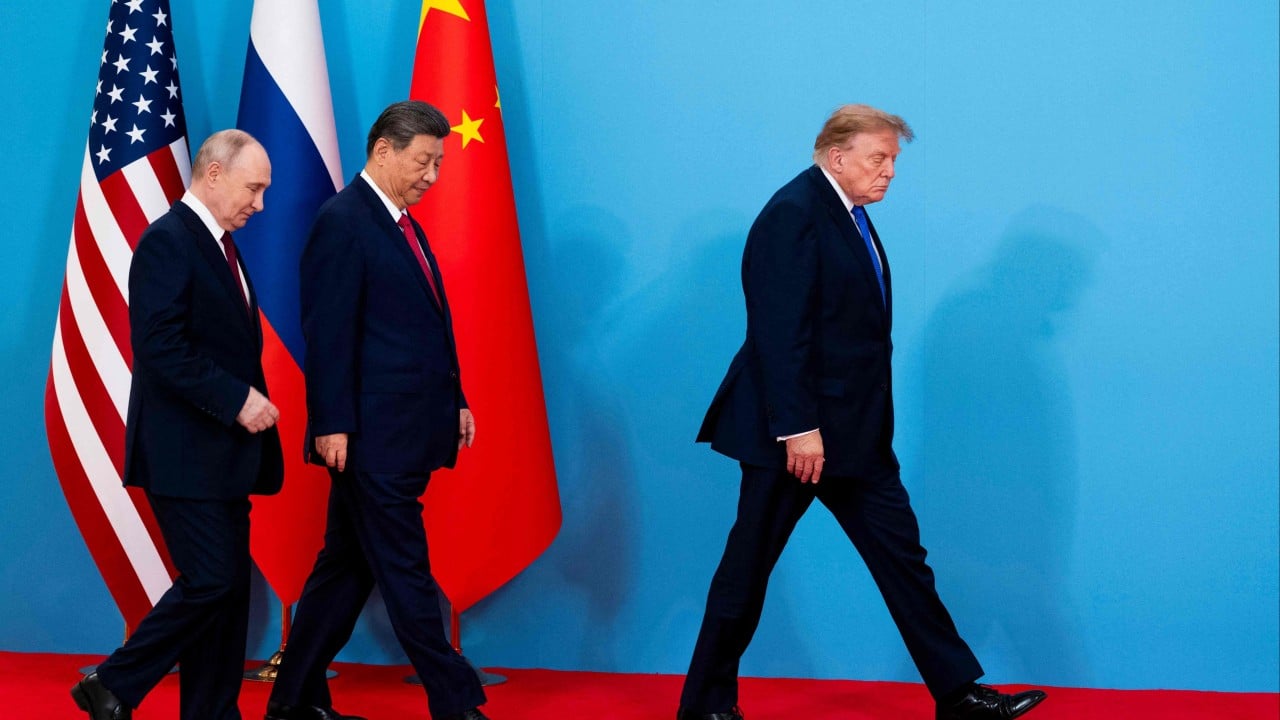
Over the past decade, domestic crises in the United States—government shutdowns, polarized elections, wars in Europe and the Middle East—have repeatedly pulled American attention away from the Pacific. Every time a president skips an East Asia Summit or cuts a regional tour short, photographs circulate in local newspapers showing an empty American chair next to a smiling Chinese leader.
Those photographs do more damage than a hundred white papers can repair.
I remember sitting in a hotel lobby in Phnom Penh during an ASEAN summit a few years back, listening to a veteran Southeast Asian diplomat nurse a lukewarm coffee. He had spent thirty years navigating between Washington and Beijing. When I asked him how he viewed the shifting balance of power, he didn't mention missiles or GDP growth rates.
He pointed to his phone. "China's foreign minister visited our capital three times this year," he said quietly. "Yours came once, stayed for six hours, and spent four of them talking about a crisis ten thousand miles away."
That is how influence evaporates. Not through defeat, but through distraction.
Where the Tide Still Turns
It would be easy—and deeply inaccurate—to write an obituary for American leadership in Asia. The same data that exposes Washington’s missteps also reveals massive, enduring reservoirs of strength that Beijing cannot easily replicate.
Look closely at the resilience and cultural influence metrics, and a different picture emerges. Despite political turbulence at home, the United States remains a magnet for the region’s brightest minds. Walk through the engineering departments of universities in Singapore, Seoul, or Bangalore, and ask students where they want to launch a startup or pursue a doctorate. Silicon Valley, Boston, and Seattle still dominate their ambitions. American capital markets remain the deepest and most transparent on earth. When global financial storms hit, money still flees toward the U.S. dollar, not the yuan.
More importantly, China has made plenty of missteps of its own.
Beijing’s aggressive posture in the South China Sea, its border clashes with India in the Himalayas, and its willingness to weaponize trade—slapping sudden bans on Australian wine, barley, and coal whenever Canberra displeased Beijing—have bred deep distrust across the region. Neighbors do not want to live under a regional hegemony where dissent invites economic punishment. They want balance. They want options.
In fact, most nations in the Indo-Pacific are desperately rooting for the United States to get its act together. They do not want Washington to leave; they want Washington to show up with a coherent, steady economic offer to match its military umbrella.
Back on Roxas Boulevard
As evening settles over Manila Bay, the rain finally slows to a drizzle. Mateo closes his spreadsheets, switches off his desk lamp, and steps out onto the balcony overlooking the darkened water. Out beyond the breakwater, anchor lights of dozens of cargo ships blink steadily in the humid air—vessels carrying grain from the American Midwest, semiconductors from Taiwan, garments from Vietnam, and steel from China.
None of those ships care about geopolitical theories. They move wherever costs are lowest, rules are clearest, and ports are open.
For seventy years, the United States prospered because it understood that simple truth: true power lies in building the system everyone wants to use, rather than demanding loyalty at the border. Narrowing margins on an annual index are not a verdict of inevitable decline. They are a warning flare fired across the bow—a reminder that in a region home to more than half the world's population, leadership is never inherited forever. It has to be earned every morning, one container, one handshake, and one kept promise at a time.