The salt air in Bridgetown does not care about diplomatic communiqués. It blows across Carlisle Bay the same way it did three centuries ago, carrying the scent of diesel from modern cruise ships and the faint, persistent ghost of cane sugar.
Stand on the wooden pier at dawn and watch the tide come in. Water hits stone. Again. And again. For generations, the political conversation between the United Kingdom and the nations of the Caribbean felt much like that tide—an endless, rhythmic collision where the ocean asks a question and the rock simply refuses to move. Building on this theme, you can also read: When Multiple Bears Attack in Canada The Brutal Truth Behind Rare Multi-Predator Fatalities.
Then, in October 2024, the rock shifted. Slightly.
During the Commonwealth Heads of Government Meeting in Samoa, the United Kingdom signed a joint statement acknowledging that the time had come for a "meaningful, truthful and respectful conversation" regarding the lasting harms of the transatlantic slave trade. To a casual observer scanning a news feed over morning coffee, the headline looked like standard diplomatic wallpaper. Words carefully laundered in the halls of Whitehall to offend no one and promise nothing. Analysts at The New York Times have shared their thoughts on this situation.
Look closer. Beneath that cautious phrasing lies a seismic crack in a centuries-old wall of silence.
The Architecture of a Ledger
To understand why a single paragraph in a Commonwealth communiqué made headlines from Kingston to London, you have to stop thinking about history as a closed book and start seeing it as an open balance sheet.
Consider a hypothetical scenario to make the mechanics clear. Suppose a wealthy family builds a sprawling industrial empire in the nineteenth century using money stolen directly from a neighboring town. The town is left impoverished, its infrastructure gutted, its schools underfunded for generations. A hundred and fifty years later, the descendants of the wealthy family live in manicured estates, funding prestigious universities and museums, while the descendants of the stolen-from town still struggle with failing hospitals and chronic debt. If the wealthy family finally agrees to sit at a table and discuss the theft—even without signing a check—the psychological and legal reality between the two sides changes overnight.
This is not a metaphor conjured out of thin air. It is the literal economic architecture of the British Empire.
Between the sixteenth and nineteenth centuries, British ships transported an estimated 3.1 million Africans across the Atlantic. Hundreds of thousands died in the suffocating darkness of the Middle Passage before ever seeing land. Those who survived—and their children, and their children's children—were worked to death on plantations across Jamaica, Barbados, Trinidad, and Guyana, generating vast oceans of capital that financed the Industrial Revolution, built British railways, insured ships at Lloyd's of London, and constructed stately homes that tourists still pay twenty pounds to tour on sunny afternoons.
When Britain finally abolished slavery across most of its empire in 1833, it did not pay a single penny to the people who had been enslaved. Instead, the British government borrowed £20 million—roughly 40 percent of its entire national budget at the time—to compensate the enslavers for the loss of their "property."
Think about that number. Pause and let it sit in your chest.
The debt was so massive that British taxpayers did not finish paying off the loan until 2015. Meaning that modern British citizens—including the Black descendants of the very people who were enslaved—were paying taxes into the twenty-first century to compensate the families who owned their ancestors.
The Weight of the Unspoken
Growing up with the legacy of that ledger does something strange to your sense of gravity. You walk through cities built on sugar and blood, and everywhere you look, plaques celebrate the philanthropists and merchants while erasing the human fuel that kept their engines running. You learn early on that polite society prefers its history sanitized, framed behind velvet ropes, safely dead.
For decades, the official British position on reparatory justice was a masterclass in polite evasion. Prime Ministers expressed "deep sorrow" or "regret," words chosen with surgical precision by government lawyers to avoid anything resembling a formal apology, which legal advisers warned might open the floodgates to binding financial liability under international law.
When Caribbean leaders formed the CARICOM Reparations Commission in 2013, drafting a ten-point plan that called not merely for cash transfers, but for debt cancellation, public health programs, educational investment, and psychological rehabilitation, London mostly looked the other way.
Why did the stance change in Samoa?
Politics is rarely moved by sudden attacks of conscience alone. Pressure builds from below until the dam gives way. Across the Caribbean, nations have been steadily severing their remaining constitutional ties to the British Crown. Barbados became a republic in 2021. Jamaica has signaled its intention to follow suit. Meanwhile, global institutions—from the Church of England to the Guardian newspaper and major British banks—have conducted their own forensic audits, uncovering their direct financial links to chattel slavery and pledging hundreds of millions of pounds in restorative funds.
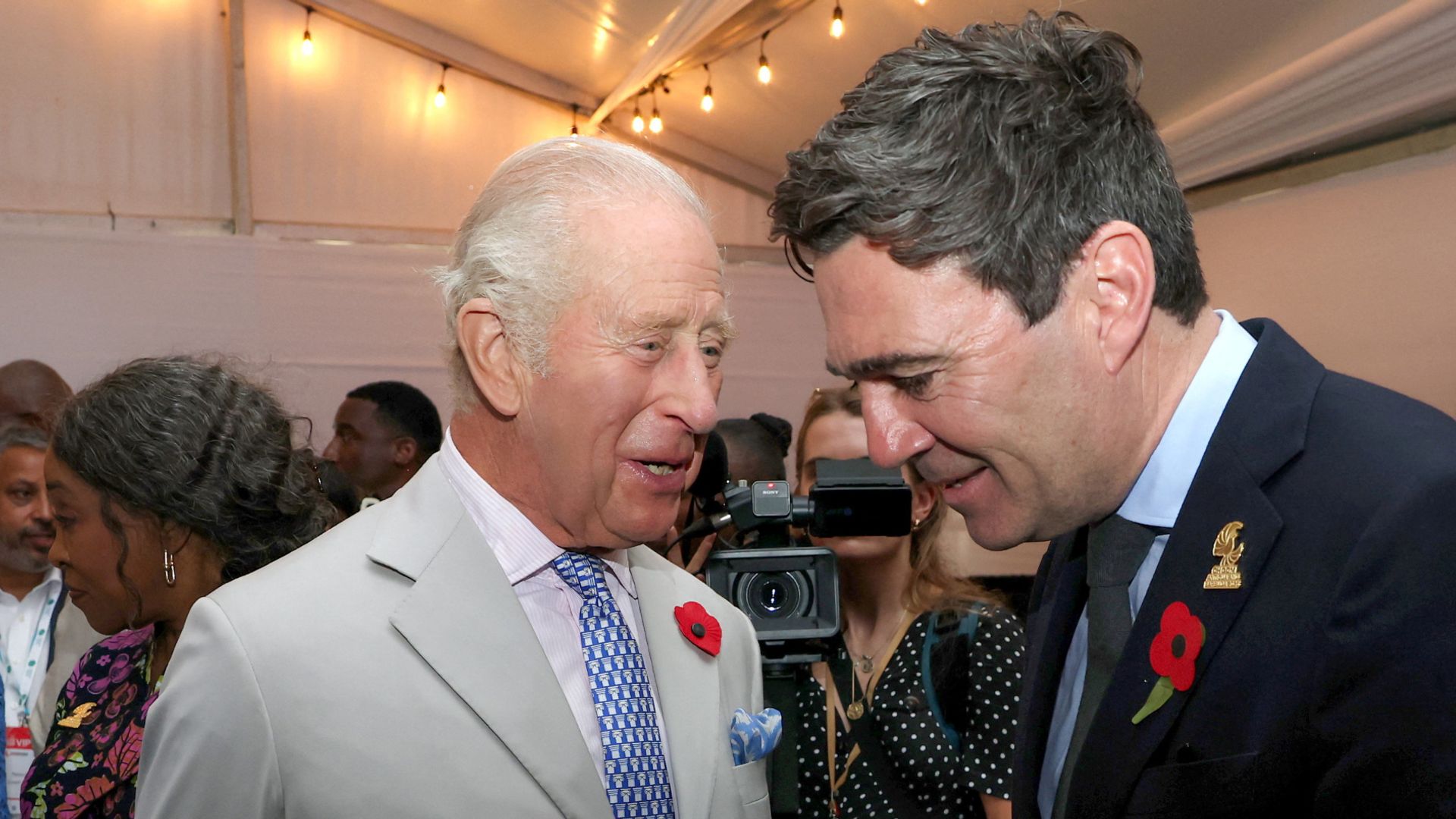
By the time Prime Minister Keir Starmer boarded his flight to Samoa, the British government found itself increasingly isolated. Caribbean leaders, backed by African nations and a growing chorus of historians and economists, refused to let the issue be quietly buried beneath discussions of climate finance and trade tariffs.
What "Talks" Actually Mean
Listen closely to the voices in the room when the communiqué was drafted, and you hear two very different expectations colliding.
On the British side, Downing Street moved quickly to manage domestic political fallout. Ahead of the summit, Starmer's spokespeople insisted that reparations were "not on the agenda" and ruled out direct financial payouts. The British framing emphasized looking forward—focusing on climate change resilience, green energy transitions, and economic partnerships rather than litigating the past.
Yet the final text, signed by all 56 member states, explicitly noted calls for discussions on reparatory justice and agreed that the time had come for a "meaningful, truthful and respectful conversation" on the enduring impact of the slave trade.
Notice the tension there.
One side says: We are not writing a check, and we are not apologizing.
The other side hears: You have finally admitted that the harm is real, ongoing, and worthy of formal diplomatic negotiation.
In diplomacy, getting an issue onto the official agenda is half the battle. Once an institution acknowledges that a wound exists, it can no longer pretend the patient is imagining the pain.
Beyond the Caricature of a Check
Whenever the word "reparations" enters a public debate, the conversation almost immediately curdles into a simplistic shouting match. Critics picture a government bureaucrat writing individual checks to millions of people based on dubious ancestry tests, or draining public hospitals in Manchester to fund vanity projects overseas.
That caricature misses the entire point of what Caribbean nations are actually asking for.
Walk into a clinic in Kingston or Bridgetown, and you will see the biological footprint of slavery written into the medical charts. The Caribbean suffers from some of the highest rates of hypertension and type 2 diabetes in the world. Epidemiologists and historians trace this crisis directly to the nutritional trauma of plantation life—centuries of surviving on salted fish, discarded animal parts, and refined sugar, combined with the generational physiological stress of captivity.
Look at the economic balance sheets of these small island states, and you see another ghost. Many Caribbean nations are trapped in crippling cycles of sovereign debt owed to Western financial institutions, forced to spend more on interest payments than on schools or hurricane defenses. They entered independence in the mid-twentieth century with economies deliberately engineered to export raw commodities and import everything else, stripped of local manufacturing and starved of infrastructure investment.
The CARICOM ten-point plan does not ask for a blank check. It asks for:
- Debt relief so small island nations can invest in their own survival as rising sea levels threaten their coastlines.
- Public health investments to combat the chronic illnesses rooted in plantation diets and generational trauma.
- Educational and cultural institutions to preserve heritage and close literacy gaps left by centuries of deliberate under-education.
- Technology transfers to help developing economies compete in a digital world built with capital extracted from their soil.
This is not about punishing a teenager in Birmingham for the crimes of a nineteenth-century ship captain. Nobody alive today committed the crime. Nobody alive today was held in chains on a sugar plantation in 1820.
This is about institutions. The British state is a continuous legal entity. It honored the debt owed to enslavers for 182 years because nations honor their institutional obligations across centuries. The question Caribbean leaders are asking is simple, piercing, and impossible to dodge forever: if a state's debts to the powerful are sacred across generations, why are its debts to the brutalized treated as expired?
The Uncomfortable Mirror
Admitting uncertainty is necessary here, because nobody knows where this road leads.
Diplomatic talks can easily become a graveyard where urgent moral demands go to die in subcommittees. History is littered with commissions that produced thick, eloquent reports which gathered dust on parliamentary shelves while nothing changed on the ground. There is a very real risk that "meaningful conversation" becomes a polite euphemism for running out the clock.
There is also fierce resistance within Britain itself. Surveys consistently show that a majority of the British public opposes financial reparations, often viewing the demand through the lens of current economic hardship—struggling families wondering why their tax money should go abroad when local councils are going bankrupt and waiting lists for doctors stretch for months. Ignoring that anxiety would be dishonest. People feel squeezed, fearful, and exhausted by constant culture wars.
Yet pretending the past is dead does not make it disappear. It merely leaves the bill unpaid while interest continues to compound in the form of global inequality, climate vulnerability, and deep cultural distrust.
The Tide Returns
Think back to that wooden pier in Bridgetown at dawn.
For centuries, the ships left these harbors loaded with sugar, rum, and the stolen lives of millions, sailing northeast toward Bristol, Liverpool, and London. The wealth flowed one way. The silence flowed the other.
Now, for the first time in modern history, the British government has put its signature on a document acknowledging that the silence is over. No money has changed hands. No formal apology has been uttered from the dispatch box in the House of Commons. The door is not wide open.
It is cracked by half an inch.
And as anyone who has ever stood beside the ocean knows, once water finds a crack in the stone, it never stops pushing until the wall comes down.