The fluorescent lights of a suburban gymnasium buzz with a low, mechanical hum that seems to vibrate right behind your teeth. Outside, a chill November wind pushes dead oak leaves across the asphalt parking lot. Inside, the air smells faintly of floor wax, damp wool coats, and the sharp, metallic tang of freshly printed paper ballots.
You step up to the plywood booth. You pick up the felt-tip pen tethered to the divider by a cheap plastic chain. For three minutes, the entire roaring machinery of American cable news, algorithmic outrage, and billion-dollar campaign ad buys shrinks down to a single piece of cardstock and the quiet scratch of ink. Meanwhile, you can read other events here: Stop Obsessing Over the 2024 Election Map Because It Is Lying to You.
For years, pundits have treated the American voter like a predictable algorithm—a collection of demographic checkboxes that reliably spit out the same partisan outputs every two or four years. If you live in a certain zip code, watch a certain network, or work a certain job, the political class assumes they already own your ink.
They were wrong. To see the full picture, we recommend the recent analysis by The New York Times.
In the wake of the 2026 midterm elections, a radically different picture has emerged from the precinct exit polls and kitchen-table interviews across the country. Beneath the loud, theatrical surface of partisan warfare, millions of Americans quietly staged a pragmatic revolt. They did not walk into those gymnasiums and church basements driven by blind loyalty to a party banner. They walked in carrying grocery receipts, mortgage statements, and a deep, simmering exhaustion with the chaos at the top of the ticket.
The Myth of the Monolith
To understand why voters pulled the lever the way they did, you first have to throw out the caricature of the partisan zealot.
Consider a hypothetical scenario that played out in tens of thousands of households across battleground states like Pennsylvania, Michigan, and Arizona this autumn. Meet Elena, a forty-two-year-old physical therapist living in a mid-sized Ohio town, and Marcus, a fifty-five-year-old independent logistics contractor in suburban Georgia. Neither of them has ever attended a political rally. Neither of them posts manifestos on social media.
For Elena, politics used to be background noise, like the hum of a refrigerator—something you only noticed when it broke. In 2024, she voted for change, hoping a shake-up in Washington would bring down the relentless climb of everyday expenses. Two years later, standing in aisle four of her local supermarket, she stared at a carton of eggs and a pack of chicken breasts, doing mental arithmetic that felt less like shopping and more like triage.
"I don't care about the speeches anymore," she might tell a pollster outside her precinct, her breath fogging in the morning air. "I care that my property taxes went up, my health insurance deductible doubled, and the people in charge are spending their time picking fights on television instead of fixing the math."
Elena is not an outlier. According to post-election data from the Pew Research Center and national exit polling, the single largest bloc of decisive swing voters in 2026 did not shift because of an ideological conversion. They shifted because of what economists call the "affordability squeeze"—the stubborn gap between what people earn and what it costs simply to exist in modern America.
The Weight of the Receipt
When politicians talk about the economy, they love to cite macroeconomic indicators. They point to gross domestic product growth, quarterly employment figures, and cooling inflation rates. To a politician standing behind a podium, a drop in the inflation rate from four percent to two-and-a-half percent looks like a victory lap.
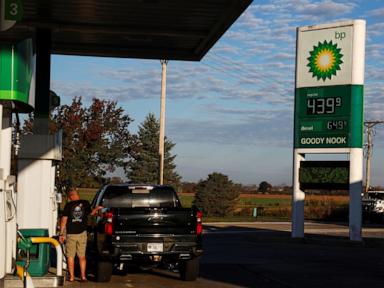
To a family sitting at a dining table on a Sunday night with a stack of bills, a lower inflation rate just means prices are still going up, only slightly slower than they were last year. It does not put the twenty dollars back into your checking account that disappeared at the gas pump on Tuesday.
This disconnect is the invisible fault line running straight through the American electorate. Think of the national economy like a massive cargo ship. When the captain turns the wheel, the instruments on the bridge register the shift immediately. Down in the engine room, though, the heat is still suffocating, and the hull takes miles to actually change direction. Voters live in the engine room.
In interviews conducted across swing districts from Nevada to North Carolina, voter after voter echoed the same quiet fury. They spoke about the cost of childcare rivaling a second mortgage. They talked about young adults moving back into childhood bedrooms because starter homes had vanished behind a wall of high interest rates and corporate real estate buyouts.
For many who had previously supported President Donald Trump’s economic promises, the patience simply ran out. The tariffs, the trade brinkmanship, and the constant rhetorical volatility began to feel less like a bold negotiation strategy and more like a direct tax on their household budgets. When voters looked at their ballots this November, they were not grading a political philosophy. They were auditing a balance sheet.
Exhaustion as a Political Force
Yet money was only half the story. The other half was harder to quantify on a spreadsheet, though you could hear it in the cadence of people’s voices when they stepped away from the voting booths.
It was fatigue. Pure, bone-deep fatigue.
For more than a decade, American civic life has operated at a permanent, screaming fever pitch. Every Tuesday brings a new constitutional crisis, a fresh social media firestorm, or an existential warning that the republic will collapse by Friday if you do not donate five dollars right now.
Human beings are not wired to live in a state of perpetual emergency. In psychology, when an alarm bell rings continuously without stopping, the brain eventually stops treating it as a signal and starts treating it as a nuisance. You do not run for the exit; you just try to find a way to turn off the noise.
For a massive swath of independent and moderate voters—and even a surprising number of traditional conservatives—frustration with Donald Trump had less to do with a sudden embrace of progressive policy and everything to do with a desperate craving for quiet competence.
Consider Marcus, our hypothetical contractor in Georgia. Marcus voted Republican for twenty years because he believed in lower taxes, deregulation, and predictable governance. Over the past two years, however, watching the administration’s erratic policy swings, public feuds with longtime allies, and relentless focus on personal grievances began to grate on his sense of order. To Marcus, running a business requires stability. You cannot plan five years ahead when the rules of trade and governance change at two o'clock in the morning via a social media post.
"I didn't vote for the Democrats because I suddenly fell in love with their platform," Marcus explains, leaning against the tailgate of his pickup truck outside the precinct hall. "I voted against the circus. I just want adults in the room who treat the job like a serious responsibility instead of a reality show."
This sentiment—voting as a brake pedal rather than a gas pedal—has become one of the most powerful, underestimated forces in modern American elections. Historically, midterm elections almost always punish the party in power. Since the Civil War, the president’s party has lost seats in the House of Representatives in nearly ninety percent of midterm cycles. In 2026, that historical gravity combined with an acute exhaustion over executive chaos to produce a quiet but unmistakable rebuke.
The Illusion of the Culture War
While cable news panels spent thousands of hours dissecting hot-button cultural skirmishes, actual voters were quietly sorting their priorities with ruthless pragmatism.
This is where the modern political media apparatus consistently gets the country wrong. Outrage generates clicks, so the loudest voices on the fringes get amplified until they sound like the majority. If you only watched television or scrolled through algorithmic feeds, you would assume every American neighbor was locked in a bitter ideological blood feud over school board curricula and celebrity endorsements.
Step into a real precinct on Election Day, and the illusion dissolves.
In states where reproductive rights, healthcare access, and minimum wage measures appeared directly on the ballot alongside federal candidates, voters frequently split their tickets in ways that baffled ideological purists. A suburban mother in Arizona might vote for a moderate Democrat for Congress out of frustration with Trump's rhetoric and healthcare costs, while simultaneously voting for a tough-on-crime ballot initiative backed by local Republicans. A union machinist in Michigan might back a populist economic measure while rejecting a state-level tax hike.
Voters are not inconsistent. They are nuanced. They are holding multiple, competing truths in their heads at the exact same time because that is what real life requires.
When you have to pay for a parent’s memory care, negotiate a lease renewal, and figure out why your electric bill jumped forty percent in July, ideological purity becomes a luxury you cannot afford. You start looking for problem-solvers, not warriors.
The Architecture of Distrust
To understand the depth of this moment, you have to look at how deeply institutional trust has eroded—and how voters are adapting to survive without it.
Forty years ago, most Americans trusted that the basic guardrails of the economy and government would hold regardless of who won an election. Today, that baseline faith is gone. Poll after poll from Gallup shows trust in Congress, the presidency, the media, and major corporations hovering near historic lows.
When people no longer trust the institutions to look out for them, their voting behavior turns defensive. They stop voting for grand visions of a shining city on a hill. Instead, they use their ballot like a shield.
It is messy. It is often contradictory. And honestly, it is terrifying to watch if you care about the long-term health of democratic norms. There is no guarantee that punishing one party today will force either party to actually fix the structural problems driving the affordability crisis tomorrow. Voters know this. They are not naive. When you talk to them in diner booths and grocery store parking lots, you hear a sobering realism. They know a single election will not magically cut their grocery bill in half or restore civility to Washington overnight.
Yet they still show up.
They stand in the rain outside elementary schools. They take an hour off from shift work, losing wages they desperately need, just to stand in line behind a velvet rope. They put on their reading glasses, squint at the tiny print on the ballot, and carefully fill in the ovals.
What the Pundits Missed
In the days following the election, the post-mortem analyses poured out of Washington. Strategists argued over messaging failures, turnout models, and demographic shifts among suburban women and working-class men. They dissected the data with surgical precision, looking for the magic formula that would unlock the next cycle.
Almost all of them missed the simplest, most human truth sitting right in front of them.
The American voter is not a pawn to be moved across a chessboard. They are not an audience waiting to be entertained by the sharpest insult or the slickest commercial. They are tired, resilient, deeply practical human beings trying to build a decent life in a world that feels increasingly expensive and unstable.
When the political class forgets that—when leaders mistake noise for strength, or treat economic pain like a talking point—the voters eventually deliver their verdict. They do not need a megaphone to do it. They do not need a trending hashtag.
They just wait for November, walk into a quiet room smelling of floor wax and damp wool, pick up a cheap plastic pen, and draw a line in the dark.