Thirty-five dinars.
That was the price of a jug of engine oil in 2018 when a Tunisian taxi driver pulled up to change what kept his car alive. Today, that same purchase hovers near one hundred dinars—a jump of roughly 186 percent. If you sit in the back seat of a yellow cab winding through Tunis at dusk, listening to the rattle of an aging chassis and the low hum of the radio, you do not hear a macroeconomic report. You hear a man calculating how many extra hours he must stay behind the wheel just to end the week where he started.
Seven years into the presidency of Kais Saied, that arithmetic defines everyday life far more clearly than any ministry press release. When Saied arrived in 2019, exhausted citizens were desperate for an end to political paralysis and elite corruption. He offered something intoxicating in its simplicity: Tunisia was not poor, its wealth had merely been stolen and hoarded, and recovering it—paired with self-reliance, community enterprises, and a firm break from external financial dictates—could set the country right. After seizing sweeping powers in July 2021, he gained the latitude to test that vision without compromise.
Seven years later, the ledger tells a complicated, sobering story. On paper, there are signs of pulse and endurance. In living rooms, markets, and neighborhoods, however, people are still paying the quiet price of standing still.
Why Headline Numbers Rarely Match the Grocery Bag
Economists love tidy headlines. A 2.3 percent year-on-year rise in gross domestic product in the second quarter of 2026. Annual inflation easing to 5.6 percent by September 2026, down from earlier highs. A Central Bank key interest rate trimmed twice to 7 percent. Overall unemployment edging down to 14.9 percent in mid-2026 from its pandemic peak of 17 percent.
Those figures are real, and dismissing them outright would be dishonest. A country weathering global shocks while keeping its lights on and posting modest growth is not collapsing in slow motion.
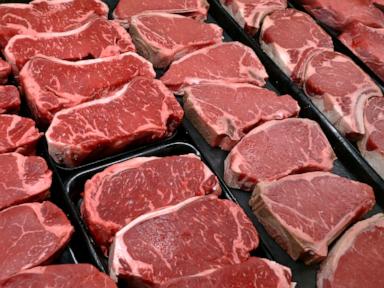
Yet a number can be accurate and still miss the human truth. Think of inflation as a rising tide rather than a single wave. Even if the tide rises more slowly this month than last month, the water already sitting on your porch has not gone down. Food and beverage prices climbed 8.4 percent year on year, with poultry up 16.5 percent, fruit up 16.3 percent, and lamb up 14.6 percent. Between 2021 and 2026, average annual inflation ran around 8.1 percent, noticeably hotter than the 6.8 percent average between 2015 and 2021.
To make that tension concrete, consider a hypothetical family—let us call them the Ben Alis in a modest apartment outside the capital. Neither parent is out of work, and on paper their household income has crept upward slightly over the years. Still, every trip to the market feels like a negotiation they are losing. When meat, fruit, and basic staples eat up a larger share of every paycheck, there is nothing left over for a broken washing machine, a dentist visit, or a cushion against the next surprise. Their wages did not vanish; their purchasing power simply shrank behind their backs.
That gap between macro-level stability and kitchen-table strain is the central paradox of Saied's seven years. Growth exists, but it has felt too thin, too uneven, and too slow to lift ordinary households out of survival mode.
The Weight of Debt and the Squeeze on Tomorrow
How does a government try to protect households while keeping a strained economy afloat? Often, by borrowing and subsidizing—and paying a steep price later in lost room to maneuver.
Public debt climbed sharply from 67.8 percent of GDP in 2019 to 84.9 percent in 2024, before edging down to 82.1 percent in 2025, according to Finance Ministry figures. External debt also swelled substantially during Saied's first term as the state navigated global turbulence and turned away from traditional international lending conditions. To bridge financing gaps at home, domestic borrowing rose to around 7 billion dinars in both 2024 and 2025, then jumped to 11 billion dinars at the start of 2026.
Every dinar a government borrows at home competes for oxygen in the same financial pool that local businesses need to expand, hire, and buy equipment. Picture a shared water tank supplying an entire town. If the municipality opens a massive pipe to cover today's operating bills and energy subsidies, the pressure drops at the taps meant for orchards, workshops, and small factories.
The numbers illustrate that squeeze vividly. In the first half of 2026 alone, fuel subsidies reached roughly 2.427 billion dinars—about $826 million, nearly half of the full-year allocation under the Finance Law. Meanwhile, public investment spending totaled around 1.665 billion dinars, or roughly $567 million, over that same six-month span. When international energy prices swing above budgetary assumptions, protecting fuel and basic goods absorbs vast sums of money that cannot simultaneously build modern infrastructure, water systems, or new industries.
Supporters of the administration argue that Saied inherited deep structural rot, entrenched monopolies, and a fragile post-2011 political order, and that confronting those problems head-on inevitably triggers friction and pushback. Critics, including former officials, counter that promises of recovering plundered funds, launching community-owned companies, and relying on domestic self-sufficiency have fallen far short of delivering broad prosperity—leaving citizens confronting water shortages, tight credit, and persistent hardship.
Both sides are pointing at real pieces of the puzzle. What remains fiercely contested is whether the strategy has built durable foundations or merely bought time at high cost.
When Promise Collides with Possibility
Nowhere is the unfinished business of seven years more visible than among young people.
While overall unemployment eased to 14.9 percent in the second quarter of 2026, youth unemployment among those aged 15 to 24 stood at a staggering 35.4 percent, and graduate unemployment reached 26.6 percent. Think about what those percentages mean in human terms. Years of studying, late nights over textbooks, family sacrifices, and hopes of adulthood collide with a job market that simply does not have enough rungs on the ladder.
Imagine a hypothetical graduate—say, Salma, holding a university degree and scrolling through job listings late at night while her parents worry aloud about utility bills. Each rejection letter or unpaid internship feels less like an individual setback and more like a sealed door. When young adults cannot find steady work, they delay marriage, delay starting a family, or start looking across the sea for a future that feels out of reach at home.
I will be candid: watching a country wrestle with this kind of stagnation is disorienting, even from the outside. On one hand, you can see why ordinary people once cheered a leader who spoke plainly against corruption and foreign pressure. Anger at self-serving elites is not an invention; it grew out of years of frustration. On the other hand, righteous anger is not a balance sheet. A nation cannot pay wages, fund clinics, or create tens of thousands of skilled jobs out of slogans alone.
Anti-speculation campaigns and tighter state oversight were meant to curb hoarding and protect consumers, yet heavy-handed enforcement can also rattle supply chains and make private entrepreneurs hesitant to take risks. Self-reliance sounds noble in speeches, but in an interconnected world where energy, grain, and capital cross borders daily, going it alone carries steep friction costs when global markets turn rough.
The Ledger After Seven Years
So what has Kais Saied actually achieved economically in seven years?
He has kept the state apparatus standing through turbulent years, steered headline inflation down from its sharpest spikes, nudged overall unemployment below pandemic highs, and insisted on a model centered on sovereignty and domestic control rather than external austerity prescriptions. Those are not nothing, and supporters rightly note that external shocks—from global price swings to regional instability—have complicated every calculation.
Yet enduring a storm is not the same as reaching calm water. Public debt remains heavy. Subsidies and debt service claim huge shares of fiscal space while public investment remains constrained. Food prices still pinch families, credit feels tight, and more than a third of young Tunisians remain without work.
Back in that yellow taxi, the meter ticks softly as traffic inches forward. The driver does not need a lecture on fiscal space or debt-to-GDP ratios to know what his seven years have felt like. He knows the cost of keeping his engine turning, the weight of the hours required to bring home enough dinars, and the quiet question hanging over the dashboard: how much harder can a person work just to stay in place?