Silence.
In a coastal shipping office overlooking the Persian Gulf, the hardest sound to bear isn't the distant rumble of naval artillery, nor the shrill whine of an air-raid siren cutting through the humid afternoon heat, but the sudden, suffocating absence of diesel engines idling in the harbor. Meanwhile, you can find other stories here: Why Iran Actually Loves the Neither War Nor Peace Trap It Claims to Hate.
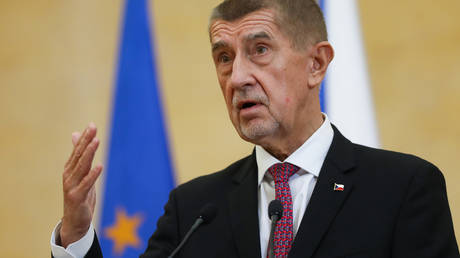
For months, the world has watched the escalating conflict between the United States and Iran through a prism of cold, antiseptic headlines. Pundits dissect missile trajectories on glowing studio maps. Diplomats issue carefully calibrated warnings from air-conditioned podiums in Washington, Geneva, and Tehran. And in the background, a steady drip of live-blog updates reduces a grinding geopolitical collision into bullet points—such as recent reports from The Indian Express noting that a senior Iranian member of parliament demanded the United States accept Tehran’s conditions to bring the war to an end.
On paper, that statement reads like standard wartime posturing. A legislator speaks; a superpower weighs its options; the news cycle spins forward. To explore the full picture, check out the excellent analysis by USA Today.
Yet beneath the diplomatic phrasing lies a human reality that rarely makes the ticker. When a senior lawmaker in Tehran lays down non-negotiable terms for peace, those conditions do not exist in a vacuum. They reverberate immediately in the cramped wheelhouses of container ships anchored outside Fujairah, in the anxious kitchens of families in Isfahan rationing cooking oil, and in the quiet calculations of parents in Norfolk, Virginia, staring at a phone screen waiting for a text message from a destroyer stationed five thousand miles away.
To understand what those conditions actually mean—and why the gap between Washington and Tehran feels so agonizingly wide—you have to step away from the briefing rooms and look at the invisible architecture of modern conflict.
The Anatomy of an Ultimatum
Consider a hypothetical scenario that plays out every time two entrenched adversaries reach a stalemate. Picture two chess players sitting across a board where half the pieces have already been swept onto the floor. One player, commanding overwhelming technological reach and global financial leverage, insists the game ends the moment the other stops advancing. The second player, battered by economic isolation yet deeply entrenched on home terrain, refuses to clear the board unless the rules of the tournament are rewritten entirely—demanding the lifting of penalties, the withdrawal of neighboring monitors, and formal recognition of their sphere of control.
In the real-world standoff between the United States and Iran, those abstract chess moves translate into concrete, fiercely contested demands. According to statements from Iranian parliamentary officials reported in regional coverage, Tehran’s framework for halting hostilities hinges on far more than a temporary pause in gunfire. Iranian lawmakers and security officials have consistently tied any cessation of conflict to structural concessions: an end to U.S. military operations and regional force deployments, the dismantling of sweeping economic sanctions that have strangled Iran’s currency and banking sector, and binding guarantees against future strikes on Iranian territory or allied infrastructure.
From Washington’s perspective, reported across decades of diplomatic exchanges and defense briefings, accepting such terms looks less like a truce and more like capitulation. American policymakers argue that lifting sanctions or pulling back naval assets under fire rewards military escalation, weakens deterrence across the Middle East, and leaves regional partners vulnerable. To U.S. officials, a ceasefire begins with an immediate halt to attacks on international shipping lanes, regional bases, and allied territory—with broader political and economic negotiations relegated to a later phase, contingent on verifiable restraint.
Two irreconcilable definitions of peace. One side demands structural relief before laying down its weapons; the other demands silence from the guns before discussing relief.
Where Policy Becomes Personal
I have spent years reporting from port cities and border towns caught in the crosshairs of great-power friction, and the pattern never changes. The longer diplomats argue over the sequence of a ceasefire, the heavier the tax levied on ordinary people who never drafted a single memorandum.
Take Karim—a composite character drawn from dozens of Iranian merchants and logistics coordinators I have interviewed over the years. In Tehran’s Grand Bazaar, Karim’s family has traded carpets and dried fruits for three generations. When open conflict erupts, the shockwaves hit his ledger within hours. The Iranian rial, already bruised by years of sanctions, enters freefall. Suppliers in Shiraz demand payment in hard currency he cannot legally access. Shipping insurers in London and Singapore quietly triple their premiums for any vessel transiting the Strait of Hormuz, pricing his goods out of international markets overnight.
When Karim turns on the television and hears a senior parliamentarian declare that Washington must accept Tehran’s conditions to end the war, his reaction is tangled, raw, and deeply human. Part of him feels a surge of defensive pride—the stubborn refusal of a proud nation to bow under bombardment. Another part of him, the part that counts dwindling savings at midnight while his children sleep in the next room, wonders how many more months his business can survive before pride becomes all he has left to feed them.
Now shift six thousand miles west, to a naval port on the American East Coast.
Meet Elena, a composite figure representing the military spouses whose lives are governed by deployment schedules and defense department press releases. Her husband serves aboard a guided-missile cruiser tasked with intercepting drones and keeping maritime chokepoints open. For Elena, the war isn't an abstract debate over Middle Eastern hegemony or parliamentary rhetoric in Tehran. It is the hollow clink of an empty coffee mug on the counter every morning. It is the sudden spike in global gasoline prices when tanker traffic through the Gulf slows to a crawl, squeezing her household budget even as her spouse stands watch in harm’s way.
When Elena reads that Iranian leaders are demanding full U.S. concessions as the price of peace, she doesn't hear geopolitical strategy. She hears an indefinite extension of her husband's tour. She feels the cold weight of uncertainty pressing against her ribs.
The Invisible Artery of the Global Economy
Why does a parliamentary demand in Tehran command instant attention in Tokyo, Frankfurt, Mumbai, and New York? Because the geography of the US-Iran conflict sits astride the windpipe of global commerce.
Think of the Strait of Hormuz not as a line on a map, but as a narrow, twenty-one-mile-wide valve connecting the world's largest energy producers to the open ocean. Roughly a fifth of the world’s petroleum liquids pass through this bottleneck every single day. Alongside the oil tankers move massive container vessels carrying electronics, fertilizer, grain, and industrial components destined for ports across Asia and Europe.
When war turns that waterway into a contested zone, the damage spreads outward like ripples in a dark pond:
- Energy shocks ripple through supply chains. Even the threat of prolonged disruption sends crude oil futures climbing, raising the cost of diesel for farmers in India, heating fuel for families in Europe, and freight shipping across the Pacific.
- Maritime rerouting adds weeks of delay. Commercial captains forced to anchor in safe harbors or divert around entire continents burn millions of dollars in extra fuel, costs inevitably passed down to consumers at grocery checkouts thousands of miles from the gunfire.
- Regional neighbors walk a diplomatic tightrope. Gulf states hosting U.S. forces while sharing maritime borders with Iran face immense pressure, caught between security partnerships with Washington and the immediate physical vulnerability of their desalination plants, ports, and cities.
This is the hidden leverage behind every statement issued from Tehran’s parliament. Iranian lawmakers know they do not need to match the United States carrier for carrier or jet for jet to impose staggering global costs. By demonstrating the capacity to disrupt maritime stability and sustain regional pressure, Tehran seeks to raise the economic and political price of the war until Washington’s calculus shifts.
The Trap of Historical Memory
If the human and economic costs are so punishing, why don't leaders simply split the difference and sign an agreement tomorrow?
History offers a sobering answer. Both Washington and Tehran are haunted by the ghosts of past bargains that unraveled, leaving deep scars of institutional distrust.
In Tehran, policymakers point to the 2015 nuclear accord—the Joint Comprehensive Plan of Action—as cautionary proof that agreements with Washington can vanish with a single American election cycle. When the United States unilaterally withdrew from that deal in 2018 and reimposed sweeping "maximum pressure" sanctions, Iranian hardliners argued their skepticism had been vindicated. To those voices inside the Iranian parliament today, accepting a partial truce without ironclad, irreversible guarantees means risking another cycle where Iran makes immediate concessions while promised economic relief remains just out of reach.
In Washington, the historical ledger reads entirely differently. American officials across multiple administrations point to decades of regional proxy conflicts, attacks on commercial vessels, detentions of dual nationals, and ballistic missile proliferation as evidence that concessions rarely buy lasting moderation. From the American vantage point, acceding to Tehran’s conditions while conflict is active sets a dangerous precedent—signaling to other global adversaries that sustained military pressure can force the United States to retreat from core strategic commitments.
Each side looks into the mirror of history and sees its own restraint betrayed. Each side looks across the table and sees an adversary negotiating in bad faith.
I remember sitting in a quiet café in Vienna several years ago during an earlier round of diplomatic talks, watching two delegations walk past each other in a hotel lobby without making eye contact. A veteran European diplomat sitting beside me stirred his espresso slowly and sighed. "They aren't just negotiating over words on paper," he murmured. "They are negotiating over who gets to tell their own people that they didn't lose."
That single observation explains more about modern warfare than a hundred strategic white papers. Domestic politics acts like an invisible anchor dragging on every peace table. A senior Iranian MP issuing stern conditions is speaking not only to the White House, but to domestic constituencies, rival factions within Tehran, and regional allies watching for any sign of wavering resolve. Similarly, American leaders face intense scrutiny from Congress, allies, and voters who demand strength and credibility.
What Comes When the Noise Stops
It is terrifying to admit how easily wars begin compared to how agonizingly slowly they end. A single miscalculation—a radar lock misunderstood in the dark, a drone strike that crosses an unspoken red line—can ignite a crisis in minutes. Untangling that crisis requires months of back-channel diplomacy, face-saving formulas, and agonizing compromises that leave neither side fully satisfied.
Right now, the headlines capture the loudest voices: the demands, the counter-threats, the uncompromising conditions laid down in parliamentary chambers and press briefings. Yet history reminds us that wars rarely end when one side suddenly abandons its rhetoric overnight. They end when the quiet exhaustion of ordinary people—the merchants counting losses, the families waiting by the phone, the nations watching their economies strain—slowly outweighs the political utility of standing firm.
Until that tipping point arrives, the world watches the horizon over the Persian Gulf.
Out past the breakwaters, dozens of massive cargo ships sit motionless at anchor under a hazy, copper-colored sky, their hulls riding high in the water, waiting for a signal that the sea lanes are safe again. On the bridge of one of those vessels, a captain leans against the cold steel railing, binoculars hanging loosely from his neck, staring toward a coastline shrouded in heat shimmer and smoke—listening intently for the faintest hum of engines returning to life.