The coffee in the paper cup went cold hours ago, but Marcus didn't notice. He stared at the glowing amber numbers on his terminal screen, watching the supply chain futures flicker in red. Two blocks away, on the floor of a bustling downtown bakery, Elena was carefully kneading dough for tomorrow's dawn delivery, entirely unaware that the price of imported wheat had just jumped twelve percent in a single automated trade.
That is how a global economic crisis begins. Not with a sudden explosion or a bell tolling from a cathedral tower, but with the quiet, relentless compounding of invisible pressures.
We talk about the global economy as if it were a weather system—something vast, distant, and utterly divorced from human breath. We look at charts and yield curves, terms like inflation rates, liquidity squeezes, and sovereign debt obligations, as though they were abstract glyphs carved into stone by ancient priests. Yet every single macroeconomic indicator is merely an echo of a human choice. It is the story of Elena paying more for flour, of Marcus delaying his daughter's college fund, of a factory in Munich pausing its assembly line because a single cargo ship is idling off the coast of Singapore, trapped in a bureaucratic gridlock of unpaid insurance premiums.
To understand why the system feels so fragile right now, we have to look past the sanitized language of quarterly reports. We have to look at the friction.
Consider how we built our modern financial architecture. For decades, the engine of global prosperity ran on efficiency. Just-in-time manufacturing. Lean inventories. Instantaneous capital allocation across oceans in milliseconds. It was a marvel of human ingenuity. We optimized the world down to the absolute bone, shaving away every ounce of redundancy because redundancy costs money.
But efficiency is the enemy of resilience.
Imagine a tightrope walker. In pursuit of absolute grace, our tightrope walker trims away the balancing pole, strips off the safety harness, and reduces their shoes to the thinnest possible soles. When the wind is still, they look miraculous. They move with breathtaking speed. Every spectator gasps at the perfection of the form.
Then a gust hits.
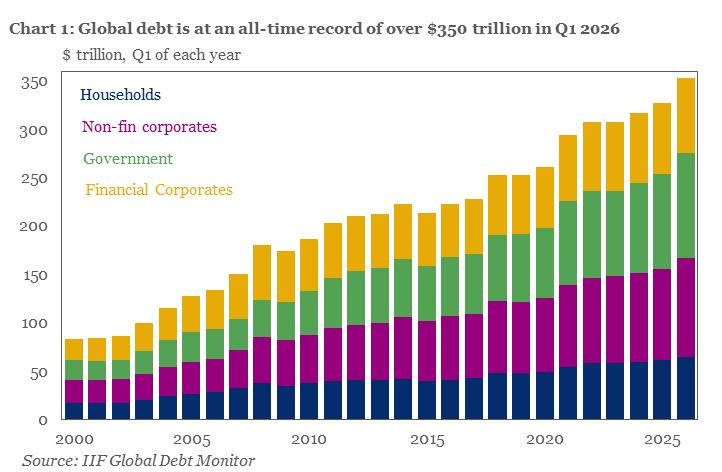
That gust is what we are experiencing now. It is the convergence of post-pandemic structural shifts, fragmented trade routes, and a generation of monetary policy that relied too heavily on printing liquidity to paper over cracks. When interest rates sat near zero for years, it acted like a narcotic. Corporations and governments alike gorged on cheap debt, building skyscrapers of obligation on foundations of sand. Now, the music has stopped. Rates have climbed to combat stubborn price spikes, and the bill has finally arrived.
The trouble is, the people holding the bill are rarely the ones who ran up the tab.
Let us step into a hypothetical commercial real estate office in Chicago. Imagine David, a mid-level portfolio manager who spent twenty years believing that prime office space was as safe as physical earth. Last month, his firm defaulted on a commercial mortgage-backed security. Why? Because hybrid work emptied the towers, and the refinancing rates tripled overnight. That default does not stay contained within David's spreadsheet. It ripples upward to regional banks, which tighten lending standards. It ripples downward to the local sandwich shop downstairs that relied on office workers for eighty percent of its daily revenue.
Multiply that single office building by tens of thousands across major metropolitan centers worldwide. Suddenly, the banking sector is sitting on a mountain of unrealized losses—assets that looked pristine on paper two years ago but are now functionally radioactive.
When fear enters the bloodstream of the financial markets, it behaves like adrenaline. It makes people run.
Central banks find themselves caught in an agonizing trap of their own making. If they keep interest rates high to crush inflation, they risk shattering the banking system and triggering a cascade of sovereign defaults. If they lower rates too soon, they risk unleashing a second wave of price acceleration that would utterly destroy the purchasing power of the average wage earner. There is no immaculate exit strategy. There is only a choice of which kind of pain to manage.
History whispers warnings to those willing to listen. We have walked this canyon before. The 1970s stagflation taught us what happens when energy shocks collide with rigid wage structures. The 2008 financial crisis showed us how quickly toxic assets hidden in the dark corners of shadow banking can metastasize into breadlines and foreclosures.
Yet today's threat feels different. It is more diffuse, woven tightly into the digital fabric of a hyper-connected planet. A drought in the Panama Canal restricts cargo flow, which spikes shipping costs, which forces retailers to raise prices, which depresses consumer spending, which triggers retail layoffs, which strains government safety nets.
We have engineered a system where a tremor in one hemisphere becomes an earthquake in the other within seconds.
So what does this mean for Elena at her bakery counter, or for Marcus at his terminal, or for you, sitting at home wondering why your grocery bill eats half your paycheck while your savings account yields pennies?
It means we are entering an era where adaptability matters more than predictability. The old playbook—the one that assumed infinite growth, frictionless trade, and permanently cheap energy—is gathering dust. Governments are already beginning to redraw their borders, prioritizing national security and supply chain sovereignty over pure economic efficiency. Factories are moving closer to home, not out of ideology, but out of sheer survival instinct.
This transition will be messy. It will be expensive. Prices will remain volatile, and the illusions of effortless abundance will continue to peel away, revealing the gritty, mechanical reality underneath.
Yet crises have a strange way of clarifying what matters. When the fat is burned away, communities rediscover local resilience. Businesses rediscover the value of physical proximity and tangible assets. People stop looking at index funds every five minutes and start investing in skills, relationships, and tangible production.
The amber numbers on Marcus's screen keep flashing. The flour keeps arriving at Elena's door, even if the cost has climbed. The world does not end when ledgers break; it merely forces us to pick up the pen and write a different kind of story.
One built not on the fragile illusion of perfection, but on the enduring strength of things that can bend without snapping.