The coffee in Regina tastes different when the grain elevators stop humming.
Ask Arthur, a third-generation canola grower whose family has worked the flat, wind-scoured dirt of Saskatchewan since 1924. Hypothetically speaking, if you sat across from him at a vinyl booth on a Tuesday morning in late autumn, you wouldn’t hear a lecture on macroeconomic theory or bilateral trade deficits. You would hear the quiet, terrifying math of a man watching his life’s work sit in a steel bin because two men in suits—one in Washington, one in Beijing—decided to play chicken with his livelihood. Don't forget to check out our previous post on this related article.
For decades, the arithmetic of Canadian survival was simple. You grew it, mined it, or built it, and you put it on a truck heading south. The United States wasn't just a neighbor; it was the gravitational center of the Canadian universe, absorbing roughly three-quarters of everything Canada sold to the world. It was comfortable. It was predictable. It felt permanent.
Until it wasn't. If you want more about the background of this, USA Today provides an in-depth summary.
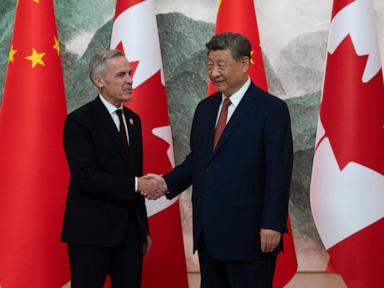
When Chinese President Xi Jinping and Canadian Prime Minister Mark Carney sat down recently and publicly called for deeper economic and diplomatic ties, the headlines read like standard diplomatic boilerplate. Dry. Bloodless. Easy to scroll past while waiting for a train. Yet beneath that sanitized phrasing lies one of the most dramatic geopolitical pivots in modern North American history. Ottawa isn't merely flirting with Beijing out of curiosity. Canada is scrambling for a lifeboat because the ship it has sailed on for over a century has suddenly started taking on water from the south.
The Myth of the Safe Harbor
To understand why Mark Carney—a former central banker who once steered both the Bank of Canada and the Bank of England through global financial tempests—is reaching across the Pacific, you have to feel the chill that swept through Ottawa when Washington turned protectionism into a blunt instrument.
We spent years believing that geography was destiny. A shared 8,891-kilometer border, intertwined supply chains where a single car part crosses the Detroit River six times before becoming a vehicle, and shared democratic values were supposed to make the Canada-U.S. bond unbreakable. I remember walking the floor of an auto-parts plant in Windsor, Ontario, a few years back, smelling the sharp tang of machine oil and hot steel, listening to floor managers boast that they were practically an extension of Michigan. Nobody there kept a backup plan. Why would you build a second house when your foundation is solid granite?
Then came the tariffs. Broad, sweeping, unapologetic levies threatened and imposed by Washington that treated Canada not as a trusted ally, but as an economic adversary taking advantage of American generosity. Suddenly, that granite foundation turned to sand. When the United States accounts for over 75 percent of your exports—roughly $590 billion CAD in goods alone—a 10 or 25 percent tariff isn't a policy disagreement. It is an existential heart attack.
Think of it like a small town built around a single massive factory. For fifty years, the factory pays the wages, sponsors the Little League team, and keeps the lights on. Everyone gets rich, or at least comfortable, by catering exclusively to that one buyer. Then one morning, a new manager takes over the factory, locks the front gate, and announces he’s going to start making everything in-house—and charging the town a fee just to walk past the fence. Panic doesn't arrive all at once; it creeps in through the floorboards.
That panic is what drove Carney to the table with Xi. When your largest customer starts slamming the door in your face, pride becomes a luxury you can no longer afford.
Ghosts in the Diplomatic Machine
Walking into a room with Xi Jinping is no casual errand for a Canadian Prime Minister. The ghosts of recent history sit right there at the table, uninvited and impossible to ignore.
Anyone who lived through the freeze between 2018 and 2021 remembers the suffocating tension. Following the arrest of Huawei executive Meng Wanzhou in Vancouver at the request of the United States, Beijing retaliated with surgical cruelty. Two Canadians, Michael Kovrig and Michael Spavor, were thrown into dark cells for over a thousand days. Chinese customs inspectors suddenly discovered "pests" in Canadian canola shipments, wiping out billions of dollars in agricultural trade overnight. Later came allegations of foreign interference in Canadian elections, retaliatory tariffs on Chinese electric vehicles, and counter-tariffs from Beijing on Canadian pork and seafood.
Trust didn't just erode; it was incinerated.
So when Carney and Xi speak of "deeper ties," nobody in Ottawa is wearing rose-colored glasses. Carney is an economist by training and temperament—a man who thinks in balance sheets, risk premiums, and systemic exposure. He knows the authoritarian realities of Beijing. He knows that China’s state-backed industrial overcapacity threatens Western manufacturing. He knows that human rights abuses in Xinjiang and the crackdowns in Hong Kong haven't vanished into thin air.
Yet look at the numbers sitting on Carney’s desk. China remains Canada’s second-largest single-country trading partner, with two-way merchandise trade hovering around $100 billion CAD annually. Despite tariffs, despite diplomatic deep-freezes, despite fierce rhetoric, Canadian consumers still buy Chinese electronics, machinery, and textiles, while China’s 1.4 billion people still need the exact things Canada possesses in staggering abundance: potash for fertilizer, timber, critical minerals, wheat, and energy.
Carney isn't falling in love with Beijing. He is hedging a catastrophic bet.
The Anatomy of a Pivot
Consider what happens next when a middle power realizes it has become dangerously over-leveraged to a single superpower.
In finance, putting three-quarters of your net worth into a single stock—no matter how blue-chip it appears—is considered reckless malpractice. If that stock crashes, you lose everything. For forty years, Canadian trade policy violated the most basic rule of risk management because the American market was simply too lucrative and too close to resist. Why pay to ship lumber across the Pacific Ocean when you can put it on a flatbed truck and have it in Ohio by Tuesday afternoon?
Now, shipping it across the Pacific is no longer about maximizing profit margins; it is about survival.
By engaging Xi directly, Carney is attempting a high-wire act without a net. He is signaling to Washington that Canada is not a captive market that can be squeezed indefinitely without looking elsewhere. At the same time, he is trying to carve out a pragmatic lane with Beijing—separating national security red lines from everyday commerce. You protect your telecommunications grids, safeguard your sensitive artificial intelligence research, and defend your democratic institutions, while simultaneously reopening the pipelines for prairie farmers, coastal fishermen, and mining executives.
It sounds tidy on paper. In reality, it is messy, nerve-wracking, and fraught with traps.
Take electric vehicles and critical minerals, the twin battlegrounds of the modern economy. Canada has spent billions trying to lure battery plants to Ontario and Quebec, aligning itself tightly with American green-tech supply chains. To please Washington, Ottawa slapped a 100 percent tariff on Chinese EVs. Beijing responded by targeting Canadian canola and pork—hitting the exact rural communities that form the backbone of the Canadian economy. How do you tell a hog farmer in Manitoba that his bankruptcy is a necessary sacrifice to protect an EV battery plant in Ontario that relies on an American partner who might tariff those very batteries next month?
You can't. Not with a straight face.
The Invisible Stakes on the Dock
To grasp what this diplomatic thaw actually looks like on the ground, picture the Port of Vancouver at dawn. Hypothetically, imagine standing on the cold concrete pier as massive gantry cranes swing forty-foot steel containers onto the deck of a Panamax cargo ship bound for Shanghai.
Inside those boxes isn't abstract geopolitics. Inside is copper concentrate dug from the frozen rock of British Columbia. Inside is yellow peas harvested under an endless prairie sky. Inside is liquefied natural gas flowing from newly completed pipelines on the West Coast, finally giving Canadian energy producers a way to reach Asian markets without begging American refiners to buy their crude at a steep discount.
For decades, Canada sold its oil to the United States for pennies on the dollar simply because all the pipes pointed south. That single geographic bottleneck cost the Canadian economy tens of billions of dollars every year. Building east-west infrastructure and expanding Pacific ports wasn't just an engineering project; it was an emancipation proclamation.
When Xi and Carney talk about revitalizing trade mechanisms, restarting ministerial dialogues, and smoothing customs friction, they are talking about whether those cranes in Vancouver keep moving or rust in the salt air. They are talking about whether a young engineer in Calgary has a job in five years, or whether a dockworker in Prince Rupert can pay his mortgage.
I’ll be honest: watching this unfold feels deeply unsettling. There is an inherent vulnerability in admitting that the post-World War II order—the cozy, predictable world where North America operated as a unified fortress—is fracturing before our eyes. Nobody in Canada wakes up wishing they had to rely more on the Chinese Communist Party to balance their ledger. The political system in Beijing is opaque, coercive, and unapologetically mercantilist. When Beijing gets angry, it doesn't just write a sternly worded letter; it weaponizes trade overnight.
Yet vulnerability cuts both ways. What happens when your oldest friend starts acting like a landlord who arbitrarily doubles the rent? You start looking at other neighborhoods, even the ones with bad reputations.
The New Geometry of Survival
History rarely announces its turning points with trumpets. Usually, they arrive disguised as routine diplomatic readouts, buried on page six of the morning paper, filled with cautious verbs like recalibrate, stabilize, and diversify.
What Xi and Carney are negotiating isn't a grand alliance. China will never replace the United States as Canada’s primary partner; the math of geography and culture forbids it. Even if Canada doubled its trade with Asia over the next decade, Washington would still tower over Ottawa’s economic horizon.
Instead, what we are witnessing is the birth of a colder, more transactional era. The age of ideological comfort is over. In its place is a world where middle powers—from Ottawa to Canberra, from Seoul to Brussels—are quietly building shock absorbers into their economies. They are realizing that dependency on any single giant, no matter how familiar, is a vulnerability waiting to be exploited.
For Beijing, welcoming Carney back into the fold is an effortless strategic victory. Every time an American ally flies to China to seek trade relief, it weakens Washington’s leverage and validates Xi’s vision of a multipolar world where all roads eventually lead through Asia. Xi doesn't need Canada to abandon the United States; he just needs Canada to hesitate before joining the next American-led blockade.
For Carney, the calculus is purely defensive. He is trying to buy insurance for a country caught in the crossfire of a superpower brawl. If he pushes too close to Beijing, he risks triggering fury in Washington, potentially jeopardizing the continental trade agreements that keep millions of Canadians employed. If he stays frozen in hostility toward China while Washington raises the drawbridge, Canada gets crushed between two grinding stones.
Back in Saskatchewan, the snow will soon cover the stubble of the autumn harvest. The grain bins stand full against the gray horizon, silent monuments to hard work and uncertain markets. Somewhere in Ottawa, trade negotiators are drafting schedules, checking tariff codes, and booking flights to Beijing, trying to pry open a door that was slammed shut years ago.
Because when the winds turn cold along the 49th parallel, even the most reluctant traveler has to look across the water for shelter.