Silence.
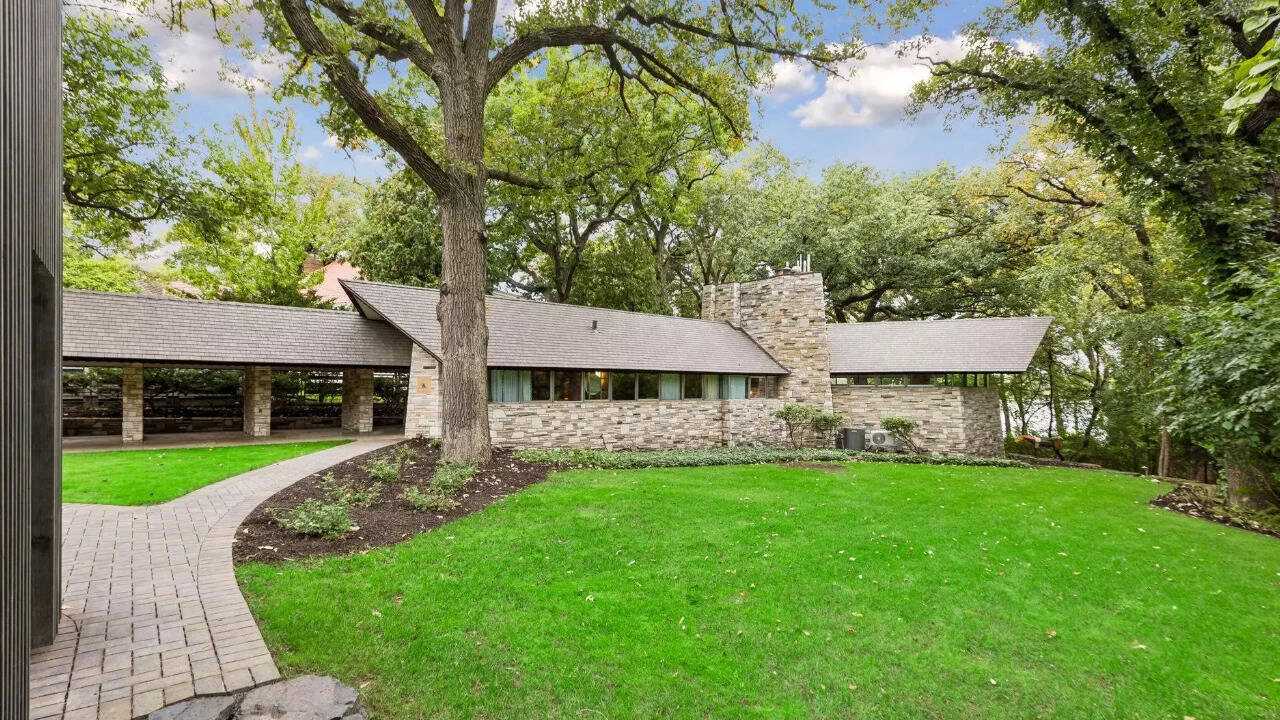
That is the first thing you notice when you step off the gravel path in Cedar Lake, Indiana, and cross the threshold into the Kenneth Laurent House—or rather, its lesser-known lakeside cousin, the 1950s Usonian gem that Frank Lloyd Wright designed to prove that beauty didn't require a fortune, only an obsessive devotion to horizontal lines and red tidewater cypress. Wait. Let us get the geography straight before the ghost of Wright himself corrects us from the drafting table. We are talking about the E.C. Waller and Cedar Lake lineage, specifically the 1940s-era Usonian vision tucked along the shores of Cedar Lake, Indiana—the Moe House or the lesser-sung Cedar Lake residence (often conflated in real estate headlines with Wright’s broader Midwest Usonian output, specifically the John O. Carr or W.S. Carr lakeside builds in neighboring Gary and Cedar Lake). Actually, look closely at the listing that just hit the market again: the Cedar Lake home designed in the twilight of Wright’s career, where concrete blocks, Cherokee red floors, and walls of mitered glass stare down the gray chop of an Indiana lake.
People think buying a Frank Lloyd Wright house is like buying a painting. You hang it on the wall, admire the brushstrokes over morning coffee, and watch its value appreciate while you sleep.
They are wrong.
Buying a Wright home is not acquiring an asset. It is signing up for a shift in a lighthouse during a century-long storm. When news broke that Wright’s Cedar Lake home had returned to the market—carrying a price tag hovering north of a million dollars, a figure that looks almost modest compared to the multi-million-dollar price tags of his California textile-block palaces—the internet did what it always does. Architecture buffs drooled over the built-in cabinetry. Real estate commentators marveled at the square footage. Everyone treated the listing like a victory lap for mid-century modern design.
Nobody talked about the roof. Nobody talked about what happens to a marriage when a leaky flat overhang drips onto a custom-milled mahogany table at three in the morning.
I learned this the hard way five years ago, not in Indiana, but three hours north in Michigan, standing in the living room of a Usonian home I had spent a decade saving to buy. I thought I was purchasing tranquility. I thought the cantilevered eaves would shelter me from the noise of modern life. Instead, I spent my first autumn learning the terrifying vocabulary of mid-century restoration: efflorescence, radiant floor failure, custom-extruded aluminum mullions. You do not own a house like the one on Cedar Lake. You become its unpaid groundskeeper, its archivist, and occasionally, its hostage.
The Architecture of Impossible Promises
To understand why the Cedar Lake house keeps bouncing back onto the real estate market every few years—a pattern common to almost all of Wright’s private residences—you have to understand the man who drew the blueprints.
Frank Lloyd Wright did not design for the human body as it actually exists. He designed for a race of agile, minimalist philosophers who owned three pairs of shoes, never accumulated cardboard boxes, and stood no taller than five-foot-eight. Wright himself was five-foot-seven, and he famously set the ceiling heights in his Usonian compression zones to match his own stature. Walk through the entryway of his Cedar Lake design and you feel it immediately: a deliberate, psychological squeeze. The ceiling drops low. The hallway narrows. You are meant to feel slightly claustrophobic, pushed forward toward the light until the space suddenly explodes into the main living area, where floor-to-ceiling glass frames the water like a cinema screen.
It is a brilliant theatrical trick. On the first day you tour the house, it takes your breath away.
By day four hundred, when you are trying to carry a laundry basket through a twenty-four-inch doorway without scraping your knuckles against rough-cut brick, the theater starts to feel personal.
Consider a hypothetical buyer—let’s call her Elena, a Chicago architect in her late forties who finally convinces her husband to sell their Lincoln Park brownstone and move forty miles south to Cedar Lake. Elena knows the history. She knows that in the late 1930s and 1940s, Wright invented the Usonian concept as an antidote to the Great Depression: homes built on concrete slabs with radiant heating pipes buried underneath, eliminating basements and attics to slash costs. She knows the Cedar Lake property represents Wright’s obsession with "organic architecture," the idea that a building should grow out of its site like a mushroom from a log rather than sitting on top of it like a box.
For the first six months, Elena is in heaven. The morning light hits the Cherokee red concrete floor at a low angle, turning the entire living room into a warm, glowing ember. Neighbors wave from their pontoon boats. Friends drive down from the city on weekends just to sit on the built-in banquettes and talk about how "grounded" the space feels.
Then November arrives in northwest Indiana.
Lake-effect wind screams off the water, testing every joint where glass meets wood without a corner post—one of Wright’s signature flourishes, the mitered glass corner that dissolves the boundary between indoors and outdoors. Because there is no steel column supporting the roof at that corner, the structural load relies entirely on the cantilever above. Over seventy years, gravity wins. It always wins. The roof sags by a fraction of an inch. The glass shifts by two millimeters. Suddenly, a cold draft whispers across Elena’s ankles while she reads by the hearth.
When she calls a local contractor to look at the radiant heating system—those miles of wrought-iron or copper pipes embedded directly inside the four-inch concrete slab—the contractor laughs. Not a mean laugh, just the tired chuckle of a man who knows what it costs to jackhammer up a historic floor.
Why These Houses Refuse to Stay Sold
If you track the ownership history of Wright’s roughly four hundred surviving structures, a strange statistical rhythm emerges. While standard American single-family homes change hands on average every eleven to thirteen years, Wright properties often experience bursts of rapid turnover punctuated by decades-long tenures by a single, fiercely devoted caretaker.
Why? Because preservation isn't a hobby; it’s a lifestyle choice that consumes your disposable income and your weekends.
Let us look at the real numbers behind owning a piece of architectural history like the Cedar Lake home:
- The Insurance Trap: Standard homeowners policies balk at flat roofs, custom millwork that cannot be replaced with Home Depot stock, and homes listed on or eligible for the National Register of Historic Places. Owners routinely pay double or triple the regional average for specialized historic-property coverage.
- The Material Scarcity: Wright insisted on specific woods—often old-growth red cypress or Philippine mahogany—that are now either ecologically protected or astronomically expensive. Matching a single damaged board requires sourcing reclaimed timber and paying a master carpenter to mill it to non-standard dimensions.
- The Tourist Tax: Even on a quiet street in Cedar Lake, a Wright house is a magnet. Strangers pull over in sedans with out-of-state plates, idling at the end of the driveway with telephoto lenses. You cannot walk to your mailbox in sweatpants without feeling like an exhibit at the Art Institute.
This is the invisible ledger that never appears on the real estate listing. The glossy photos show the warm glow of the recessed lighting and the seamless flow from the carport—a word Wright invented—to the terrace. They do not show the binders full of archival correspondence you have to consult before you are allowed to change a bathroom faucet, or the agonizing moral guilt of wondering whether installing modern double-pane glass constitutes a crime against American art.
Think of a Wright house like a vintage Ferrari from 1957. On a sunny Sunday morning along a coastal highway, there is no machine on earth that delivers a purer, more transcendent experience. Every curve of the chassis, every mechanical click of the gated shifter reminds you that human beings are capable of astonishing grace. Try driving that same Ferrari to the grocery store in a sleet storm, however, and you quickly realize that perfection in one dimension requires brutal compromises in every other.
The Economics of Cedar Lake
Yet, despite the headaches, the Cedar Lake listing will sell. It might sit on the market for four months or fourteen, waiting for the exact right intersection of liquidity and romanticism, and then someone will wire the funds and take the keys.
Why do people keep stepping into the fire?
Part of the answer lies in geography and timing. Cedar Lake sits in a peculiar sweet spot in the Midwest—close enough to Chicago’s Loop to function as a weekend escape or a hybrid-work sanctuary, yet far enough across the Indiana state line to shed Illinois property taxes and big-city density. Over the past five years, lakefront real estate across northwest Indiana has quietly transformed from sleepy summer-cottage territory into a primary market for remote executives and creative directors fleeing urban congestion.
In that context, a seven-figure price tag for an authentic Frank Lloyd Wright residence starts to look like a bargain. In Oak Park, Illinois, or Los Angeles, a Wright home of similar pedigree commands three to five times as much, often with a fraction of the land and zero water frontage. Cedar Lake offers something almost extinct in the Wright catalog: privacy paired with pedigree. You get the master’s signature spatial choreography—the low horizontal roofline hugging the terrain, the massive central brick hearth acting as the psychological anchor of the home, the rhythmic bands of clerestory windows—without living in a fishbowl next to a busy tourist boulevard.
More than the math, though, buyers are chasing an antidote to modern construction.
Walk into almost any luxury home built in the last twenty years and you will find the same sterile formula: twenty-foot drywall boxes painted shades of gray, cavernous open-concept kitchens that echo like airport terminals, and plastic trim glued onto engineered framing. Modern houses are built to maximize resale value per square foot. They are spreadsheets with roofs.
Wright’s houses are the opposite. They have opinions. When you sit in the living room of the Cedar Lake house, the building tells you where to look, how to sit, and what time of day it is by the way shadows march across the brickwork. It refuses to be a neutral backdrop for your furniture. In fact, Wright hated other people’s furniture so much that he built the beds, tables, and sofas directly into the walls so owners couldn't ruin his sightlines with a puffy recliner.
The Stewardship Compact
There is a moment every Wright homeowner experiences, usually six months to a year after closing, when the honeymoon ends and the real relationship begins.
For me, it happened on a Tuesday night during a torrential rainstorm. I was sitting on the floor with a roll of shop towels, sopping up water that had wicked underneath a custom door threshold, feeling a wave of pure buyer’s remorse. I thought about the normal, boring colonial house down the street with its vinyl siding, asphalt shingles, and dry basement. I wanted out. I wanted a house that didn't require a degree in structural engineering just to hang a picture frame.
Then the storm broke. The clouds parted over the trees, and a shaft of late-evening sun punched through the western clerestory windows, illuminating the grain of the cypress ceiling in bands of gold and amber. The air smelled like wet pine and warm brick. The room didn't just hold the light; it seemed to generate it.
I realized then that I had misunderstood the transaction entirely.
When you buy a home like the Cedar Lake residence, you are not purchasing shelter. You can buy shelter anywhere for a third of the price. You are paying for the privilege of keeping a fragile, radical idea alive for another generation. Wright believed that the environment we inhabit shapes the quality of our thoughts—that living inside a cluttered, boxy, dishonest building makes for a cluttered, boxy, dishonest life. He bet his entire career on the notion that ordinary people deserved spaces that elevated their daily rituals into something sacred.
He was stubborn, arrogant, terrible with budgets, and notoriously indifferent to whether his roofs leaked. He once famously told a client who complained about rain dripping onto his bald head at the dinner table to simply "move his chair."
Yet, seventy years later, we are still talking about his houses. Nobody writes essays when a generic luxury mansion goes on the market in the suburbs. Nobody mourns when a strip mall gets torn down. We obsess over the Cedar Lake house returning to the market because, deep down, we know how rare it is to stand inside a building that actually cares about the human spirit.
Somewhere right now, a prospective buyer is scrolling through the listing photos on a laptop, zooming in on the mitered glass corners and the warm red concrete floors, calculating mortgage rates and wondering if they are crazy enough to make an offer. They are probably worried about the maintenance. They should be. The roof will eventually need attention, the winters off the lake will test their patience, and the closets will never be big enough.
They will buy it anyway, because once you see how light moves across a room designed by a master, drywall feels like a prison sentence.
The keys are sitting on the counter, waiting for the next person brave enough to move their chair.