Money has a heartbeat.
It sounds like a quiet typing pool at midnight, the soft hum of cooling fans in a server farm, or the scratch of a fountain pen signing a document that alters a skyline. For decades, global capital behaved like water. It flowed downhill toward the deepest basins, pooling in traditional financial capitals where century-old brick buildings whispered promises of permanence. New York, London, Zurich. These were the gravitational centers of human ambition and liquid wealth.
Then, the earth shifted.
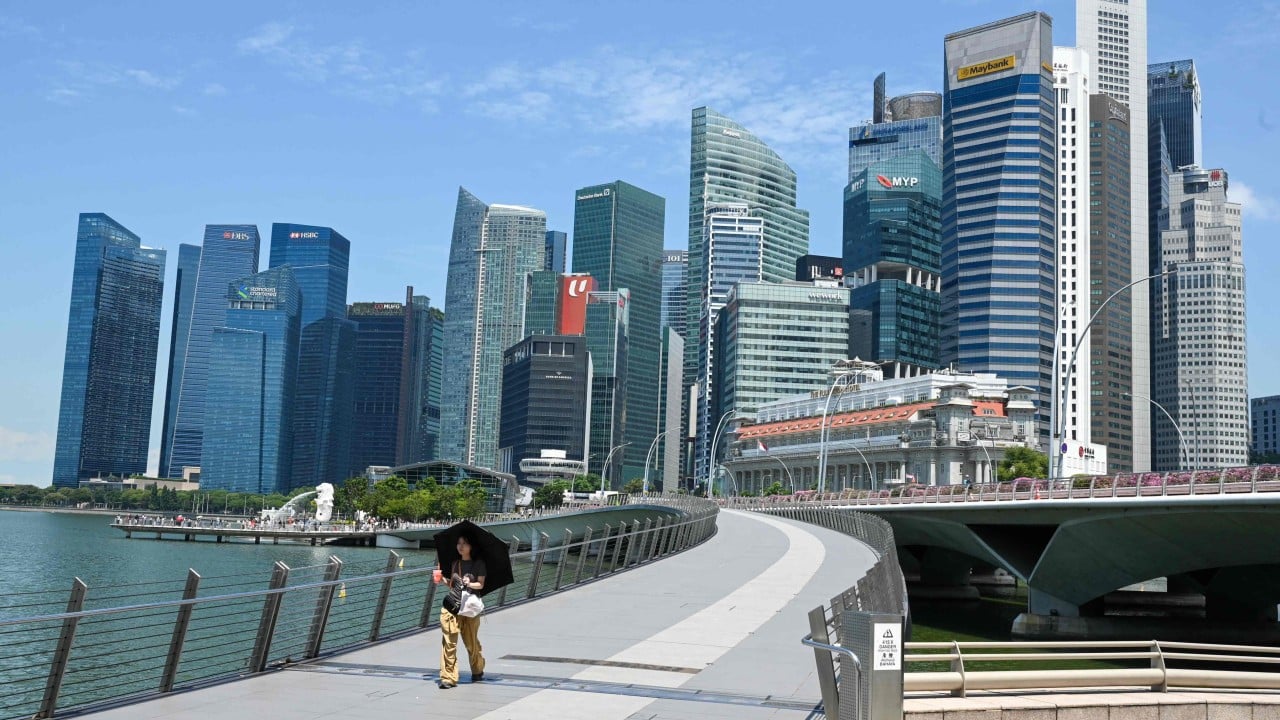
If you stood in the financial district of Singapore five years ago, you could feel the tremor. Cranes dotted the horizon like iron dragonflies. Glass towers pierced a humid tropical sky. Billions of dollars were quietly changing ZIP codes, abandoning western corridors for the immaculate, hyper-efficient streets of Southeast Asia. Yet, behind the polished marble floors and the breathtaking infinity pools overlooking Marina Bay, a subtle anxiety lingered.
Capital is notoriously fickle. It arrives dressed in tailored suits, but it leaves at the first sign of friction.
To understand why Singapore just introduced a radical new package of tax incentives and visa overhauls for its fund management industry, you have to look past the spreadsheets. You have to look at the human cost of standing still in a moving world.
Meet Elena.
Elena is a hypothetical portfolio manager, though she shares a DNA strand with thousands of real professionals currently uprooting their lives across the globe. Ten years ago, Elena managed a multi-billion-dollar tech fund out of London. Her days were a blur of Heathrow express trains, cold grey rain, and an escalating labyrinth of compliance forms, tax shifts, and bureaucratic sluggishness. She loved the city’s history, but history does not pay quarterly returns, nor does it keep talent from packing their bags when the regulatory climate turns hostile.
When Elena finally relocated her operations eastward, she wasn't just chasing lower tax brackets. She was chasing sanity. She was chasing a system that worked.
Governments rarely admit when they are terrified. They speak in dry press releases, policy papers, and bureaucratic jargon. But beneath the cold text of Singapore’s recent legislative changes lies a stark, urgent realization: staying wealthy means running twice as fast while the ground beneath you melts.
The Lion City has long understood that it possesses no natural resources. No oil fields. No vast agricultural plains. No massive domestic consumer market to cushion a fall. Its only real assets are its people, its rule of law, and its relentless, paranoid efficiency. Singapore survives because it refuses to be comfortable.
Consider what happens next in the global chess match for liquidity.
Traditional hubs have begun to buckle under the weight of their own inertia. Complex regulatory burdens, political volatility, and rising tax hostility have turned historic capitals into minefields for wealth creators. Capital managers want predictability. They want a jurisdiction that does not change its mind every time a new administration takes office.
Singapore’s new playbook reads like a masterclass in modern statecraft. By reshaping tax frameworks specifically targeted at fund managers and streamlining elite visa tracks for top-tier talent, the government is sending an unmistakable flare into the dark.
It says: Bring your capital here, but more importantly, bring your minds here.
Let us look closely at the mechanics, stripped of the dry corporate prose. When a nation introduces targeted tax incentives for fund managers—such as enhanced exemptions for qualifying funds and localized spending requirements—it is not merely handing out discounts to the wealthy. It is constructing an ecosystem. It forces global money to anchor itself in local soil. That money must hire local analysts, rent local office space, fund local universities, and buy coffee from the corner hawker center.
Wealth ceases to be an anonymous digit flashing on a Bloomberg terminal. It becomes flesh. It becomes a community.
At the same time, the visa overhauls solve a deeply human bottleneck. Elite fund managers are notoriously mobile, but their families are not. They care about school placements, safety on midnight streets, healthcare quality, and the ability to build a life without bureaucratic harassment. By lowering the friction for specialized talent to enter and stay, Singapore is weaponizing its greatest competitive advantage: quality of life married to operational perfection.
Critics will call it a tax haven maneuver. They will point fingers at widening wealth gaps and accuse the island state of catering exclusively to the global elite. And that critique, frankly, contains a kernel of uncomfortable truth. Rapid inflows of global capital place immense pressure on housing markets. They drive up the cost of living for everyday locals who have never touched a venture capital term sheet in their lives.
A tiny island cannot absorb the world's excess cash without feeling the strain in its joints. Rent prices skyrocket. Traffic thickens. The cultural fabric stretches.
Singapore’s leadership knows this. Their policy is not a utopian dream; it is a calculated gamble. They are betting that by attracting the world's most sophisticated pools of capital and the brains that steer them, they can generate enough tax revenue and economic dynamism to build public housing, fund world-class education, and future-proof their economy against regional instability. They are using global wealth to build a domestic shield.
It is a high-stakes tightrope walk over an abyss.
Zoom out. Look at the broader historical canvas. Empires rise and fall on the velocity of their trade and the integrity of their ledgers. Venice fell when trade routes bypassed its canals. Amsterdam waned when capital outgrew its small banking houses. London and New York dominated the twentieth century because they offered safety, depth, and rule of law when the rest of the world was burning.
Now, the twenty-first century is decentralizing. The center of gravity is drifting toward Asia, a region pulsing with young populations, exploding technology sectors, and hungry domestic markets. Singapore sits at the literal and figurative crossroads of this migration.
When Elena sits at her desk in her downtown office tower today, looking out over the Singapore Strait where container ships sit heavy on the horizon, she isn't thinking about tax codes. She is thinking about momentum. She sees the future being built in real-time, brick by heavy brick, dollar by calculated dollar.
The new incentives and visas are not just administrative adjustments. They are open invitations to the future. They are a declaration that in a fractured, chaotic world, stability and foresight remain the ultimate commodities.
The money will always go where it is treated best. But increasingly, it stays where it is understood, challenged, and welcomed into the fold of a society that refuses to stand still.
The cranes on the horizon keep turning. The ink on the new policies dries under the tropical sun. And somewhere out there, the next wave of capital is already packing its bags, listening for the heartbeat of a new world.