Silence is rarely empty. Usually, it is heavily engineered.
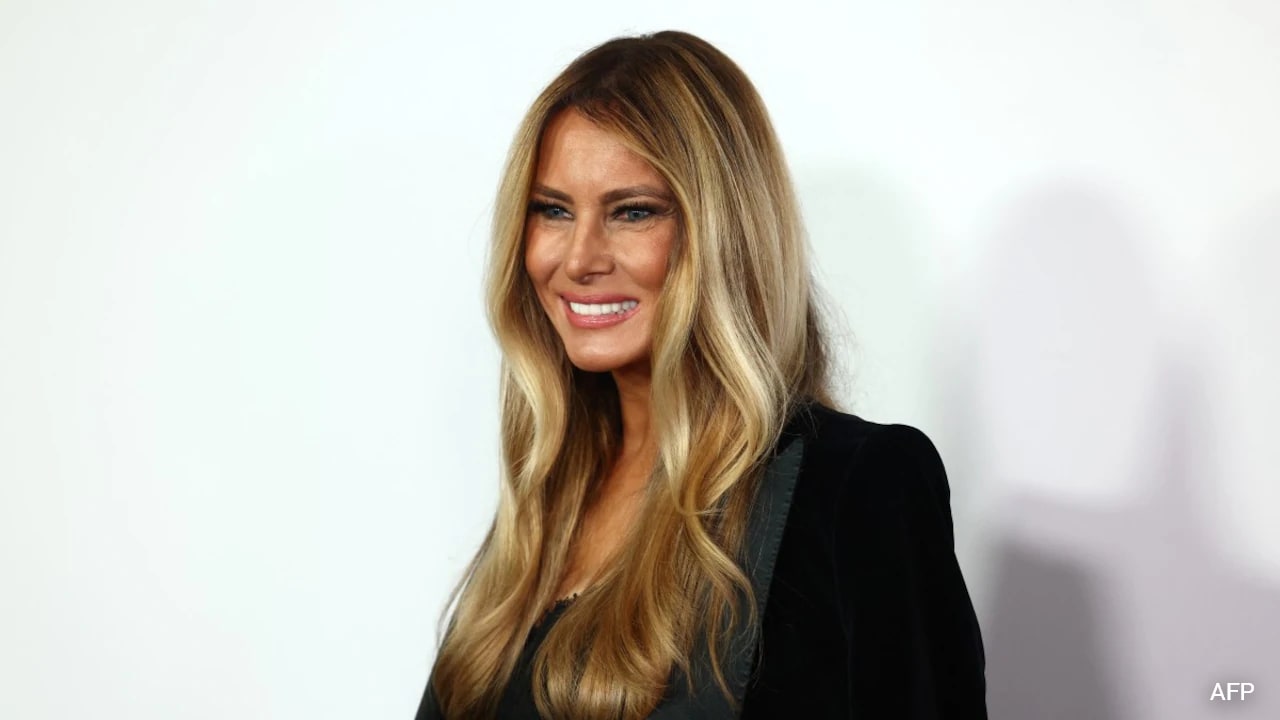
To understand how a girl raised in a concrete apartment block in communist Yugoslavia ended up standing beneath the rotunda of the United States Capitol—not once, but across two distinct, turbulent eras of American history—you have to stop looking for the standard political biography. Most profiles of Melania Trump read like a dry inventory of passports, runways, and real estate square footage. Born Melanija Knavs in 1970 in Novo Mesto. Raised in Sevnica. Discovered at sixteen. Milan, Paris, New York. Married in Palm Beach. Sworn in beside Donald Trump in 2017, and again in 2025.
Those dates are true. They are also completely insufficient.
If you line up the facts on a table, you get a timeline, not a human being. You miss the cold winter mornings in an industrial Slovenian town where survival depended on watching what you said and who was listening. You miss the brutal, transactional math of 1990s European modeling, where young women learned quickly that beauty was currency, visibility was a trap, and saying too much gave other people leverage over your life. I have spent years covering political spouses and public figures who step from private ambition into the glare of Washington, and the ones who survive without fracturing share a specific psychological trait: they treat privacy not as shyness, but as armor.
Melania Trump did not stumble into the East Wing. She arrived there carrying a lifetime of practice in being watched without ever letting the watcher inside.
The Concrete Town That Taught Her How to Watch
Sevnica in the 1970s and 1980s was not a fairy-tale European village of cobblestone romance and tourist postcards. It was a working town along the Sava River in what was then the Socialist Federal Republic of Yugoslavia, anchored by textile factories and state-run industry. Her father, Viktor Knavs, sold car parts and later automobiles, navigating the narrow corridors of commerce permitted under Tito's regime. Her mother, Amalija, worked as a patternmaker at Jutranjka, a children's clothing manufacturer.
Pause on that detail. A patternmaker.
A patternmaker does not improvise. She measures. She cuts along exact lines so that separate pieces of fabric—sleeves, collars, hems—assemble into a structured garment that holds its shape under stress. Growing up beside a woman whose livelihood relied on precision and restraint leaves an imprint. You learn early that presentation is discipline, and that loose threads ruin the whole line.
Consider a hypothetical young woman growing up in that environment—call her Elena, though her exact circumstances mirror thousands of ambitious teenagers in late-Cold War Central Europe. Elena watches Western television broadcasts drifting across the border from Austria and Italy. She sees glossy magazines filled with unreachable glamour, while at home, political conformity is the quiet price of stability. In such a world, ambition cannot be loud. Loudness invites scrutiny. Scrutiny invites trouble. Instead, you observe. You study languages. You learn how to read a room before speaking a word in it.
By the time photographer Stane Jerko spotted the sixteen-year-old Melanija Knavs outside a fashion show in Ljubljana in 1987, that habit of composed distance was already second nature. She enrolled at the University of Ljubljana to study architecture and design, a detail often glossed over in tabloid summaries, yet it explains almost everything about her public persona. Architects care about structure, boundaries, clean lines, and load-bearing walls. They do not build glass houses without deciding exactly which rooms remain opaque.
She left university after a year to pursue modeling full-time, moving through Milan and Paris before landing in Manhattan in 1996. Anyone who romanticizes 1990s modeling has never spoken to the women who lived through cattle-call castings in cramped apartments, living out of suitcases, speaking accented English in rooms full of agents who measured their worth in centimeters and expiry dates. In New York, she was not a pampered heiress. She was a twenty-six-year-old immigrant working on visas, building a portfolio, and learning the unwritten rules of Manhattan nightlife.
The Kit Kat Club and the Art of Not Blinking
September 1998. Fashion Week in New York. The Kit Kat Club in Times Square.
Donald Trump, then fifty-two, freshly separated from his second wife Marla Maples, arrived at the party with another woman on his arm. Across the room stood Melania Knauss—she had already Germanized the spelling of her surname for the international market. When Trump sent his companion to the restroom and walked over to ask for Melania's phone number, she refused.
Instead, she asked for his.
That single exchange—verified across multiple accounts from both of them—is the Rosetta Stone of their entire partnership. Think about the power dynamics in that room. Trump was one of the most famous, relentless self-promoters in New York, a man accustomed to women chasing his proximity. Melania was an immigrant model with no safety net in America. Giving him her number would have placed her in a queue, waiting by a landline for a call that might never come. Taking his numbers—all of them, office, Mar-a-Lago, New York—inverted the geometry. It gave her the clock. She waited a week before calling.
That is not passivity. That is control exercised through restraint.
For years, critics mistook her quietness for compliance, projecting onto her the familiar trope of the ornamental trophy wife. Watching her from the press risers during the 2016 campaign and across two White House terms, what struck me instead was how stubbornly she refused to perform the emotional labor Americans traditionally demand from their First Ladies.
Look at the historical lineage of the role. American political culture expects the First Lady to be an open book—a comforting national mother, an enthusiastic cheerleader, or an accessible policy advocate who smiles through indignity and explains herself to morning television hosts. Eleanor Roosevelt traveled the country as her husband's eyes and ears. Jacqueline Kennedy curated Camelot into a mythic cultural triumph. Michelle Obama turned warmth and candor into a generational connection.
Melania Trump rejected the template entirely.
When the Access Hollywood tape leaked in October 2016, weeks before the election, Washington pundits predicted she would either vanish or appear beside him in a scripted, tearful display of forgiveness. She did neither. She issued a brief statement calling his words unacceptable and offensive, sat for two calm, controlled television interviews in which she defended her husband while refusing to grovel for public sympathy, and then retreated behind her own walls. Whether you agreed with her stance or found it infuriating, you could not deny the discipline behind it. She would not let the cameras eat her alive.
Behind the Heavy Doors of the East Wing
What does it actually feel like to inhabit the White House when you are fundamentally allergic to political theater?
Imagine moving into a museum where 132 rooms belong to the taxpayers, where Secret Service agents stand outside your bedroom corridor, where every coat you wear is dissected by cable news panels before you even reach the bottom of the airplane stairs, and where half the country views you as complicit in a political movement they despise while the other half projects fantasies onto your silence.
For her first five months in office in 2017, she did not even live in Washington. She stayed in Trump Tower in New York until their son, Barron, finished his school year. Washington insiders whispered that it was unprecedented, a breach of protocol, a sign of marital fracture. What they missed was the practical reality of a mother prioritizing her eleven-year-old son's stability over political optics—and quietly using those months to renegotiate her terms before stepping into the fishbowl.
When she finally arrived at 1600 Pennsylvania Avenue, she assembled one of the smallest East Wing staffs in modern history. While predecessors employed twenty or thirty aides to manage sprawling policy portfolios and media outreach, Melania operated with roughly a dozen loyalists. She skipped traditional magazine covers—Vogue, which had featured every modern First Lady, never put her on its cover during her husband's presidency, a snub she brushed off with visible indifference.
Her public initiative, Be Best, launched in May 2018, focused on children's well-being, online safety, and the opioid crisis. Critics immediately pounced on the irony of the First Lady campaigning against cyberbullying while her husband used social media as a battering ram. The criticism was logical, obvious, and entirely beside the point to her. She addressed the contradiction directly in an interview during a solo trip to Africa, acknowledging that she did not always agree with what her husband tweeted and that she told him so in private.
That distinction—private candor, public impenetrability—defined her tenure.
Those who worked inside the residence describe a woman intensely focused on visual order, historical preservation, and personal autonomy. She oversaw the restoration of the Rose Garden, the White House tennis pavilion, and historic rooms in the Executive Residence, approaches rooted directly in that early architectural training in Ljubljana. She was meticulous about lighting, floral arrangements, and state dinner choreography, yet famously detached from the daily ideological street fights consuming the West Wing fifty yards away.
The Second Act and the Illusion of Knowing
Most political stories end when the moving vans pull away on January 20. For four years after leaving Washington in 2021, Melania Trump disappeared almost entirely from public view, retreating to Mar-a-Lago and New York, raising Barron as he grew into adulthood, and writing her 2024 memoir.
When she returned to the national stage for Donald Trump's second inauguration in January 2025, stepping onto the Capitol floor in a sharp, navy-and-ivory silk wool coat and a wide-brimmed boater hat that shaded her eyes from the cameras, the message was unmistakable. Four years had not softened her edges or made her eager for approval. If anything, the hat was a physical manifestation of her entire public philosophy: you may look, you may speculate, you may write a million words, and you will still only see what I permit you to see.
The internet, predictably, turned the hat into a meme within minutes. Cable commentators debated whether the brim was a deliberate barrier to prevent a kiss on the cheek or simply high-fashion armor. Both readings missed the deeper truth.
We live in an era of compulsive confession. Politicians, celebrities, and ordinary citizens alike broadcast their anxieties, marriages, therapies, and grievances in real time, mistaking oversharing for authenticity. Against that cultural noise, Melania Trump's refusal to explain herself feels almost subversive—and deeply unsettling to people who believe public figures owe us their interior lives.
Admitting what we do not know about her is not a failure of journalism; it is the most honest conclusion available. We do not know what conversations happen behind closed doors in Palm Beach or New York. We do not know the full calculus of loyalty, ambition, pride, and survival that keeps two people bound together through indictments, assassination attempts, political exile, and historic comebacks. Anyone claiming to have unlocked the "real" Melania Trump is selling fiction.
What we can see is the structure she built.
From a concrete apartment in Sevnica to the gilded ceilings of Manhattan, from Milanese runways to the Truman Balcony, Melanija Knavs never once asked the crowd for permission to be who she is. She learned early that in a loud, demanding world, the person who refuses to raise her voice holds a strange, immovable power—standing still in the center of the storm, behind a brim wide enough to keep the light out of her eyes.