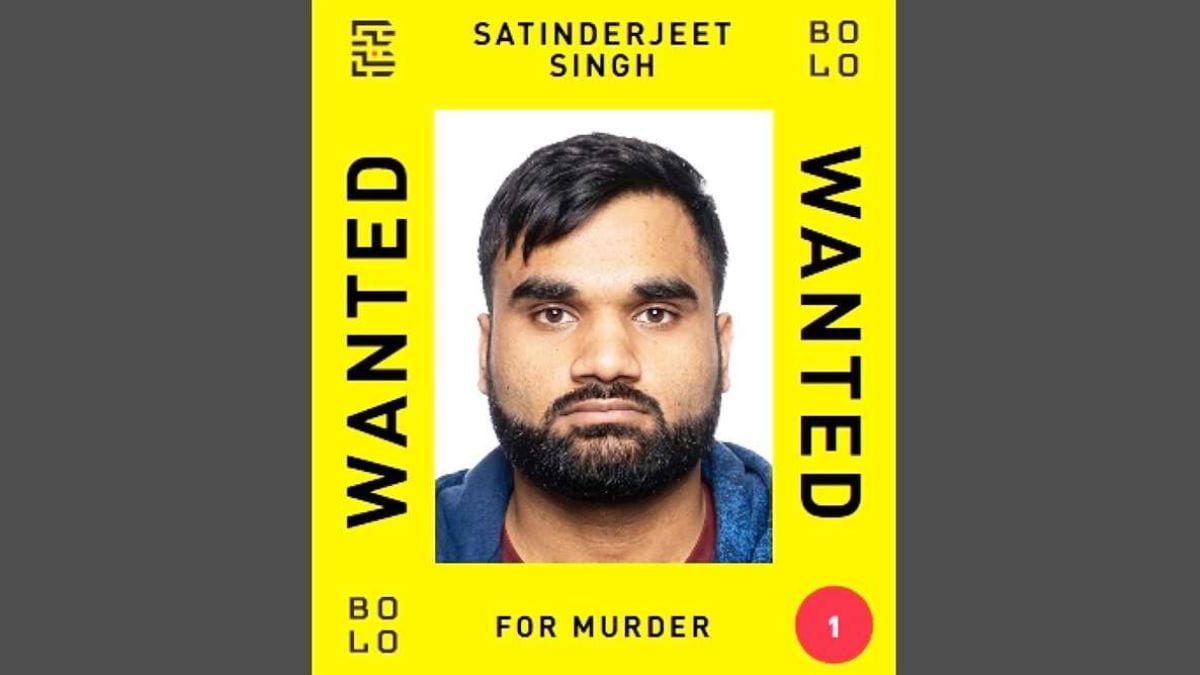
Putting a $50,000 bounty on Satinderjit Singh Brar—better known as Goldy Brar—makes for dramatic press conferences and splashy headlines. It doesn't automatically put handcuffs on him.
When the Bolo Program placed Brar at the very top of Canada’s 25 most-wanted list, offering up to $50,000 for information leading to his arrest, officials framed it as a major escalation against transnational organized crime. And on paper, it is. Brar is wanted by the Royal Canadian Mounted Police (RCMP) for murder, conspiracy to commit murder, and criminal harassment, alongside an Interpol Red Notice issued at India's request. He's widely accused of orchestrating the May 2022 assassination of Punjabi singer Sidhu Moose Wala from abroad, operating as a key lieutenant in the Lawrence Bishnoi syndicate.
Yet if you've followed cross-border gang enforcement in North America over the past decade, you know a stark truth. Bounties and public awareness campaigns work best against fugitives hiding in plain sight within domestic communities—people relying on local relatives, working cash jobs, or staying in known neighborhood safe houses. They're far less effective against someone running an international extortion and hit-for-hire network through encrypted apps across multiple jurisdictions.
What the Bolo Program Bounty Actually Means
Most people hear "most-wanted list" and picture an FBI-style tactical manhunt with helicopters circling a suspected hideout. That's not what the Bolo Program is.
Short for "Be On the Lookout," the Bolo Program is a public-private initiative run by the Stéphan Crétier Foundation in partnership with Canadian police services and Crime Stoppers. It amplifies high-priority fugitives through social media blitzes, digital billboards, and financial rewards funded privately rather than out of taxpayer budgets.
In Brar's case, the reward reached $50,000, making him the prime target in a campaign designed to crowdsource tips from the public.
Here's why that matters—and where the limitations kick in.
- It removes financial fear for informants. People who know where a fugitive is sleeping rarely call police out of pure civic duty, especially when the target is tied to violent extortion rings. Cash helps break that silence.
- It creates intense public pressure. When a suspect's face is plastered across transit hubs in Brampton, Surrey, and Vancouver, moving around locally becomes exponentially harder.
- It doesn't grant extra-territorial arrest powers. A Canadian bounty doesn't authorize Canadian officers to kick down doors in California, Texas, or anywhere else outside Canadian soil.
And that jurisdictional wall is the entire crux of the problem.
The Jurisdictional Maze Around Goldy Brar
Brar's story isn't a simple case of a local offender skipping bail and hiding in a basement apartment in Ontario.
According to Canadian law enforcement records and Indian intelligence dossiers, Brar entered Canada on a student visa back in 2017. Over the next several years, he integrated into criminal networks linked to Lawrence Bishnoi—an Indian gangster who has somehow managed to run major operations even while incarcerated in high-security Indian prisons.
When Sidhu Moose Wala was gunned down in Punjab's Mansa district in May 2022, Brar publicly claimed responsibility via social media posts. Soon after, Indian authorities pushed for global tracking, leading to an Interpol Red Notice. Meanwhile, Canadian investigators linked Brar to violent crimes and extortion plots targeting South Asian business owners across British Columbia and Ontario.
Then came the rumors, the conflicting intelligence reports, and the border-hopping.
At various points following the Moose Wala killing, intelligence chatter placed Brar in the United States, specifically California, where he allegedly sought asylum or moved between safe houses before potentially slipping elsewhere. At one point, false reports even circulated online claiming he had been shot dead in Fresno, California—a rumor Fresno police quickly shut down, confirming the victim of that specific shooting wasn't Brar.
Think about what that means for investigators. You have a suspect wanted in India for a high-profile political and cultural assassination, wanted in Canada for murder and conspiracy, and allegedly operating out of U.S. territory using VoIP numbers, encrypted messaging platforms, and proxy operatives.
A $50,000 billboard campaign in Toronto doesn't solve a tri-national intelligence bottleneck.
How Remote Gang Operations Defeat Traditional Policing
To understand why catching someone like Brar takes more than a tip line, you have to look at how modern South Asian organized crime syndicates actually function in North America.
Twenty years ago, gang leadership required physical presence. A boss had to collect envelopes of cash, hold face-to-face meetings at restaurants, and personally manage local lieutenants. That physical footprint gave undercover units and surveillance teams concrete patterns to track.
Today, that model is dead.
Modern syndicates operate like decentralized tech startups with lethal enforcement arms. A planner sitting in an undisclosed location can use WhatsApp, Signal, or Telegram to contact a low-level recruiter in Punjab or Surrey. That recruiter hires local teenagers or desperate young men—often international students facing financial pressure or immigration uncertainty—to carry out a drive-by shooting or fire shots into a business owner's home.
Payments move through hawala networks, cryptocurrency wallets, or untraceable informal transfers. The shooters rarely know who gave the original order. The person giving the order never touches a weapon, never visits the crime scene, and never uses a SIM card registered in their real name.
Look at the wave of extortion threats hitting builders, restaurant owners, and jewelers across Brampton, Surrey, and Edmonton over the past couple of years. Victims receive phone calls from international numbers demanding hundreds of thousands of dollars. If they refuse to pay, bullets hit their front doors or vehicles.
When police arrest the shooters, they catch 19-year-old foot soldiers who were promised a few thousand dollars and a fake visa. The architect remains untouched.
Why the Diplomatic Freeze Made Everything Worse
You can't talk honestly about the hunt for Goldy Brar without addressing the elephant in the room—the severe diplomatic breakdown between Canada and India.
Cross-border policing relies on trust, rapid intelligence sharing, and streamlined extradition channels. When diplomatic relations freeze, criminals get breathing room.
Following the 2023 killing of Hardeep Singh Nijjar in British Columbia and the subsequent diplomatic expulsions between Ottawa and New Delhi, routine law enforcement cooperation took a massive hit. Visa processing stalled. Intelligence exchanges became politically fraught. Extradition requests—which are already notoriously slow in Canada due to strict Charter of Rights and Freedoms protections and multi-year judicial review processes—faced heightened scrutiny and friction.
Criminals don't care about geopolitics, except when geopolitics slows down the people chasing them.
Every month that agencies spend navigating diplomatic red tape instead of sharing real-time financial and telecom intercepts is another month a fugitive can burn phones, rotate safe houses, and launder extortion proceeds. Even when Indian and Canadian agencies both want the exact same person behind bars, political friction gums up the machinery required to make an arrest stick.
What Needs to Happen Beyond the Headlines
Publicity campaigns have their place. In fact, the Bolo Program has a solid track record of helping police locate domestic fugitives who underestimated how fast their faces would spread online. Keeping Brar's face in front of the public ensures he can't easily walk into a grocery store in Brampton or catch a domestic flight out of Vancouver without someone recognizing him.
Still, relying on public tips to dismantle a transnational syndicate is like trying to bail out a sinking boat with a coffee mug.
If law enforcement actually wants to shut down networks led by figures like Goldy Brar, three structural shifts have to happen alongside the public manhunt:
- Joint U.S.-Canada-India financial task forces. Tracking burner phones is a losing game. Tracking the money isn't. Extortion payouts and hawala settlements leave patterns when financial intelligence units like FINTRAC in Canada and FinCEN in the U.S. actively share data on suspicious cross-border transfers and crypto off-ramps.
- Aggressive prosecution of digital facilitators. Police need to go harder after the mid-level recruiters—the people setting up fake social media accounts, buying burner devices, and laundering the initial extortion demands—rather than settling for arrests of the low-level shooters.
- Faster international warrant execution. When an Interpol Red Notice is backed by verifiable criminal evidence from multiple democratic jurisdictions, immigration and border agencies need streamlined protocols to flag, detain, and process suspects before they cross state or provincial lines.
If you live in communities affected by these extortion rings—or if you're simply watching how North American policing adapts to globalized crime—pay less attention to the dollar amount on the wanted poster and more attention to who gets charged with money laundering and conspiracy over the next twelve months. Anyone with credible information regarding Goldy Brar's whereabouts shouldn't engage directly; contact local law enforcement immediately or submit an anonymous tip through Crime Stoppers at 1-800-222-8477.