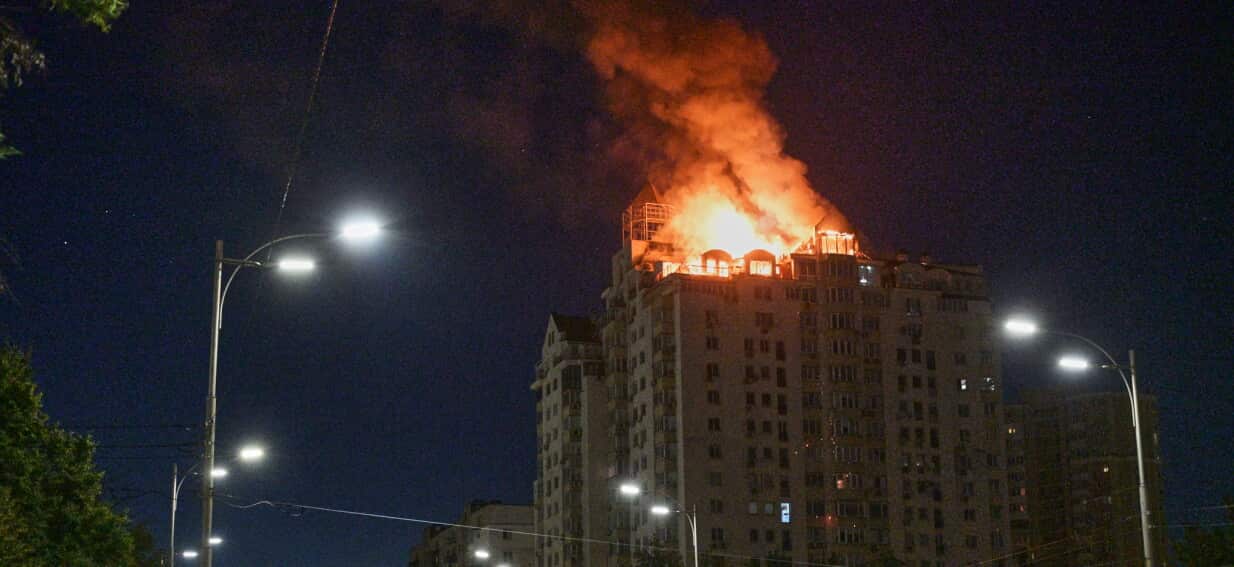
Air raid sirens didn't just sound in Kyiv. They screamed.
Within hours of Ukrainian President Volodymyr Zelensky's stark warning that "instead of peace, they choose missiles," Vladimir Putin proved him right. A coordinated barrage of ballistic missiles, cruise missiles, and attack drones hammered the capital. Debris rained down on residential sectors, energy infrastructure caught fire, and the sky over Ukraine turned a violent orange.
This isn't just another routine bombing campaign. It's a calculated, desperate show of force from Moscow, designed to shatter Ukrainian morale and cripple its remaining power grid during a brutal summer heatwave. But if you look past the terrifying headlines, you'll see a distinct reality: Putin's latest blitz is a direct retaliation for Ukraine's own deep-strike successes.
The Escalation Loop You Aren't Being Told About
The mainstream media loves to cover the destruction in Kyiv, but they often ignore the cause-and-effect timeline. This current Russian assault didn't happen in a vacuum. It comes directly after Ukraine launched one of its most punishing asymmetric operations of the war.
Ukraine recently deployed more than 200 long-range strike drones deep into Russian territory. They didn't just target border outposts. They struck a major oil refinery right on Moscow's doorstep, sending fuel prices soaring and forcing Russian citizens to line up at gas stations for hours. Zelensky called the strikes a "fully justified response," pointing out that ordinary Russians must realize "one man, Putin" is driving this war.
Putin hates looking weak. The Kremlin's response was predictable but terrifyingly intense:
- Targeting the historic heart of Kyiv, including near cultural landmarks like the Pechersk Lavra monastery.
- Flooding the skies with complex, multi-tiered aerial assaults to overwhelm western-supplied Patriot missile batteries.
- Striking energy grids during peak hours when civilian air conditioning use is at its highest, triggering blackouts across eight separate regions.
What Zelensky's Eight-Word Warning Really Means
When Zelensky told his people that "instead of peace, they choose missiles," he wasn't just talking about the immediate threat to life. He was signaling a complete collapse of any back-channel peace talk rumors. For months, political commentators have speculated that international pressure might force a ceasefire. Putin's missiles just blew those theories to pieces.
The strategic reality on the ground is grim. According to reports from the Institute for the Study of War, Russia's actual frontline battlefield progress has slowed significantly. Their traditional military advance is waning. Unable to achieve a decisive breakthrough on the front lines, Putin is reverting to his favorite terror tactic: strategic bombing of civilian centers to force a surrender.
Russia's Two-Pronged Terror Strategy:
1. Break the Ukrainian Will: Constant overnight sirens to exhaust the population.
2. Cripple the Economy: Target substations and power plants to freeze production.
But the strategy is backfiring. Instead of cowering, Ukraine is pressing its allies for advanced anti-ballistic capabilities. The standard air defense systems that stop slow-moving Iranian-designed Shahed drones aren't enough anymore. Kyiv needs heavy-duty interceptors capable of stopping hypersonic and intermediate-range ballistic threats, like the Russian Oreshnik missile.
Why The Information War Is Reaching A Tipping Point
The battle isn't just happening in the sky; it's happening on your newsfeed. Following the recent overnight blitz, a massive propaganda war broke out regarding the damage to Kyiv's historic Pechersk Lavra monastery.
Moscow immediately claimed that a malfunctioning U.S.-supplied Patriot missile caused the destruction, trying to blame Ukraine's defenders for ruining their own heritage. Kyiv and Western intelligence agencies flatly rejected this, presenting tracking data that points to a direct Russian strike. It's a classic Kremlin tactic: muddy the waters, create doubt, and try to weaken Western public support for sending more high-tech weaponry to Ukraine.
The truth is that Ukraine's air defenders are pulling off miracles. During recent waves, they managed to down 82 out of 108 launched drones, alongside dozens of cruise missiles. But no system is perfect. When a ballistic missile travels at several times the speed of sound, even a successful interception means hundreds of pounds of burning metal and unexploded fuel fall directly onto the city below.
What Happens Next
If you are tracking this conflict, stop looking for signs of a sudden peace deal. It isn't happening. Both sides have dug into an escalation cycle that will likely get worse before it gets better.
Ukraine will keep targeting Russian infrastructure because it works. Shifting the war to Russian soil weakens Putin’s domestic image and chokes his military supply lines. Consequently, Russia will keep launching retaliatory blitzes on Kyiv.
The immediate next step for the international community isn't drafting peace treaties; it's securing Ukraine's sky. European nations are under intense pressure from Kyiv to co-develop localized anti-ballistic defense networks. Until those arrive, the people of Kyiv will continue to spend their nights in subway stations and bomb shelters, waiting out the firestorm.
This video provides an breakdown of the tactical shift as both sides trading heavy long-range strikes on strategic infrastructure.