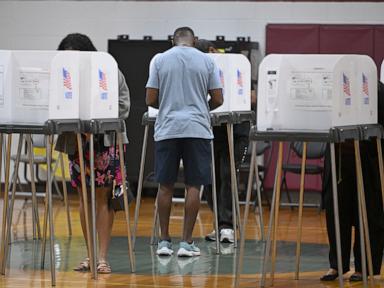
The media coverage surrounding the federal court injection halting proof-of-citizenship voting requirements follows a predictable script. One side decries it as a targeted assault on democracy designed to suppress marginalized voices. The other frame it as a necessary defense against a wave of non-citizen voting that threatens the integrity of our elections.
Both narratives are fundamentally flawed. They are designed to manufacture outrage rather than address the structural realities of modern election administration.
The lazy consensus among political commentators is that this judicial ruling represents a definitive victory for voting rights or a devastating blow to election security. It is neither. This legal battle is a classic example of political theater, where both sides fight over a symbolic issue while ignoring the deeper, operational failures of the current voter registration framework.
The obsession with implementing physical proof-of-citizenship mandates at the polling place misses the point entirely. At the same time, the knee-jerk reaction that any verification measure is inherently discriminatory ignores the legitimate need for administrative precision. The real crisis in election administration is not a coordinated conspiracy to steal elections, nor is it a Jim Crow-style campaign to lock eligible voters out of the booth. The crisis is an outdated, fragmented registration system that relies on reactive compliance rather than proactive validation.
The Myth of the Easy Fix
Proponents of proof-of-citizenship laws argue that requiring a birth certificate or passport to register to vote is a common-sense measure. They point to everyday activities, like boarding an airplane or opening a bank account, which require strict identification. This analogy fails because it ignores the fundamental difference between commercial verification and constitutional rights.
When a state mandates that a voter produce documents that a significant percentage of the population does not readily possess, it creates an administrative bottleneck. I have spent years analyzing municipal and state data systems. The reality is that state databases do not talk to each other. The Department of Motor Vehicles, the Department of Health, and state election boards operate on separate, incompatible legacy networks.
Imposing a strict documentation requirement without first unifying these data structures is an operational disaster. It shifts the burden of proof onto the individual, forcing them to navigate bureaucratic silos to exercise a constitutional right. This is not about ideology; it is about basic system architecture. If a state cannot instantly verify a citizen's status through its own existing records, forcing the citizen to bring a physical document to a government office is a sign of administrative incompetence, not an advancement in security.
The Flawed Logic of Both Extremes
The debate is paralyzed by two equally absurd positions.
- The Voter Fraud Hyperbole: This camp claims that millions of non-citizens are actively registering and swinging federal elections. The data simply does not support this. Study after study, including audits conducted by conservative think tanks, show that non-citizen voting is vanishingly rare. The penalties are draconian—deportation, asset forfeiture, and prison time. The risk-reward ratio makes no sense for an individual. Framing this as an urgent national security threat is a fundraising tactic, not a data-driven policy stance.
- The Voter Suppression Hysteria: The opposing camp argues that asking for any verification is a form of disenfranchisement. This position is equally untenable. Every modern democracy requires a reliable method to determine who is eligible to vote. A system based entirely on the honor system is vulnerable to administrative errors that erode public trust. When the public loses faith in the mechanics of the vote, the entire democratic structure weakens.
By focusing on physical documents at the point of registration, we are fighting a 20th-century battle in a 21st-century world.
The Hidden Cost of Administrative Inertia
The real damage of these laws is the immense operational overhead they impose on local election officials. County clerks and volunteer poll workers are the people who actually run our elections. They are already understaffed, underfunded, and facing unprecedented levels of harassment.
When a state legislature passes a complex, poorly drafted verification law that is inevitably challenged in court, local officials are left in limbo. They must train staff on a law that might be struck down next week, update software that was built in the late 1990s, and manage the inevitable long lines caused by confused voters.
Imagine a scenario where a local precinct has to process five hundred voters on Election Day using an entirely new set of rules regarding acceptable documentation. If a poll worker misinterprets a birth certificate format from another state, a legitimate citizen is turned away. This is not intentional suppression; it is systemic failure caused by forcing low-wage workers to act as immigration officials.
The court's intervention in the Trump-backed mandate is not a radical act of judicial activism. It is a predictable response to a law that violates the National Voter Registration Act (NVRA) of 1993, which explicitly sought to streamline the registration process. The NVRA relies on a signed attestation under penalty of perjury. Critics argue this is too weak. If it is, the solution is to upgrade the underlying data infrastructure, not to create a parallel track of documentation that clogs the courts and the polling places.
The Unpopular Solution No One Wants to Discuss
If policymakers were serious about securing elections while ensuring maximum participation, they would stop arguing about passports at the polling place and focus on automated data integration.
The federal government and state governments already hold all the data necessary to verify citizenship automatically. When you pay taxes, receive social security benefits, or get a passport, your status is recorded. The failure lies in the refusal to build secure, real-time data-sharing agreements between state election offices and federal agencies like the Social Security Administration and the Department of Homeland Security.
Instead of a voter proving their status on a paper form, the system should verify eligibility automatically during the registration process behind the scenes. This approach removes the burden from the voter, eliminates the need for physical documents at the precinct, and provides a level of security that paper documents can never match.
Why isn't this happening? Because a solved problem cannot be weaponized.
Political parties thrive on the ambiguity and fear generated by this ongoing conflict. One side uses the threat of non-citizen voting to mobilize its base and raise money. The other side uses the threat of voter suppression to achieve the exact same goal. A modernized, quiet, highly efficient registration system would deprive both sides of their most potent rhetorical weapon.
The federal judge's ruling is a temporary patch on a deeply fractured system. Continuing to debate whether voters should carry a birth certificate to vote is a distraction from the real issue. The current framework is broken, inefficient, and held together by duct tape and political posturing. Stop defending an archaic registration process and start demanding a modern data infrastructure that makes the entire debate irrelevant.