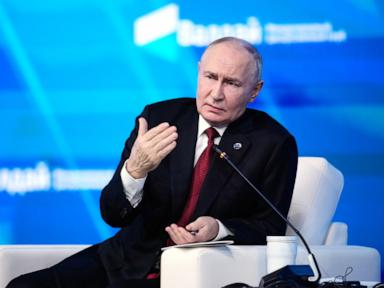
We live in an era where severe warnings from geopolitical theorists often blend into the background noise of daily news. Yet, when figures labeled with stark monikers like Professor Doomsday speak out about the very real mechanics of escalation, people tend to sit up. Sergey Karaganov isn't just an academic throwing around theoretical threats. He represents a specific hardline current inside Moscow's foreign policy establishment, and his constant warnings about nuclear annihilation deserve a cold, hard look rather than an immediate dismissal.
When you hear a prominent analyst argue that Russia should consider lowering its threshold for using atomic weapons to cow Western nations, it sounds like cinematic fiction. It feels detached from rational statecraft. But statecraft doesn't always follow the rules we prefer. Understanding why these provocative ideas circulate requires examining how certain strategists view the current global chessboard, the breakdown of traditional deterrence, and why the stakes are higher than most citizens care to admit. For a closer look into this area, we suggest: this related article.
The Logic Behind Nuclear Brinkmanship
Most people assume deterrence is a stable math equation. Country A has weapons, Country B has weapons, and nobody wants to burn because mutual destruction is guaranteed. Professor Doomsday challenges this comforting baseline. The core argument rests on the belief that Western political systems have grown too comfortable, too detached from the horrific reality of strategic warfare, and therefore too willing to push boundaries through proxy conflicts.
From this perspective, conventional deterrence has failed because leaders in Washington, London, and Brussels believe Moscow will never actually cross the Rubicon. To fix this perceived imbalance, hardline analysts suggest injecting raw fear back into the equation. They argue that unless adversaries genuinely believe an atomic strike is possible over certain red lines, they will continue slicing salami tactics until the home front faces an existential threat anyway. To get more information on this issue, extensive analysis can be read at NPR.
It's a terrifying philosophy. It treats human lives as pawns on a tactical board where the ultimate threat is meant to paralyze decision-makers. You don't have to agree with the premise to recognize how dangerous it is when policymakers start listening to these theories.
Why Deterrence Theory Is Breaking Down
For decades, the global order relied on stable doctrines forged during the Cold War. Hotlines existed. Treaties capped arsenals. Both sides understood the guardrails. Those guardrails have rusted through completely.
Arms control agreements have collapsed one by one. Communication channels between major capitals are strained, overly bureaucratic, or entirely silent. When trust hits rock bottom, miscalculation becomes the primary driver of catastrophe. A stray missile, a misinterpreted radar blip, or a poorly timed military exercise can cascade into a crisis before anyone has time to verify facts.
Take a look at how fast regional conflicts draw in global superpowers today. Supply chains link economies, intelligence sharing happens in real-time, and cyber attacks blur the line between peace and active combat. When you mix rapid-fire digital communications with stagnant military doctrines, you get a recipe for sudden, unmanageable escalation.
The Rhetoric Versus The Reality On The Ground
We need to separate academic bluster from actual military posture. Analysts like Karaganov push boundaries to shift the Overton window, making extreme options look like reasonable middle grounds compared to total defeat. It's a classic negotiating tactic scaled up to the planetary level.
However, dismissing it entirely as mere talk is a massive mistake. Military doctrine adapts to political pressure. When leaders hear the same aggressive theories repeated enough times by influential voices, those theories creep into operational planning. Budgets shift. Nuclear readiness protocols get updated. Drills simulate scenarios that used to be unthinkable.
Millions dying isn't just a dramatic phrase tossed around for internet clicks. It's the baseline mathematical projection of a strategic exchange involving modern thermonuclear warheads. The infrastructure of modern civilization cannot absorb that kind of kinetic shock. Hospitals vanish. Power grids fail. Food distribution collapses within days. The aftermath makes the initial blast look almost merciful.
What Citizens Can Actually Do
Feeling helpless doesn't help anyone. While you can't personally renegotiate international arms treaties or redesign the nuclear triad, you can stay informed without panicking. Ignore the sensationalist headlines designed purely to spike your adrenaline. Look past the clickbait and focus on deep, rigorous reporting from defense experts who actually understand the hardware and the history.
Support leaders who prioritize diplomatic backchannels, military transparency, and arms control renewals. Vote with an awareness of foreign policy realities. Pay attention to how your government handles gray-zone conflicts and cyber warfare, because those are the friction points where accidental wars actually start.
The threat is real, but fatalism is useless. Clear eyes, steady nerves, and an insistence on honest, sober diplomacy offer the only real path away from the abyss.