The mainstream media loves a simple aesthetic disaster. When the Lincoln Memorial Reflecting Pool turned a murky, soupy green following a multi-million dollar renovation, the headlines practically wrote themselves. Editorial boards rushed to blame administrative incompetence, rushed construction, or political interference. Then, when the fountain at the nearby Malcolm X Park began spitting out brown, sediment-heavy water, the narrative solidified: Washington’s water infrastructure was in a state of terminal, embarrassing collapse.
It is a neat, tidy story. It is also completely wrong.
The panic over green and brown water in urban parks exposes a deep, structural ignorance about how water systems, ecology, and municipal engineering actually interact. For decades, the public has been conditioned to expect public water features to look like backyard swimming pools—crystal clear, chemically sterilized, and entirely dead. When nature inevitably reclaims these massive, open-air basins, we treat it as a management failure rather than an ecological certainty.
Having spent twenty years analyzing urban infrastructure and resource allocation, I can tell you that the obsession with pristine park water is actively draining municipal budgets and harming the environment. The "lazy consensus" screams for more chemicals, more filtration, and tighter control. The reality? We need to stop fighting natural water biology and start managing our expectations.
The Algae Myth: Why Green Means a System is Working
Let’s dismantle the Lincoln Reflecting Pool hysteria first. The pool was redesigned to be more sustainable, shifting from a system that dumped millions of gallons of potable city water down the drain every week to a recirculating model that utilizes ozone treatment instead of massive doses of chlorine.
Almost immediately, the water turned green. The public threw a fit.
What the critics missed is basic biology. The Lincoln Reflecting Pool is a shallow, three-foot-deep, two-thousand-foot-long concrete pan sitting directly under the intense mid-Atlantic summer sun. It collects duck droppings, urban runoff, dust, and windblown organic matter. It is, for all intents and purposes, a massive petri dish designed to grow algae.
When you switch from heavy chemical sterilization (chlorine) to an eco-friendly system (ozone), you create a window where natural biology will take over. Ozone kills bacteria and breaks down organic matter at the point of treatment, but it leaves no chemical residual in the water to fight algae growth under the sun. The green tint isn't a sign of failure; it's a sign that the water is no longer a toxic, chemical dead zone.
Imagine a scenario where we demand the National Park Service dump thousands of pounds of copper sulfate and chlorine into the reflecting pool every week just to satisfy a tourist's desire for a blue mirror effect. The runoff from draining that pool would devastate local aquatic ecosystems downstream in the Potomac. The green hue is the price of sustainability. If you want a sterile blue rectangle, go to a hotel resort. Public monuments shouldn't be run like water parks.
The Brown Fountain Panic: Sediments Aren't Sickness
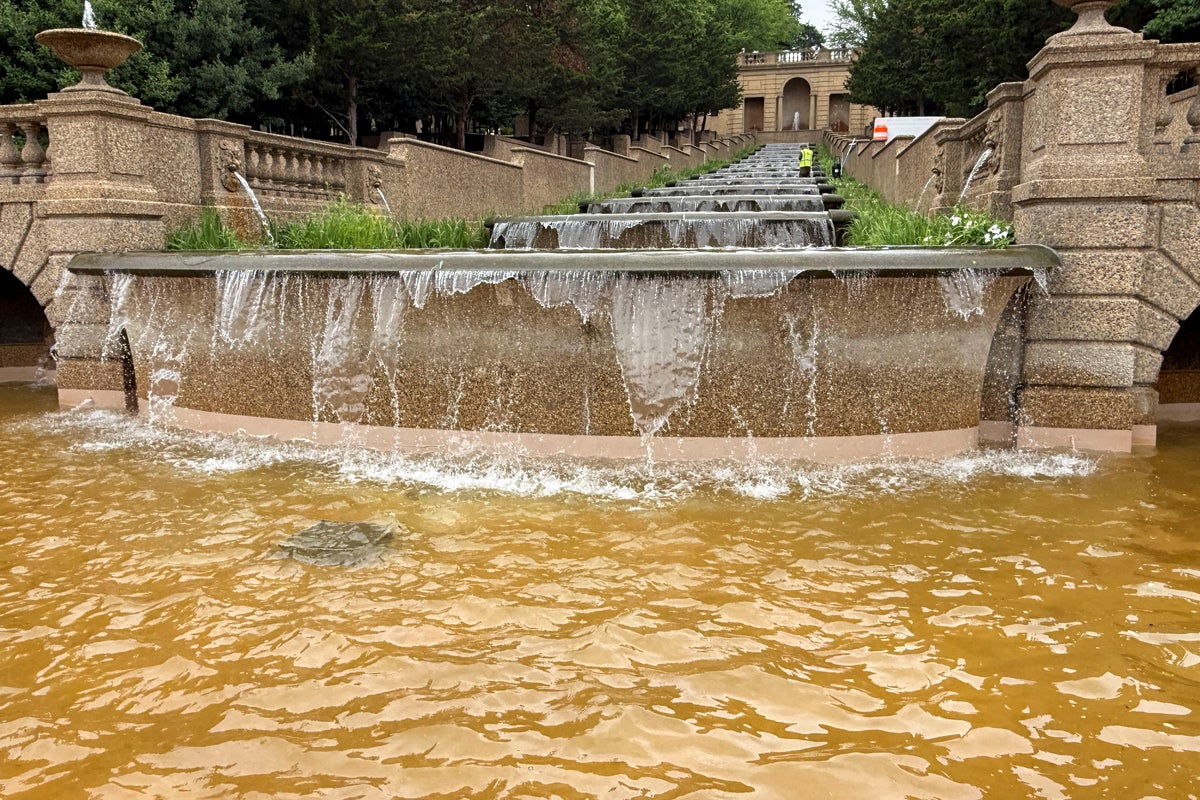
Shortly after the Reflecting Pool story broke, local reporting pivoted to the cascading fountain at Malcolm X Park (Meridian Hill Park), pointing out its muddy, brown water as further proof of decay.
This is where lack of technical literacy becomes genuinely damaging. Fountains like the one at Malcolm X Park operate on complex, aging hydraulic systems that draw from local water tables or older municipal mains. When a fountain's water turns brown suddenly, it is almost always due to two factors: iron oxide shedding from century-old cast-iron pipes during pressure fluctuations, or heavy stormwater runoff overwhelming the intake filters.
Brown water looks terrible on Instagram, but iron sediment is fundamentally harmless to public health in an outdoor, non-potable fountain. The knee-jerk reaction from local politicians is to demand an immediate shutdown and an expensive, emergency overhaul of the filtration grid.
This is a catastrophic waste of capital. I have seen cities blow millions of dollars retrofitting historic water features with high-tech, multi-stage filtration loops that get choked out by organic debris within six months. The sediment eventually settles. The pipes eventually flush themselves out. Shutting down a historic park feature for six months to chase away temporary discoloration is an exercise in bureaucratic vanity.
The Brutal Truth About Municipal Resource Allocation
Every dollar spent turning a park fountain from natural brown or ecological green back to synthetic blue is a dollar stolen from critical infrastructure.
Let's look at the numbers. Maintaining pristine clarity in a water feature the size of the Lincoln Reflecting Pool requires constant mechanical filtration, regular draining, manual scrubbing, and continuous chemical balancing. This costs hundreds of thousands of dollars annually per feature.
Meanwhile, just miles away from these monumental tourist traps, actual drinking water infrastructure is plagued by legitimate crises:
- Lead service lines requiring replacement.
- Combined sewer overflows (CSOs) dumping raw sewage into rivers during heavy rains.
- Decaying water mains causing catastrophic pressure drops in residential neighborhoods.
To demand that the city prioritize the cosmetic appearance of non-potable, decorative water features over the fundamental safety of residential drinking water is civic malpractice. The status quo dictates that if a monument looks dirty, it must be fixed immediately to preserve the city's image. We need to flip that paradigm completely. A dirty monument is a badge of honor—it means the city is spending its money where it actually matters.
Re-Engineering the Expectation
The unconventional advice that nobody wants to hear is simple: we need to let our public water features age, discolor, and integrate with the local environment.
In Europe, historic fountains are routinely covered in moss, filled with river silt, and allowed to shift colors with the seasons. The water is understood to be part of the urban landscape, not an indoor plumbing fixture. In North America, our hyper-sanitized view of nature demands that even our outdoor spaces mimic the cleanliness of a surgical suite.
If we want sustainable cities, we have to embrace aesthetic imperfection. The water in the Lincoln Reflecting Pool will get murky. The fountains at Malcolm X Park will occasionally run brown after a storm. This is not infrastructure failure; it is the natural world refusing to be contained by concrete and politics.
Stop asking why the water is green. Start asking why we are still spending millions of dollars trying to make it blue.
Turn off the chemical pumps. Let the silt settle. Accept the mud.