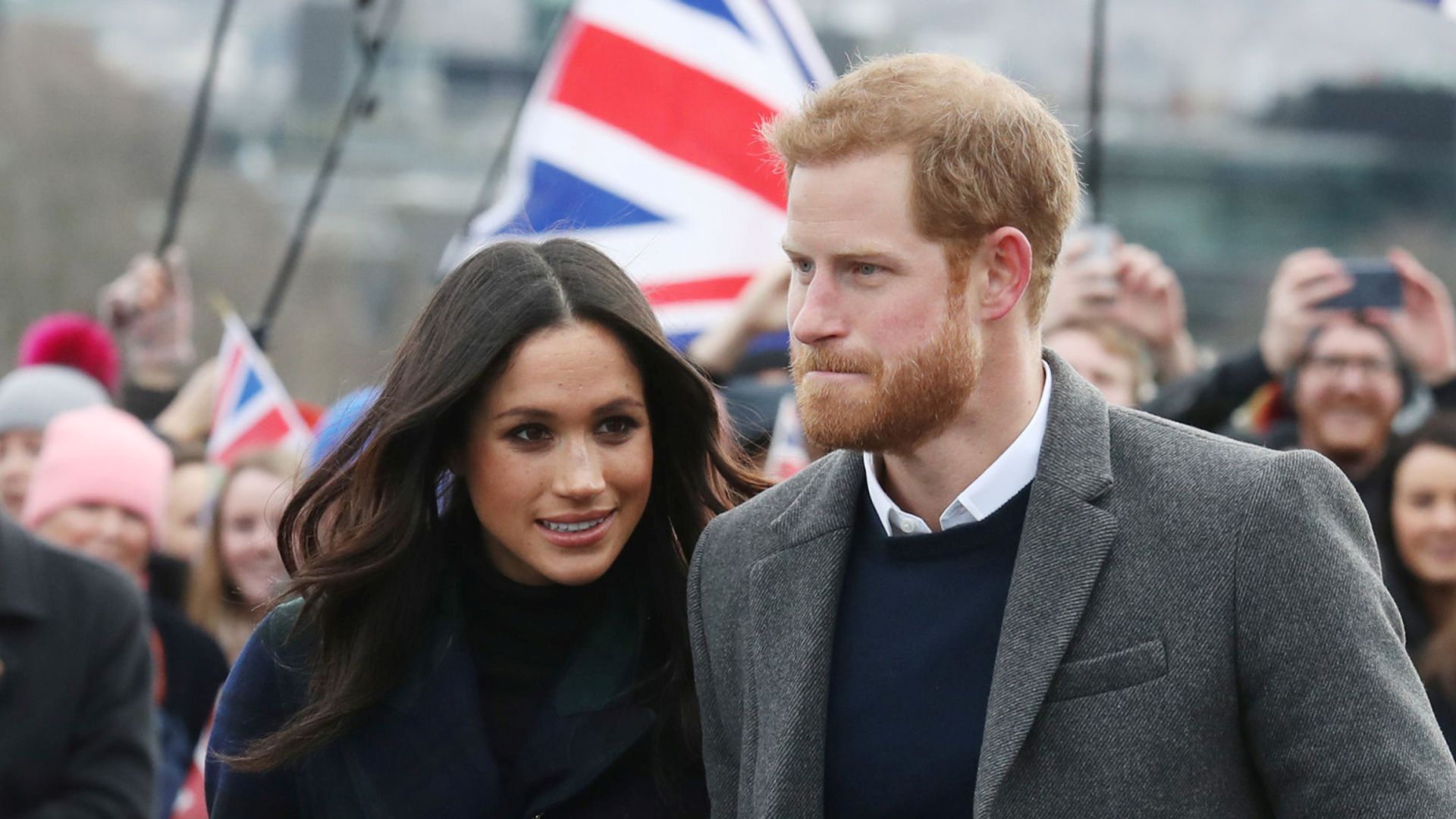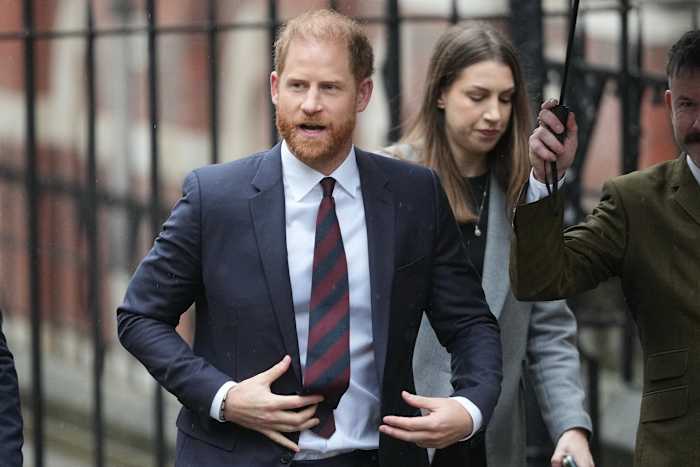
The media narrative surrounding Prince Harry’s endless war with Fleet Street follows a tired, predictable script. On one side, you have the noble, aggrieved prince weaponizing the British High Court to protect his family and clean up the gutter press. On the other side, you have the unscrupulous tabloid editors hacking phones and buying illegally obtained information. Every time a judge hands down a ruling, commentators obsess over who won the day.
They are missing the entire point.
This isn't a battle for privacy. It never was. It is a sophisticated, highly calculated branding exercise designed to replace the old media gatekeepers with a new, corporate PR machinery controlled entirely by Montecito. The lazy consensus wants you to believe that Harry is a martyr for civil liberties. The reality is far more cynical. By treating the courtroom as a stage for personal grievances, these high-profile privacy suits are actively distorting the legal system, narrowing the scope of legitimate public interest journalism, and masking a deeper truth. Harry doesn't want the cameras to stop flashing; he just wants to hold the remote control.
The Co-Dependency Media Model
To understand why this legal crusade is a charade, look at the fundamental economics of modern celebrity. Having spent over two decades navigating the media industry from the inside, I can tell you that the relationship between public figures and the press is never purely adversarial. It is symbiotic.
The standard narrative suggests that tabloids hunt celebrities against their will. In reality, the celebrity ecosystem relies on a constant exchange of currency. Fame requires oxygen. The moment a celebrity completely detaches from the media ecosystem, their cultural capital plummets, and with it, their commercial value.
Consider the sheer volume of content produced by the Duke and Duchess of Sussex since their departure from senior royal duties. A multi-million-dollar Netflix docuseries, a tell-all memoir, Spotify podcasts, and high-profile American magazine profiles. These are not the actions of individuals seeking a quiet, private life away from the public gaze. They are the actions of a media enterprise competing for the same digital attention span as the very tabloids they sue.
The legal strategy serves as the perfect marketing engine for this enterprise. Every court appearance reinforces the narrative of victimization, which is the foundational pillar of the Sussex brand. The litigation generates the exact kind of global headlines that keep the brand relevant, feeding the content loop. If the tabloids truly stopped writing about them tomorrow, the financial architecture supporting their current lifestyle would collapse. They need the monster to keep fighting it.
The Distortion of the Public Interest Standard
When these privacy cases reach the High Court, the legal arguments inevitably hinge on what constitutes the public interest versus what is merely interesting to the public. This is where the legal precedent becomes dangerous.
British privacy law has evolved rapidly since the Human Rights Act 1998, primarily through judicial interpretation rather than parliamentary legislation. By continually expanding the definition of a "reasonable expectation of privacy" for ultra-wealthy individuals, the courts are creating a chilling effect that extends far beyond gossip columns.
When a prince sues over the methods used to uncover stories from twenty years ago, it sets a precedent that restricts investigative journalism today. If the threshold for what the press can investigate is restricted to only what a billionaire or a royal deems acceptable, accountability vanishes.
Imagine a scenario where a politician or a corporate executive uses the exact same legal arguments pioneered by royal litigants to suppress an investigation into financial misconduct, claiming that the initial tip-off violated their right to a private life. It happens constantly. The wealthy use these exact privacy laws as a shield against legitimate scrutiny. Harry’s legal victories do not protect the ordinary citizen whose phone will never be hacked; they protect the powerful from being exposed.
The Myth of the Unbiased Royal Witness
Watch the courtroom dynamics during these trials. The mainstream press coverage often treats the claimant’s testimony with a level of deference that defies basic journalistic skepticism. When Harry took the witness stand in his suit against Mirror Group Newspapers, it was framed as a historic moment of reckoning.
Strip away the royal mystique, and the testimony was legally weak. It consisted largely of generalized grievances, assumptions, and an admission that he could not remember specific details of the articles in question. In any other civil litigation, a claimant showing up with minimal direct evidence and relying heavily on emotional impact would be dismantled by the defense.
The strategy succeeded not because of overwhelming forensic proof, but because the court of public opinion had already chosen a side. The legal system is designed to assess specific breaches of statutory duty, not to adjudicate historical family trauma or settle scores with editors from the early 2000s. By dragging deeply personal, unverified family dynamics into a court of law, the process ceases to be about justice and becomes a therapeutic exercise played out on the public dime.
Why the Tech Giants Win in This Fight
There is a massive blind spot in the anti-tabloid argument. While Harry rails against ink-stained editors and traditional newspaper groups, he remains largely silent on the entities that actually destroyed modern privacy: the Silicon Valley tech platforms.
The British tabloids are dying legacy institutions. Their print circulations are in terminal decline, and their digital ad revenues are dwarfed by the major search and social media monopolies. The real surveillance capitalism isn't happening through a long-lens camera on a public street; it is happening via the algorithms that track every click, purchase, and location data point of billions of people every single second.
By focusing all cultural outrage on traditional newspapers, the conversation remains stuck in 1997. The Sussex media strategy relies heavily on these very tech platforms to distribute their content and control their narrative. It is a masterful redirection. Attack the weak, unpopular legacy media while partnering with the digital giants that have commodified privacy on a scale Fleet Street could only dream of.
The High Cost of the Billionaires Playground
Let's look at the financial reality of these legal battles. The average citizen cannot afford to defend their privacy in the British High Court. A standard privacy or defamation suit can easily run into seven figures in legal fees before it even reaches a trial.
The system is rigged in favor of those with endless liquidity. When Prince Harry launches multiple concurrent lawsuits against major publishing houses, he is engaging in a war of attrition that only the top 0.01% can sustain.
This creates a dangerous asymmetry. A publisher facing a multi-million-pound legal bill from a royal litigant may choose to spike a completely true, valid story simply because the cost of defending it in court could bankrupt the company. This is corporate censorship by another name. The result is a media environment where the truth is secondary to the depth of the subject's pockets.
Dismantling the Press Freedom Argument
Defenders of the royal legal strategy argue that press freedom is not absolute and that illegal methods must be punished. This is true. Phone hacking was a systemic failure that deserved criminal prosecution, which it received over a decade ago during the Leveson Inquiry and subsequent criminal trials.
The current wave of litigation, however, is trying to fight a war that was already won. It is an exercise in grave-digging. By raking over historical grievances from decades past, these suits are not reforming current journalistic practices; they are punishing current editorial teams for the sins of their predecessors.
The unintended consequence of this constant legal pressure is the sanitization of the press. A press that is terrified of litigation becomes toothless. It stops taking risks. It stops investigating the powerful. The lazy consensus celebrates this as a victory for decency, but it is actually a catastrophic loss for democratic accountability.
The Selective Outrage of Corporate PR
The most hypocritical element of this entire saga is the selective nature of the privacy complaints. The Sussexes have made it clear that they object to press intrusion only when they do not control the output.
When they invite a camera crew into their private home to film a documentary, or when intimate details of family arguments are published in a ghostwritten memoir, privacy is irrelevant. The details are broadcast to millions because there is a financial return and a narrative benefit. Intrusion is redefined as "sharing our truth."
This exposes the fundamental flaw in the crusade. It is not an objection to the violation of privacy; it is an objection to the loss of editorial control. The goal is to establish a precedent where public figures can dictate exactly how they are covered, eliminating independent journalism entirely and replacing it with corporate press releases and sanctioned content.
The Execution of the Legal Trap
If you analyze the mechanics of the litigation, the long-term play becomes clear. The objective is to force major publishers into global settlements that include non-disclosure agreements and massive financial payouts.
This strategy uses the legal system to create a permanent revenue stream and a defensive shield. Every settlement achieved is used as leverage against the next publisher. It creates a domino effect designed to break the financial will of the traditional media.
This approach has serious downsides that the contrarian must acknowledge. It burns bridges permanently. It ensures that the legacy media will never provide favorable coverage, forcing the celebrity to remain entirely dependent on alternative, self-funded distribution channels. It is a high-risk gamble that assumes the public will never grow weary of the grievance loop. If the audience tunes out, the entire economic model collapses, leaving the celebrity with massive legal overheads and a dwindling platform.
The Reality of the Modern Newsroom
To believe that these lawsuits are reforming journalism is to misunderstand how a modern newsroom operates. Today's editorial decisions are driven by digital metrics, search engine optimization, and programmatic ad revenue.
The salacious, illegal tactics of the early 2000s are obsolete not because of Prince Harry’s lawsuits, but because technology made them irrelevant. The public openly volunteers their private data on social media every day. Editors do not need to hack phones to find out what a celebrity is doing; they just need to watch their Instagram feed or monitor public registries.
The legal crusade is fighting a ghost. It is a performative battle against an era of journalism that no longer exists, waged by a public figure who uses the very machinery of publicity to maintain his status while claiming to despise it. The court rulings may go in his favor, but the premise of his entire war is fundamentally dishonest. It is time to stop viewing this as a righteous battle for ethics and see it for what it truly is: a corporate turf war for control of the narrative.