A single siren in Tel Aviv does something to the human nervous system that no white paper or budget briefing can replicate. It is a primitive, bone-deep sound. When it wails, fathers scoop up toddlers mid-giggle. Grandmothers leave kettles whistling on the stove. There is a frantic, coordinated rush toward reinforced concrete. Then, the wait. You look upward, squinting against the Mediterranean sun, searching for the signature white plume of a Tamir interceptor. You are looking for a miracle of physics.
When the flash occurs—a silent burst of orange high in the blue—the city exhales. That collective breath is the "Golden Dome" in practice. It is the literal commodification of peace of mind.
But back in the windowless corridors of the Pentagon and the marble halls of Capitol Hill, that peace of mind is being weighed against a cold, unrelenting ledger. Donald Trump’s vision for an American "Impenetrable Shield"—an Iron Dome for the continental United States—is no longer just a campaign applause line. It is a line item. And the numbers are starting to scream.
The Architecture of Anxiety
The technical challenge is a monster. Protecting a country the size of Israel, which is roughly the size of New Jersey, is a manageable feat of engineering. Protecting the United States is an exercise in geological scale. We are talking about 3.8 million square miles of airspace.
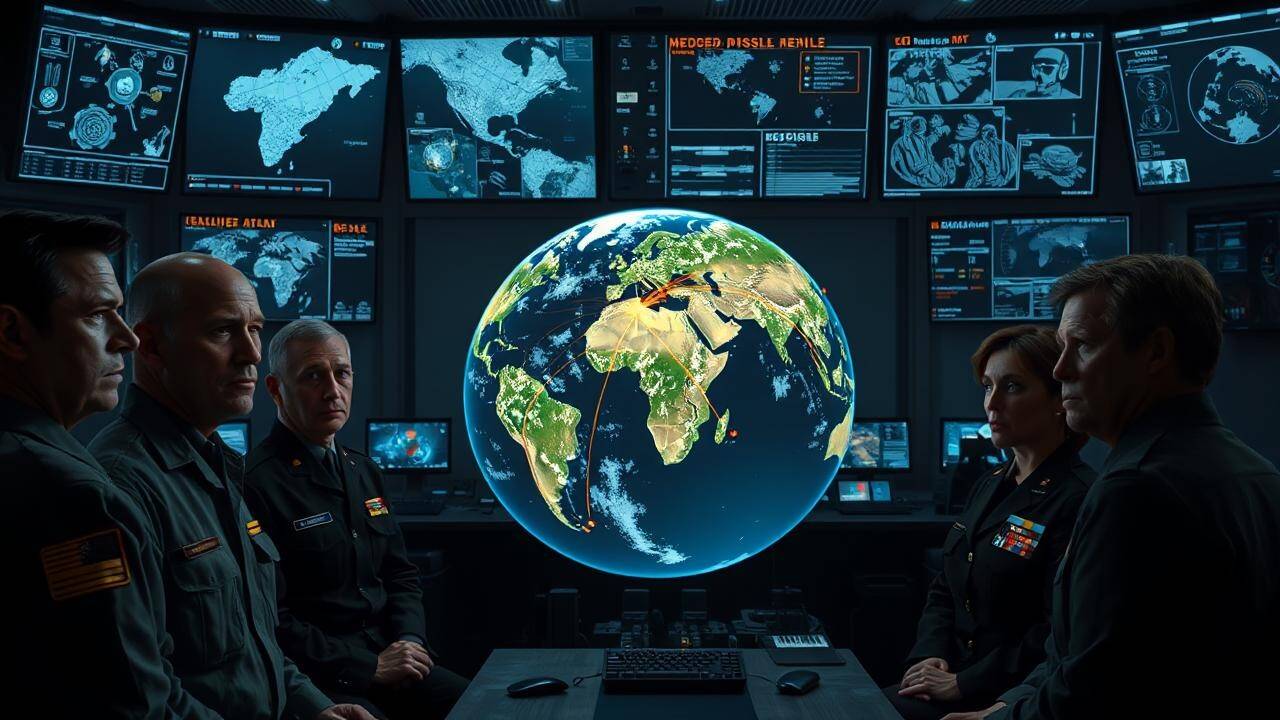
To cover that much ground, you don't just buy a few batteries. You have to build a sensory nervous system that spans from the Aleutian Islands to the Florida Keys. Thousands of radar arrays must talk to hundreds of satellite sensors, all feeding data into an AI-driven brain that can distinguish between a flock of geese, a wayward weather balloon, and a hypersonic glide vehicle traveling at five times the speed of sound.
The Pentagon’s current strategy focuses on "layered" defense. Think of it like a series of filters. The first filter catches the big, slow stuff far out in space. The second catches the maneuvering missiles in the upper atmosphere. The "Golden Dome" would be the final, desperate filter—the goalie standing on the goal line.
But goalies are expensive.
Each interceptor missile can cost upwards of $100,000 to $2 million depending on its sophistication. In a world where an adversary can overwhelm a system by launching thousands of "dumb" drones that cost $20,000 apiece, the math fails. We are spending a fortune to shoot down a garage-built kite. This is the "cost-exchange ratio," a dry term for a terrifying reality: the defense can be bankrupted by a cheaper offense.
The Ghost in the Machine
Consider a hypothetical operator named Sarah. She sits in a darkened room in Colorado, staring at a screen that represents the lives of millions. Her job isn't to pull a trigger; the machines move too fast for human reflexes. Her job is to trust the software.
If the Golden Dome is built, Sarah becomes the most important person in the world who nobody knows. She is the human element in a $500 billion gamble. But what happens when the budget squeeze hits?
Budget cuts don't usually look like a canceled project. They look like "deferred maintenance." They look like sensors that aren't upgraded quite as often as they should be. They look like software patches that are delayed because the coding team was halved. For Sarah, a budget squeeze means the "false positive" rate on her screen might tick up by half a percent. In her world, half a percent is the difference between a quiet Tuesday and an international catastrophe.
The Pentagon is currently pushing for a massive infusion of cash to bring this shield to life, but they are running headlong into a Congress that is increasingly wary of the "forever deficit." The clash is inevitable. On one side, you have a commander-in-chief who views national defense as a branding exercise in strength—a literal dome of gold. On the other, you have the accountants of the military-industrial complex who know that even gold eventually wears thin.
The Invisible Stakes
We often talk about missile defense as a way to stop a war. But there is a more subtle, psychological argument at play. When a population feels vulnerable, its politics change. It becomes more insular, more reactive, more prone to the kind of fear that demagogues thrive on.
The promise of the Dome isn't just about stopping a warhead. It’s about stopping the fear of the warhead.
If the American public believes they are safe behind an unhackable, unpassable shield, the national psyche shifts. We become bolder. Perhaps, critics argue, we become more reckless. This is the paradox of protection: the safer you feel, the more risks you are willing to take. If the shield is perceived as perfect, the deterrent of "Mutually Assured Destruction" evaporates. Why fear the fire if you have an asbestos suit?
But the fire is changing.
The threat today isn't just the lumbering Intercontinental Ballistic Missiles of the Cold War. It’s the "gray zone" threats. It’s the swarm of five hundred drones, each the size of a microwave, flying low enough to hug the terrain and dodge the radar. It’s the hypersonic missile that skips along the atmosphere like a stone on water, arriving before the siren even has time to warm up.
To stop these, the Golden Dome can't just be a wall. It has to be a cloud. It has to be everywhere at once.
The Arithmetic of Survival
The current budget squeeze is forcing the Pentagon to make impossible choices. Do they fund the "Next Generation Interceptor" (NGI), designed to hit a bullet with a bullet in space? Or do they pivot to directed energy—lasers that can fire for the cost of a gallon of diesel?
Lasers are the holy grail. They don't run out of ammunition. They move at the speed of light. They solve the cost-exchange ratio instantly. But lasers require a massive amount of power and struggle with things like fog, smoke, and rain. They are a fair-weather defense for a stormy world.
So we are stuck in the middle. We are building the expensive, old-fashioned rockets while praying the new-fashioned light beams become a reality before the money runs out.
Every dollar spent on a missile battery in Guam is a dollar not spent on crumbling bridges in Ohio or failing schools in Alabama. This is the "opportunity cost" of the dome. We are trading the visible needs of the present for a hypothetical safety in the future. It is a trade we have made many times before, but never on this scale.
The Human Ledger
Walk through any major American city and look up. You don't see a shield. You see the open sky. We have lived with that vulnerability for decades, a quiet background radiation of the modern age. We accepted that there was no such thing as a perfect defense.
The push for the Golden Dome is an attempt to repeal that law of nature. It is a grand, sweeping gesture of defiance against the reality of modern physics. It tells the American people that they can be untouchable.
But as the budget meetings drag on and the "prioritization" memos fly, the gold is starting to look more like brass. The Pentagon wants the shield. The White House wants the shield. The taxpayer, perhaps unknowingly, wants the feeling the shield provides.
Yet, the math remains indifferent to our desires.
The real danger isn't that the dome will fail. The danger is that we will build half a dome. We will spend enough to feel safe, but not enough to actually be safe. We will buy the sirens and the concrete bunkers, but skip the expensive sensors that make them work. We will create a theater of security—a massive, multi-billion dollar stage play where the audience is the entire nation.
In the end, the Golden Dome isn't a piece of hardware. It’s a promise. And in the high-stakes world of global defense, a promise you can't afford to keep is more dangerous than no promise at all.
The sun sets over the Potomac, reflecting off the glass of the Pentagon. Inside, people are still arguing over decimals. They are trying to find a way to pay for the sky. They are looking for a way to tell Sarah that her screen will be clear, and to tell the father in the city that he doesn't need to scoop up his child. They are trying to find the money to buy a miracle.
The sirens are silent for now. But the clock is ticking, and the ledger is waiting for its due.