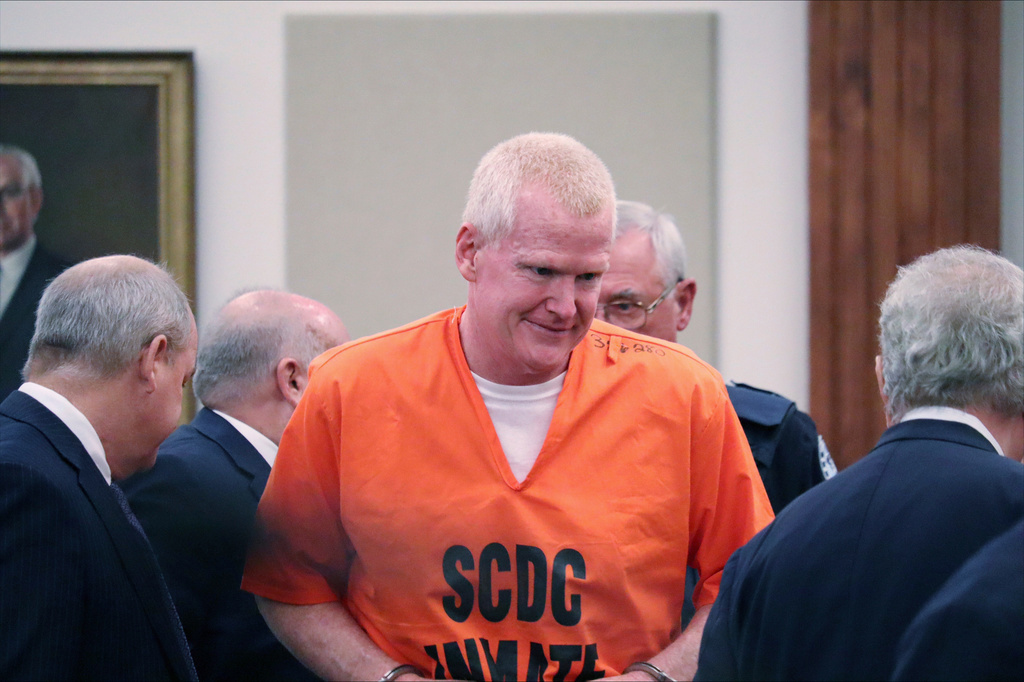
The air inside the Colleton County Courthouse carries a specific weight. It smells of floor wax, old paper, and the heavy, humid expectation of the South Carolina Lowcountry. For six weeks, this room was the center of a global orbit. Alex Murdaugh, a man whose name was once synonymous with regional power, sat at the defense table while the world watched a Greek tragedy play out in real-time. But while the cameras were fixed on the fallen scion and the grisly details of a double homicide, a different kind of drama was unfolding in the shadows of the jury box.
It was a drama of ambition.
Rebecca Hill, the Clerk of Court, was the gatekeeper of this sanctuary. Her job was mechanical, sacred, and supposedly invisible. She was the administrator of the machinery of the law. Yet, as the trial reached its fever pitch, the boundary between public servant and private opportunist began to blur.
The jury is a fragile ecosystem. Twelve strangers are plucked from their lives, stripped of their phones, and told to decide the fate of a human being based solely on what is said within the four walls of a courtroom. They are told to ignore the noise of the world. But what happens when the noise comes from the person handing them their water bottles and escorting them to the restroom?
The Whispers in the Hallway
Imagine you are a juror. You have been sequestered from your family. You are exhausted by the technical jargon of blood spatter and high-velocity impact. You look to the court staff for stability. You trust them because they represent the Institution.
According to sworn affidavits that later shook the foundations of the verdict, Becky Hill began to seed the clouds. She didn't use a megaphone. She used the intimacy of her position. She allegedly told jurors not to be "fooled" by Murdaugh’s testimony. She urged them to watch him closely. She told them to look at his expressions, to judge his heart before they judged the evidence.
In a trial of this magnitude, a single word from an official can hit like a gavel.
Why would a clerk risk the integrity of a murder trial? The answer is as old as the hills: a book deal. Hill was writing a memoir, a "behind-the-scenes" look at the trial of the century. To make that book a bestseller, she needed a specific ending. She needed a conviction. A hung jury is a messy, unsatisfying narrative. An acquittal is a shock that might alienate a local audience. But a guilty verdict? That is a definitive closing chapter.
She wasn't just clerk of court anymore. She was a ghostwriter for the prosecution, editing the reality of the jury’s experience to ensure her own literary success.
The Hidden Stake of a Fair Shake
Justice is often described as blind, but it is actually hypersensitive. It is a scale so delicate that the breath of a bystander can tip it. When Hill allegedly pressured the jurors to reach a quick decision, she wasn't just trying to go home early. She was protecting her brand.
Consider the "egg juror." This juror was removed from the panel late in the trial under circumstances that smelled of theater. Hill reported that the juror’s ex-husband had made a Facebook post claiming she was going to "swing" the verdict. It was a scandal. It was high drama. It was also, as it turned out, based on a post that likely never existed or was misconstrued beyond recognition.
By removing a juror who might have held out for a different verdict, the path to a unanimous "Guilty" was cleared. The narrative was preserved. The book was safe.
But the cost of that safety was the very thing the courthouse was built to protect: Due Process. It is easy to look at Alex Murdaugh—a man convicted of stealing millions from the vulnerable and eventually convicted of the brutal murder of his wife and son—and say that the end justifies the means. We want the villain behind bars. We want the story to end with the bad man in a jumpsuit.
However, the law doesn't care about the quality of the villain. It cares about the integrity of the process. If a clerk can tilt the scales for a book deal today, what stops a bailiff from doing it for a political favor tomorrow? What stops a judge from doing it for a headline?
The Fragility of the Box
The jury room is supposed to be a vacuum. Inside, the only things that should exist are the testimony, the exhibits, and the conscience of the twelve. When Becky Hill allegedly entered that vacuum, she brought the outside world with her. She brought her own aspirations, her own financial interests, and her own biases.
The defense team eventually filed for a new trial, citing this unprecedented interference. They brought forward jurors who felt pressured, who felt watched, and who felt that the "motherly" figure of the clerk was actually a shepherd herding them toward a specific pen.
One juror later testified that Hill’s comments influenced her vote. Think about that weight. A woman tasked with the ultimate civic duty, deciding whether a man spends the rest of his life in a cage, was swayed not by a smoking gun, but by the casual, authoritative prodding of a court official.
It is a terrifying realization. Our system of justice relies on the honor of those who wear the robes and those who carry the files. When that honor is traded for a spot on a bestseller list, the building remains, but the temple is gone.
The Echo of the Gavel
The Murdaugh trial was always about more than the crimes of one man. It was a mirror held up to a system that had allowed a single family to rule a corner of the world for a century. It was supposed to be the moment the system proved it could clean its own house.
Instead, the allegations against Becky Hill suggested that the rot wasn't just in the Murdaugh family tree—it was in the very soil of the court.
Hill eventually resigned. Her book, Behind the Doors of Justice, became a bitter irony. The doors she wrote about were supposed to be locked to protect the truth, not opened to sell it. Her career ended in a flurry of investigations and ethics complaints. The "boost" she sought for her book ended up being the very thing that dismantled her reputation.
But the damage to the public trust is harder to repair than a single career. Every time a high-profile case captures the national imagination, we now have to ask: Who else is writing a book? Who else is looking at the jury and seeing a target audience?
We often think of corruption as a grand, cinematic conspiracy involving bags of cash and dark alleys. But real corruption is often much smaller. It is a whispered comment in a hallway. It is a wink to a juror. It is the quiet, desperate desire of an ordinary person to be part of something extraordinary, even if it means breaking the very thing they are sworn to uphold.
The Murdaugh saga continues to twist and turn through the appellate courts, a ghost that refuses to be laid to rest. And somewhere in the back of our minds, we are left with the image of a jury sitting in a quiet room, unaware that the person guarding the door is the one they should fear the most.
Justice is not a final destination. It is a continuous, exhausting act of vigilance. It is maintained by people who are willing to be bored, willing to be invisible, and willing to put the sanctity of the law above the lure of the spotlight. When that vigilance slips, even for a moment, the whole structure begins to lean.
The Colleton County Courthouse still stands. The wax still smells the same. But the silence in the jury box now feels a little more hollow, haunted by the ghost of a signature on a book contract that almost broke the law.