Money talks. Usually, it whispers in the hushed corridors of central banks or shouts from the trading floors of Wall Street. But sometimes, it speaks with the deafening roar of a legislative vote, echoing through the marble halls of government until it reaches the kitchen tables of ordinary citizens who are busy calculating whether they can afford another week of groceries.
When the salary of the highest-paid world leader climbs by eight hundred thousand pounds a year, the first reaction is rarely calm analysis. It is a sharp intake of breath. It is the sudden tightening of a jaw.
Think about what that kind of money represents. Not just numbers on a ledger or pixels glowing on a Bloomberg terminal. Real value. The kind of value that builds schools, paves crumbling rural roads, or funds emergency room beds during a bitter winter flu surge. When an individual’s annual compensation leaps by an amount that could buy a fleet of luxury homes, the contract between the governed and the governor shifts.
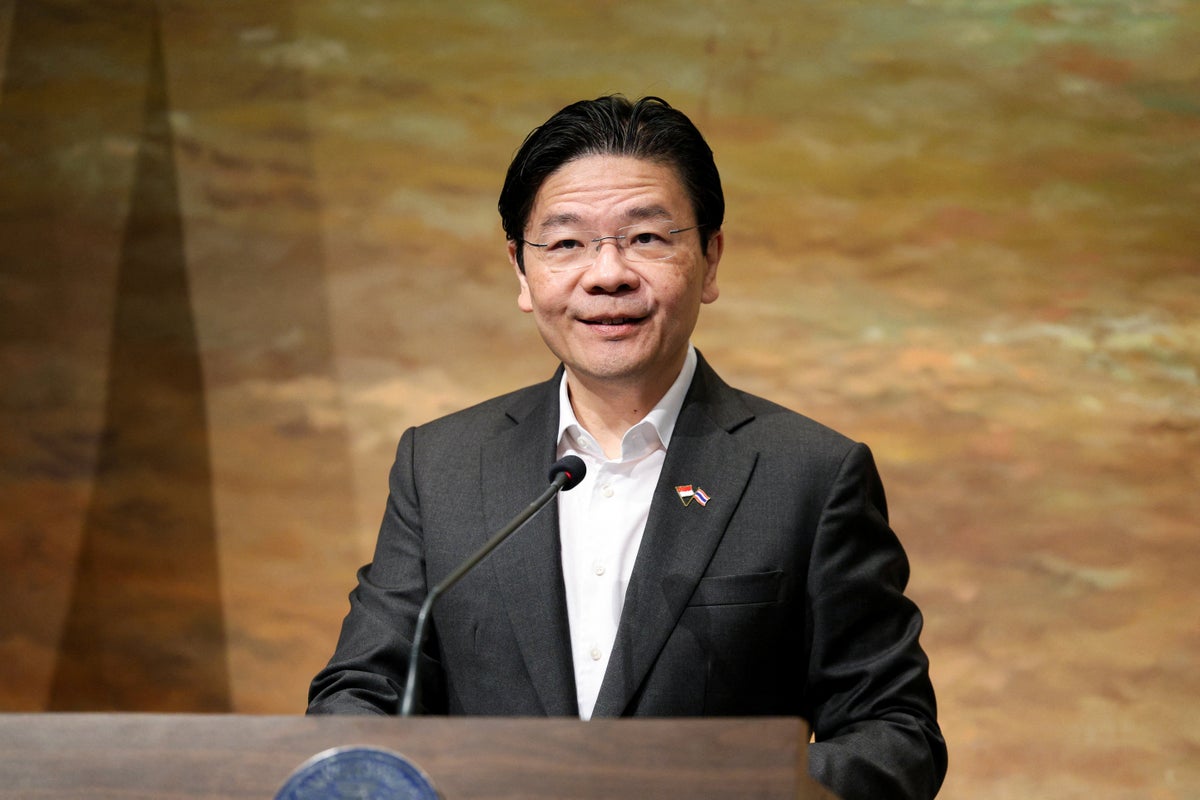
To understand why this happens, we have to look past the outrage and examine the peculiar mechanics of governing high-stakes territories. Take Singapore, for instance, where leadership compensation has long been tied to the private sector. The rationale is as cold as it is pragmatic: if you want the sharpest corporate minds to steer a nation, you must compete with multinational CEO salaries, or watch your best talent migrate to private equity boardrooms where the checks have many more zeros.
It is a utilitarian argument. Pay peanuts, get monkeys. Or, more accurately, pay moderately well, and watch your most competent engineers, financiers, and strategists walk out the door to run tech conglomerates instead of sovereign states.
Yet, governance is not a corporation.
A corporation answers to shareholders whose primary metric is return on capital. A nation-state answers to citizens whose metrics are infinitely more complex: dignity, safety, historical continuity, justice, and the quiet assurance that tomorrow will not be worse than today. When a political leader's paycheck balloons to stratospheric heights, it sends a psychological shockwave. It widens the empathy gap.
Imagine sitting in a cramped apartment in a rain-drenched suburb, watching the evening news. The radiator is clanking, stubbornly refusing to produce real heat. The utility bill sits on the counter, unopened because you already know it exceeds what is left in your checking account. Then, the anchor announces that the person at the very top of the political food chain has just received a pay bump that dwarfs your lifetime earnings over a few short years.
Disconnect.
That is the word. The distance between the apex of power and the base of society becomes a canyon.
Defenders of high political salaries often point to corruption. They argue that well-compensated leaders are less vulnerable to bribery. If a Prime Minister or President is already taking home millions, the temptation of a backdoor payoff loses its luster. There is historical precedent for this theory. In ancient Rome and throughout various monarchies, impoverishing rulers often invited desperate measures, embezzlement, and palace coups. A rich ruler is, in theory, a secure ruler. A secure ruler can afford to be honest.
But does a higher salary actually inoculate a leader against greed? Human history suggests otherwise. Greed is rarely an economic calculation; it is an emotional void. Piling more gold onto a throne does not satisfy the appetite for accumulation; it often just refines the palate.
Consider the optics. In a democracy, optics are not superficial. They are the currency of trust. When trust erodes, institutions rot from the inside out. People stop believing in the ballot box. They stop believing in the judiciary. They assume the entire apparatus is a private club designed to protect the interests of those who hold the keys to the treasury.
When an eight-hundred-thousand-pound raise is approved—whether through automatic indexing, independent review boards, or legislative votes—it triggers a visceral reaction because it exposes a double standard. While public sector workers like teachers, nurses, and sanitation workers are told to tighten their belts during economic stagnation, the chief executive’s compensation curve shoots upward like a SpaceX rocket.
We are told this is necessary to attract talent. But what kind of talent are we attracting? If a leader's primary motivation for running a country is a seven-figure salary, do we really want them at the helm when the storms hit?
History remembers the leaders who slept on cots, who wore frayed suits, who lived modestly while holding absolute power. Marcus Aurelius writing his meditations by candlelight. Nelson Mandela wearing his Madiba shirts with quiet dignity. Mahatma Gandhi with his spinning wheel. Their power did not derive from their bank accounts. It derived from moral authority.
When we monetize the highest office, we risk transforming public service into a career path for mercenaries. We trade the sacred trust of stewardship for the cold efficiency of executive management.
The debate over leader salaries forces us to confront a fundamental question about the nature of power. Are our leaders our employees, or are they our betters? If they are our employees, why are they negotiating executive compensation packages that rival Fortune 500 CEOs while managing entities that operate at a loss and cannot be liquidated? If they are our betters, then what happened to the egalitarian promise of modern democracy?
The eight-hundred-thousand-pound increase is not just a line item. It is a mirror. It reflects a society that has grown increasingly comfortable with staggering inequality, even at the very top of the civic ladder. It tells us that we value scarcity of administrative talent far above the collective well-being of the populace.
The check clears. The ledger balances. But somewhere out there in the quiet streets, beneath the flickering streetlights, the gap between the rulers and the ruled grows just a little bit wider, leaving a silence that no amount of money can fill.