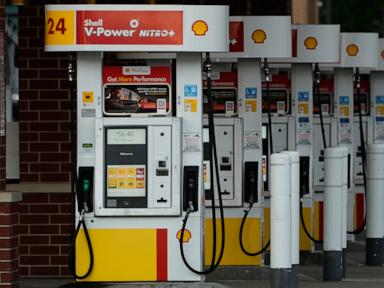
The numbers on the digital display at Pump 4 spin so fast they blur.
Sarah Miller watches them with a familiar, tightening knot in her chest. It is 6:15 AM on a Tuesday. The air in eastern Ohio is crisp, smelling faintly of damp pavement and cheap convenience store coffee. Her minivan takes twenty-two gallons to fill. Three weeks ago, this routine cost her seventy-eight dollars. Today, the total clicks past ninety-five, and the pump is still humming.
Sarah does not track the intricacies of Middle Eastern geopolitics. She does not read white papers on crude oil futures or monitor the diplomatic cables floating between Washington and Tehran. She managing a tight household budget. But whether she knows it or not, her family's weekly grocery list is tethered by an invisible, microscopic wire directly to a fragile, unwritten agreement thousands of miles away.
When that wire vibrates, Sarah pays.
The Mirage of Quiet
For months, a shaky, informal ceasefire between the United States and Iran has kept a lid on the worst-case scenarios of global energy markets. It was never a formal treaty. No one shook hands in front of flashbulbs. Instead, it was a quiet understanding, a mutual agreement to look the other way while certain pressures eased. Oil flowed. Supply chains adapted. The world breathed a cautious sigh of relief, and for a moment, energy prices drifted back down toward something resembling normal.
But peace built on a lack of friction is not peace at all. It is just waiting.
Consider what happens when that quiet begins to fray. The tension does not start with an explosion or a sudden embargo. It begins with whispers. A minor diplomatic spat here. A seized tanker there. A sudden, sharp rhetoric shift in a press briefing. To the casual observer, it looks like political posturing. To the commodity traders sitting in glass towers in New York and London, it looks like a fire alarm.
Oil is a unique beast. It is the only commodity that trades as much on anxiety as it does on actual physical supply. When a ceasefire looks tenuous, the market does not wait for the oil to stop flowing before raising prices. It charges an insurance premium up front.
The Physics of the Barrel
To understand why a dispute in the Persian Gulf changes the price of a gallon of milk in the American Midwest, you have to look at how deeply oil is baked into the physics of modern life.
Imagine a single barrel of crude oil. It is roughly forty-two gallons of thick, dark liquid. We tend to think of it strictly as gasoline for our cars, but that is only half the story. That single barrel is fractured and refined into diesel for the semi-trucks that deliver inventory to regional distribution hubs. It becomes the jet fuel that keeps overnight shipping networks alive. It is transformed into the petrochemicals used to make plastic packaging, synthetic fertilizers, and medical supplies.
When the geopolitical risk premium rises, the cost of that barrel ticks upward.
- The First Ripple: The shipping company notices the fuel surcharge instantly.
- The Second Ripple: The regional distributor adjusts their delivery fees to protect their margins.
- The Third Ripple: The grocery store chain faces higher invoices for every single pallet arriving at the loading dock.
By the time the friction reaches the consumer, it has mutated. It is no longer just about the cost of filling up a tank. It is an inflationary tax on existence. The consumer absorbs the cumulative weight of every extra dime spent on transportation along the way.
The Human Margin
This is where the abstract macroeconomics turn into human drama. For a corporate analyst, a five-dollar increase in the price of a barrel of crude is a data point on a chart. For people living on the economic margins, it is a series of quiet, painful compromises.
Let us look at a hypothetical scenario based on very real data. Take Marcus, a freelance delivery driver in Atlanta. His entire livelihood depends on his vehicle. When fuel prices spike by thirty percent, his hourly wage effectively drops. He cannot simply ask for a raise; the algorithm running his app does not care about the state of US-Iran relations. To make the same net income he made last month, Marcus has to drive an extra two hours a day. That is two hours away from his kids, two hours of extra wear and tear on an aging sedan, and two hours of compounding fatigue.
The true cost of geopolitical instability is measured in these stolen hours.
It is measured in the small businesses that put off hiring an extra hand because their utility and shipping costs are too volatile. It is measured in the winter heating bills that force older couples to turn the thermostat down to sixty-two degrees and wear coats indoors. The anxiety is cumulative, a slow-dripping faucet that erodes economic confidence long before a formal recession ever hits the headlines.
The Uncertainty Trap
The most difficult aspect of the current US-Iran dynamic is the sheer unpredictability. Markets can price in known risks. If a factory closes, analysts can calculate the exact deficit and adjust accordingly. But how do you price in a mood? How do you hedge against an unwritten ceasefire that could disintegrate over a single miscalculation in international waters?
We live in an era of hyper-connectivity, yet our most critical infrastructure remains vulnerable to ancient grievances. The Strait of Hormuz, a narrow choke point through which a fifth of the world’s petroleum passes, is essentially a global economic windpipe. If someone squeezes it, even slightly, the entire world gasps for air.
The current anxiety is not driven by a current shortage of oil. It is driven by the realization that our stability is an illusion. We are relying on a fragile equilibrium that requires every player to act rationally at all times. History suggests that is a terrible bet.
Sarah Miller finishes pumping her gas. The final number is ninety-eight dollars and forty-two cents. She replaces the nozzle, clicks the gas cap into place, and gets back behind the wheel. She glances at her phone, notes the time, and pulls out into the early morning traffic, joining millions of others driving to work under a sky heavy with things they cannot control.