The ink on a defense procurement file does not smell like aviation fuel. It smells like cheap cellulose and bureaucracy. Yet, when a bureaucrat in New Delhi signs a request for proposal, a chain reaction triggers across continents, moving billions of dollars and shifting the tectonic plates of global geopolitics.
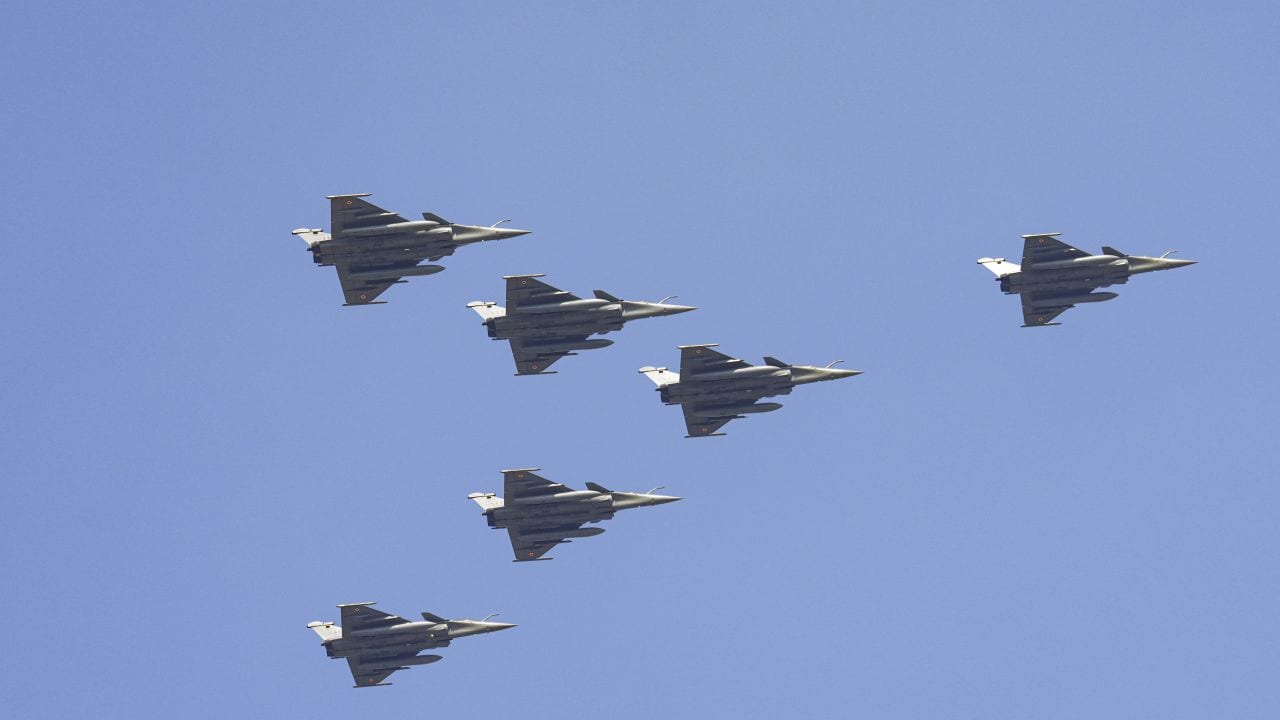
India has officially issued a formal request to France. The target is 114 Rafale fighter jets. The estimated cost is a staggering ₹3.25 lakh crore.
To the casual observer scrolling through a news feed, that number is just an abstraction. It is a digit followed by too many zeros to comprehend. It sounds like cold arithmetic. But military procurement is never about math. It is about a fundamental human obsession: the desire to control the horizon.
The Weight of an Empty Horizon
To understand why a nation spends a fortune on metal birds, you have to leave the air-conditioned boardrooms of New Delhi and stand on a tarmac in Ambala or Hashimara.
Picture a pilot. Let’s call him Vikram. He is thirty-two, has a young daughter who thinks he flies to the moon, and possesses a resting heart rate that would make an Olympic marathoner jealous. When Vikram straps into a cockpit, he is not thinking about bilateral trade deficits or the strategic autonomy of the Indo-Pacific. He is thinking about gravity, reaction times, and the fact that the airspace he patrols is becoming increasingly crowded.
The aircraft Vikram currently flies may be older than he is. For decades, the backbone of India’s air defense relied on legacy machines—monuments to Soviet-era engineering that require heroic amounts of maintenance just to stay airworthy. Flying them is an act of faith.
When a radar screen blips in the western or northern sectors, Vikram has seconds to react. If his radar cannot see past the mountains, or if his missiles are outranged by a potential adversary's, the geopolitical balance of power suddenly shrinks down to a very lonely, very terrifying reality inside a plexiglass canopy.
This is the invisible stake. The ₹3.25 lakh crore deal is not a shopping spree. It is an insurance policy against a nightmare.
Why France? The Psychology of the Unconditional Ally
The Multi-Role Fighter Aircraft (MRFA) program has been a long, agonizing saga. It has dragged on through various iterations, names, and political administrations for nearly two decades. Global defense firms from the United States, Russia, Sweden, and Europe have hovered over New Delhi like vultures, offering everything from F-15EXs to Gripen-Es.
Yet, India keeps returning to Paris. Why?
The answer lies in history and a deep-seated cultural preference for autonomy. Consider the concept of the "unconditional friend." In 1998, when India conducted nuclear tests in Pokhran, the Western world reacted with immediate, freezing sanctions. Washington wagged its finger. London condemned.
Paris, however, remained quiet. The French did not lecture. They understood that India’s geography dictates its security, a reality shaped by sharing thousands of kilometers of hostile, disputed borders with two nuclear-armed neighbors.
That historical memory matters. When India buys American hardware, the contracts come with end-user monitoring agreements. The Americans want to know where the planes are parked, how they are used, and who is looking at them. Russia, long a dependable partner, is currently bogged down in its own systemic quagmire, its defense industry choked by sanctions and distracted by its own front lines.
France offers something different: sovereign technology with no strings attached. Dassault Aviation will sell you a jet, and they will not ask you how you intend to use it. For a nation that guards its strategic independence fiercely, that lack of judgment is worth every paisa of the premium price tag.
Dissecting the ₹3.25 Lakh Crore Sticker Shock
Let us confront the elephant in the room. The cost is agonizing.
Whenever a deal like this is announced, a predictable chorus rises: Why are we buying fighter jets when we could be building hospitals, improving schools, or fixing urban infrastructure?
It is a fair question. It deserves an honest answer, not patriotic platitudes.
The confusion stems from a misunderstanding of how modern defense deals work. India is not handing over a briefcase containing ₹3.25 lakh crore to Dassault Aviation on day one. The expenditure is staggered over a decade or more. More importantly, a significant portion of that money never actually leaves India.
Under the current defense acquisition framework, this deal is tied to the "Make in India" initiative. The terms demand that a vast chunk of the manufacturing, assembly, and component sourcing happen within domestic borders.
Think of it as a massive, forced technology transfer.
A local engineering firm in Maharashtra that used to make automotive gears is suddenly upgraded to manufacture high-tolerance titanium components for a delta-wing jet. The technicians in Bengaluru are trained to maintain advanced active electronically scanned array (AESA) radar systems. The ecosystem grows. The capability stays.
You are not just buying an airplane; you are buying the knowledge of how to build one. Without that knowledge, a nation remains perpetually dependent on foreign empires to secure its own skies. It is the price of entry into the club of nations that cannot be bullied.
The Anatomy of the Machine
What does this astronomical sum actually buy?
The Rafale is not just a vehicle; it is an omni-role sensor node. In the past, air forces needed different planes for different jobs. You had a pure interceptor to shoot down other planes, a bomber to hit targets on the ground, and a reconnaissance aircraft to take pictures.
The Rafale does all of it simultaneously.
During a single mission, a pilot can track targets in the air, map terrain below, jam enemy communications, and carry a payload that includes the Meteor ramjet-powered air-to-air missile.
To put it in human terms: if an adversary’s missile can fly 100 kilometers, and the Meteor can fly well beyond 150 kilometers, the fight is over before the enemy even knows they are being hunted. It changes the geometry of fear.
When these jets patrol the Line of Actual Control in the Himalayas, their presence changes the calculations of commanders across the border. They don't even have to fire a shot to be effective. Their mere existence on the radar screens of rivals acts as a psychological brake against aggression.
The True Cost of Delay
But the real problem lies elsewhere. It is not the money. It is time.
The Indian Air Force is currently operating with roughly 31 fighter squadrons, against a sanctioned strength of 42 required to successfully defend against a synchronized two-front war. Every year, older squadrons are retired. The replacement rate is a slow, agonizing trickle.
Bureaucracy can be a deadly disease. In the time it takes to draft a request, review bids, navigate political scandals, and sign a contract, technology evolves, and threats multiply. While committees sit in comfortable rooms in Delhi debating clauses and sub-clauses, the airspace above the subcontinent grows more precarious.
Consider what happens next: the formal request is just the opening gambit in a complex chess game. Next come the price negotiations, the technical evaluations, the offset agreements, and the political posturing. It will be years before the first tyre of the 114 new Rafales touches Indian tarmac.
Vikram, our hypothetical pilot, will be closer to retirement by then. His daughter will be in college. The world will look entirely different.
The true cost of defending a nation is measured in these long, quiet gaps between realizing a vulnerability and actually fixing it.
The paperwork will eventually move from desk to desk. The signatures will be inked. The grand speeches will be delivered at aero shows amid the smell of burning aviation fuel and the roar of engines that shake the earth. But beneath the spectacle, the truth remains simple, quiet, and stark.
A nation of 1.4 billion people is looking up at a restless sky, gambling that billions of dollars spent today can buy them the one thing that is truly priceless: a tomorrow where the horizon remains empty and peaceful.