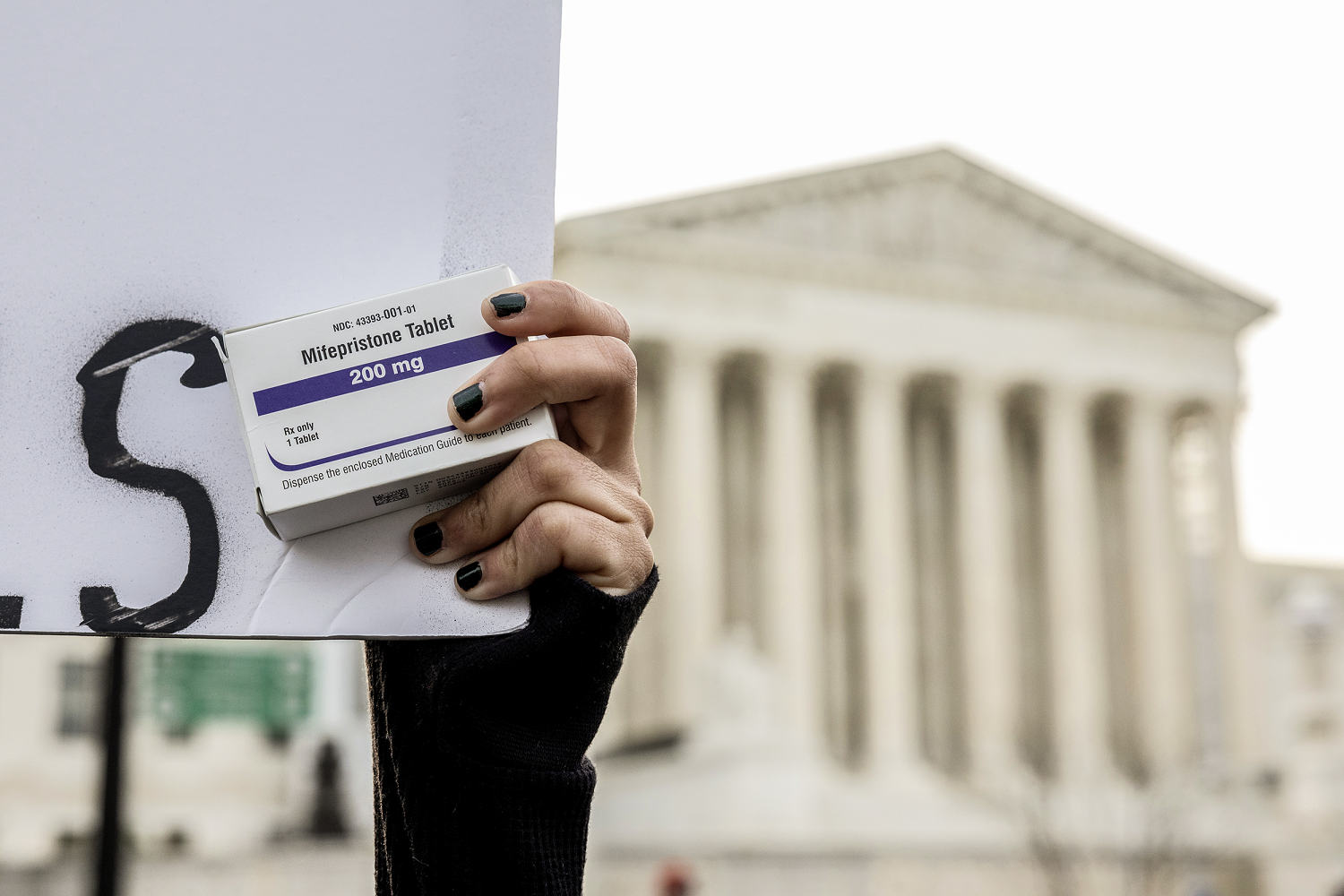
A brown cardboard box sits on a kitchen table in a town where the nearest specialist is a three-hour drive away. To a passerby, it looks like a delivery of vitamins or a new pair of shoes. Inside, however, are two medications—mifepristone and misoprostol—that have become the center of the most significant legal tug-of-war in modern American medicine. This isn't just about chemistry. It is about the geography of autonomy.
For years, the process was clinical and rigid. You drove. You sat in a waiting room. You saw a doctor face-to-face. But the world shifted. Technology caught up with biology. Suddenly, a consultation could happen over a laptop screen, and a pharmacy could be as close as the mailbox at the end of the driveway. This shift toward telehealth and mail-order access changed the math for millions of people. It turned a logistical mountain into a manageable hill. Expanding on this idea, you can find more in: Why the New Vaccine Approval is Playing Catch Up With Biology.
Now, that hill is being leveled by a series of court rulings that threaten to rewind the clock. The Supreme Court has been asked to intervene, to pause a lower court’s decision that would effectively strip away these modern conveniences. If the pause isn't granted, the cardboard box on the kitchen table becomes a relic of a brief, more accessible era.
The Science of the Small Tablet
Mifepristone does one thing: it blocks progesterone. Without that hormone, a pregnancy cannot continue. It is a targeted, molecular intervention. Since the FDA approved it in 2000, the data has piled up like a mountain of evidence. Complication rates are lower than those for wisdom tooth extractions or penicillin. Observers at Mayo Clinic have shared their thoughts on this matter.
Yet, the legal arguments currently swirling around the bench don't often focus on the molecular. They focus on the procedural. Opponents of mail-access argue that the FDA overstepped when it relaxed restrictions in 2016 and again during the pandemic. They claim the safety "guardrails" were tossed aside too haphazardly.
Consider the perspective of a rural physician. They see the data. They know that forcing a patient to travel hundreds of miles for a pill they could take at home doesn't make the medicine safer; it only makes the patient more desperate. When you add layers of travel, childcare, and time off work, the "safety" of a forced in-person visit begins to look like a barrier rather than a benefit.
The medicine hasn't changed. The politics of how it moves through the mail has.
The Invisible Stakes of a Postmark
If the ruling to block mail access stands, we aren't just talking about a change in pharmacy policy. We are talking about a return to a specific kind of inequality.
A person with a flexible job, a reliable car, and a healthy savings account will always find a way to navigate these hurdles. They will drive the three hours. They will pay for the hotel. But for the person working two minimum-wage jobs, the loss of a telehealth appointment is a total shutdown of options. For them, the postal service was the equalizer.
Imagine a woman named Sarah. She lives in a state with "trigger laws," but she is early enough in her pregnancy to qualify for medication. Under the current telehealth rules, she speaks to a provider on Tuesday, and the medication arrives on Thursday. She handles her business in the privacy of her own bathroom, with her own support system nearby.
If the mail-order ban takes hold, Sarah’s Thursday disappears. She has to find a clinic. In some regions, those clinics are vanishingly rare. She has to explain to her boss why she needs two days off. She has to find someone to watch her kids. The "pause" being requested of the Supreme Court is, for Sarah, the difference between a private medical decision and a public, logistical nightmare.
The Legal Pendulum
The Fifth Circuit Court of Appeals recently moved to reinstate restrictions that hadn't been seen in nearly a decade. They wanted to roll back the clock to 2011. This would mean no more mail-order delivery. It would mean the pills could only be administered up to seven weeks of pregnancy instead of ten. It would mean three required in-person doctor visits.
The Department of Justice and the manufacturer of the drug are the ones asking the Supreme Court to step in. Their argument is simple: the FDA is the expert. If a court can override the scientific judgment of the nation's premier health regulator based on a philosophical disagreement, the entire framework of American drug safety is in jeopardy.
Think about the precedent. If a judge in Texas can decide that a drug's distribution method is "unsafe" despite twenty years of FDA data saying otherwise, what stops a judge in another state from blocking a vaccine, a contraceptive, or a life-saving heart medication? It is a crack in the foundation of how we trust medicine.
The Supreme Court is being asked to maintain the status quo while the legal battle continues to play out in the lower courts. It is a request for stability in a landscape that feels increasingly like shifting sand.
The Logistics of a Choice
There is a strange irony in the fact that we can track a pizza across town with GPS, but we are debating whether a life-altering medication can be tracked through the United States Postal Service.
Logistics are often boring. They involve spreadsheets, shipping zones, and delivery routes. But in this context, logistics are everything. When the FDA removed the in-person dispensing requirement, they acknowledged a reality that every person living in the 21st century understands: the internet is a tool for decentralization.
By centralizing medical care back into physical buildings, the courts are effectively shrinking the map for anyone who doesn't live in a major metropolitan area. They are creating "healthcare deserts" by judicial fiat.
The stakes aren't just about one pill. They are about whether we believe that technology and medicine should move forward together, or if we prefer to keep our systems anchored to the physical limitations of the past.
The Weight of the Wait
Wait.
That is what everyone is doing now. The doctors are waiting to see if they need to cancel appointments. The pharmacists are waiting to see if they need to pull stock from the shelves. The patients are waiting, watching the news, trying to figure out if their window of opportunity is closing.
The Supreme Court’s decision on this "stay" won't be the final word on the legality of mifepristone, but it will dictate the reality of its accessibility for the foreseeable future. A "pause" allows the cardboard boxes to keep moving. A denial of that pause stops them in their tracks.
In the quiet of a law clerk's office, the papers are shuffled. In the quiet of a kitchen, a person looks at the calendar. The connection between the two is a line of ink on a legal brief, a line that determines how much power a postmark holds over a person's future.
The brown box on the table is more than just a delivery. It is a testament to a system that, for a moment, decided that geography should not be destiny. Whether that remains true depends on a few signatures in Washington, D.C.
The mail carrier is still on the route. For today, the package arrives. Tomorrow is a question mark written in the margins of a legal brief.