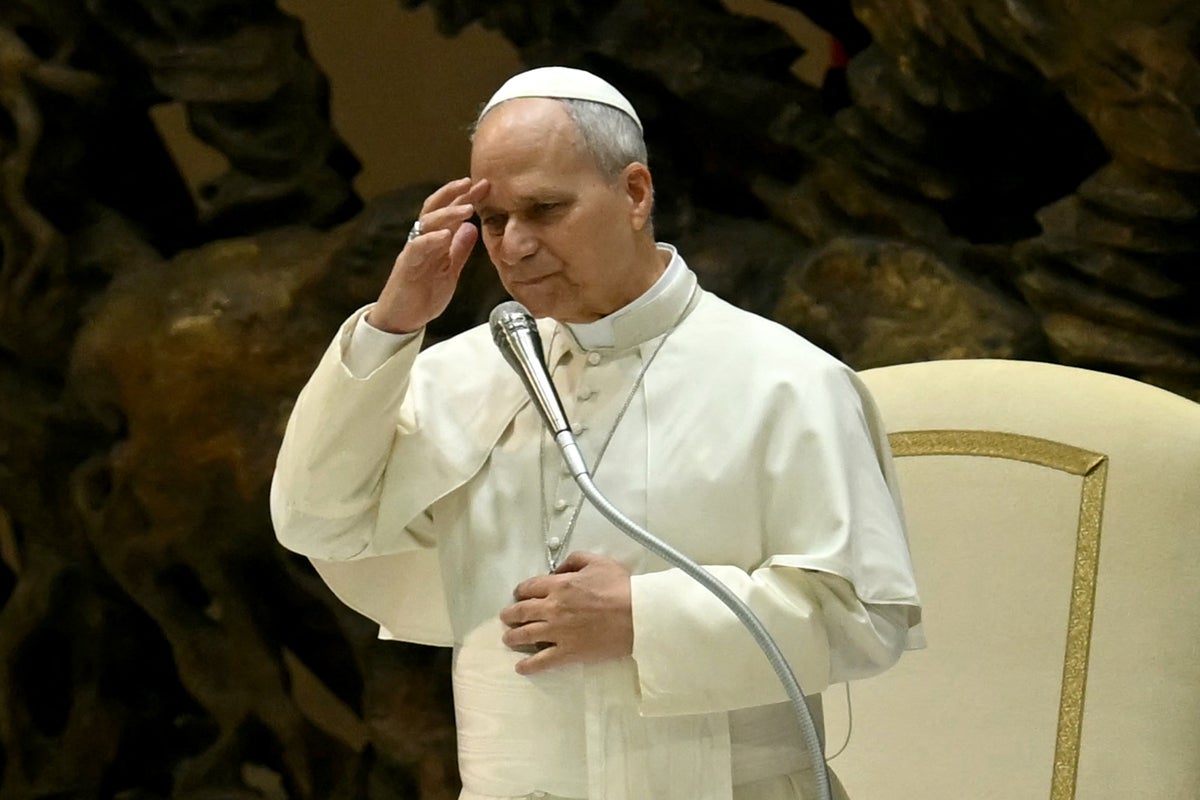
The white smoke had barely cleared from the Sistine Chapel when the world realized Leo XIV was not going to be the compliant American export many in Washington anticipated. By condemning the recent strikes against Iranian infrastructure, the first U.S.-born Pope has done more than just issue a plea for peace. He has effectively torched the unspoken script of Western diplomacy. His demand for "reasonable, sincere and responsible dialogue" isn't a soft-hearted religious platitude. It is a calculated, high-stakes geopolitical pivot that positions the Holy See as a direct friction point against the current momentum of military escalation in the Persian Gulf.
For decades, the Vatican’s influence has often been viewed as a moral echo chamber—loud on ethics but light on actual policy leverage. Leo XIV is changing that math. By using his unique identity as an American to criticize the very military apparatus he was raised near, he has stripped away the "clash of civilizations" narrative that often fuels these conflicts. He is signaling to Tehran that the West is not a monolith, while simultaneously telling the White House that its moral authority on the global stage is officially under review by the world’s oldest diplomatic service.
The End of the Transatlantic Honeymoon
The assumption was simple. A Pope from the United States would naturally align with the security interests of the NATO alliance. Analysts expected a bridge-builder who would translate American democratic values into the language of the Church. Instead, Leo XIV has become a barrier. His condemnation of the strikes against Iran suggests a deep-seated skepticism of the "surgical strike" philosophy that has dominated Pentagon thinking for twenty years.
The Vatican’s diplomatic corps, the Secretariat of State, has been quietly building a file on the futility of sanctions and kinetic interventions in the Middle East since the early 2000s. Leo XIV is simply the first Bishop of Rome with the cultural fluency to weaponize that data against the American establishment. He knows the political language of Washington, and he is choosing to reject it in favor of a "responsible dialogue" that includes the very actors the West has spent years trying to isolate.
This isn't just about theology. It’s about the reality on the ground in Iraq, Syria, and Lebanon, where Catholic minorities often pay the price for Western bombs. When the U.S. strikes Iranian-backed assets, the blowback doesn't hit Washington. It hits the ancient Christian communities of the Levant. Leo XIV is acting as a protector of these populations, realizing that every missile launched from a drone is a death sentence for a parish in Baghdad or a convent in Damascus.
Why Dialogue is the New Defiance
When the Pope calls for "sincere" conversation, he is intentionally using a word that grates on the ears of realpolitik practitioners. In the world of intelligence and defense, sincerity is a weakness. In the world of Leo XIV, it is the only remaining tool that hasn't been broken. The Holy See is betting on the fact that both Washington and Tehran are trapped in a cycle of performative hostility where neither side can back down without losing face.
The Vatican provides the "third space" where face-saving is actually possible. Because the Pope does not have an army, a central bank, or a seat at the UN Security Council with veto power, he is the only global figure who can host a table where neither side feels they are surrendering to a superior military force. This is the "reasonable" part of his demand. He is calling for a pragmatic recognition that neither the Iranian regime nor the American influence in the region is going to vanish overnight.
The Mechanics of Vatican Neutrality
- The Apostolic Nunciatures: The Vatican maintains an embassy in Tehran. Unlike the U.S., the Holy See has ears on the ground in the Iranian capital, allowing for a back-channel that is shielded from the heat of public rhetoric.
- Non-Aligned History: During the Cold War, the Church often served as a quiet intermediary. Leo XIV is dusting off the John Paul II playbook but applying it to a multipolar world where the enemies aren't just atheistic communists, but aggrieved regional powers.
- Cultural Insulation: As an American, the Pope can criticize U.S. policy without being accused of reflexive anti-Americanism. He speaks as a son of the soil, which makes his critique far harder for the State Department to dismiss as "foreign interference."
The Iranian Response and the Risk of Naivety
Critics of the Pope’s stance argue that he is being played. The hardliners in Tehran are experts at using "dialogue" as a stalling tactic while they advance their regional proxies or nuclear ambitions. By condemning the strikes, Leo XIV risks providing a moral shield to a government that has shown little interest in the human rights the Church supposedly champions.
However, the Pope’s advisors argue that the alternative—perpetual escalation—has a 100% failure rate. They point to the last two decades of conflict in the region as proof that air superiority does not equal political stability. Leo XIV is not necessarily "pro-Iran." He is "anti-chaos." He views the current trajectory as a slide toward a regional conflagration that would draw in every major power and result in a humanitarian disaster that would dwarf the Syrian civil war.
The tension here is palpable. Inside the Roman Curia, there are those who worry the Pope is overstepping. They fear he is risking the Church's relationship with its largest financial contributors in the United States. But Leo XIV seems uninterested in the collection plate. His focus is on the long arc of history, and he appears convinced that the era of Western-led military solutions in the Middle East is over.
The American Backlash
The reaction in the United States has been predictably divided. For some, the Pope is a prophet of peace standing up to the military-industrial complex. For others, he is a "useful idiot" for an authoritarian regime. This polarization is exactly what the Vatican wants to avoid, yet it is exactly what it has invited by taking such a firm stand.
The U.S. Catholic community is now in the awkward position of choosing between their Commander-in-Chief and their Supreme Pontiff. This creates a unique pressure on the White House. If the Pope continues to frame these strikes as "unreasonable" and "irresponsible," he creates a moral deficit for any administration trying to justify the cost of another war to a weary public. It’s a soft power play of the highest order.
Leo XIV is banking on the idea that the American public is as tired of "forever wars" as he is. He is speaking directly over the heads of the politicians to the people in the pews. He is betting that the moral weight of the Papacy can act as a circuit breaker in the machinery of war.
A New Doctrine of Engagement
This move marks the beginning of what some are calling the "Leo Doctrine." It is characterized by an aggressive neutrality that refuses to accept the binary choices presented by state departments and defense ministries. It demands a seat at the table not as a guest, but as an auditor of the world's conscience.
The Pope is not asking for a ceasefire; he is asking for a fundamental shift in how nations perceive their security. He argues that security built on the threat of destruction is a house of cards. True security, in his view, is the byproduct of a "responsible" engagement where the legitimate concerns of all parties—even the ones we don't like—are addressed.
It is a radical, perhaps even dangerous, position. In a world that thrives on clear-cut villains and heroes, Leo XIV is insisting on the complexity of "sincere" dialogue. He is forcing the world to look at the human cost of geopolitical chess. Whether his gamble will prevent a war or merely delay the inevitable remains to be seen, but one thing is certain: the Vatican is no longer a silent observer in the halls of power.
The next move belongs to the diplomats, but the moral gravity has shifted. Leo XIV has drawn a line in the sand, not with a sword, but with a cross, and he is waiting to see who is brave enough to cross it. The era of the quiet Pope is dead. In its place is a man who understands that in the modern world, the most subversive thing you can do is ask two enemies to actually speak to one another.
Every missile strike from here on out will be judged against this standard of "responsible dialogue." The White House can no longer claim the moral high ground by default. They now have to contend with a critic who knows their language, knows their culture, and isn't afraid to use his global pulpit to tell them they are wrong. This is the new reality of the Vatican’s foreign policy, and it is a reality that the world’s superpowers are going to find increasingly difficult to ignore.


