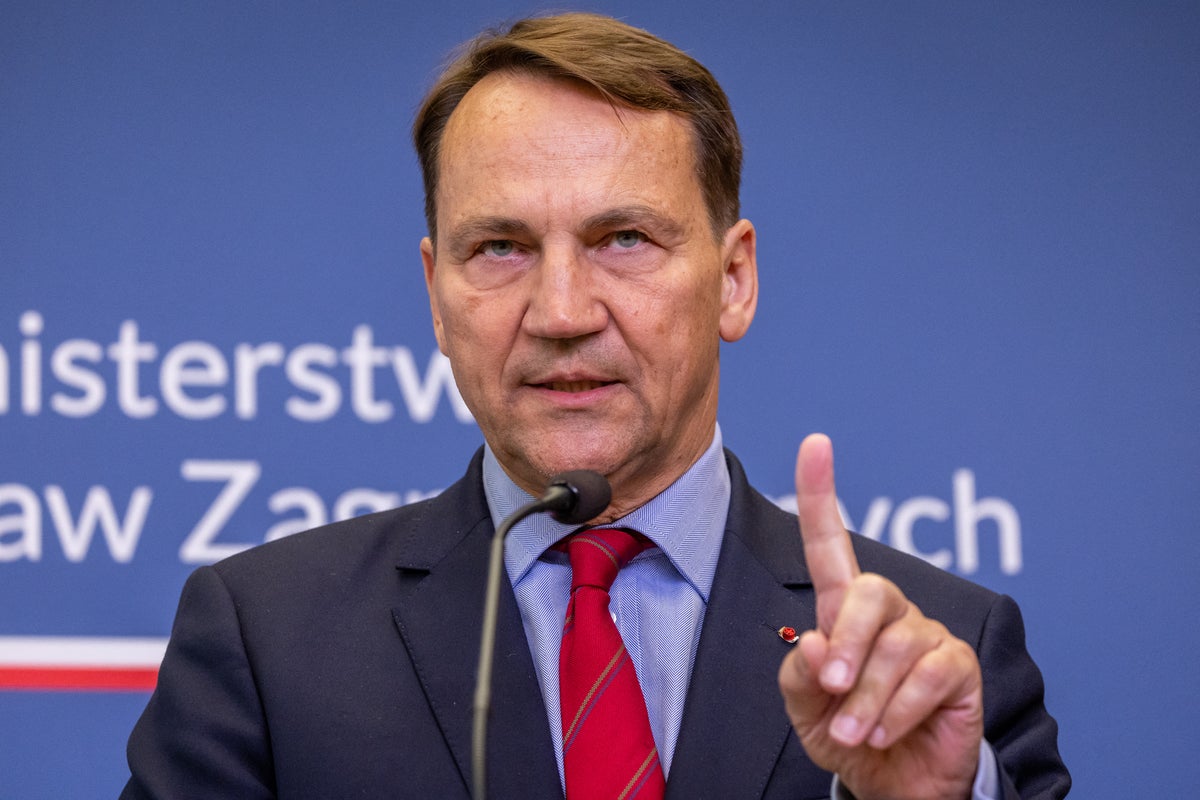
Warsaw isn't known for mincing words lately. When Polish leadership pointed out that a direct military confrontation between NATO and Russian forces wouldn't last long—suggesting the alliance could sweep the board if it took its gloves off—they weren't just blowing smoke. They were stating a stark math problem that Moscow's military planners refuse to solve publicly.
If you look past the endless cable news speculation and examine the sheer tonnage of industrial output, technological superiority, and logistics capability, the balance tips dramatically. Yet, talking about taking gloves off misses the entire point of why this standoff remains frozen in a grim, grinding stalemate of artillery shells and drone warfare.
The Arithmetic of Conventional Dominance
Let's look at the raw facts. NATO economies dwarf Russia's GDP by a factor that makes direct comparison almost comical. When you pool the defense budgets of the alliance members, you get a multi-trillion-dollar juggernaut.
Russia's war machine runs on Soviet-era stockpiles, refurbished T-72 tanks pulled from dusty Siberian depots, and raw manpower funneled through brutal attritional tactics. They adapted well to a long-haul war economy. They learned how to churn out cheap drones and keep factories running 24 hours a day.
Even so, factory output means little when the underlying technology is a generation behind. Western air superiority isn't just a talking point. It's an operational reality built on stealth aircraft, integrated air defense networks, and real-time electronic warfare suppression. If NATO air forces operated without the current self-imposed political restraints—the diplomatic red lines meant to prevent escalation—Russian supply lines, command bunkers, and armored columns would face a systematic dismantling.
We saw flashes of this capability during Operation Desert Storm back in 1991, and military technology advanced light-years since then. Russia's air defense grid, while formidable on paper, relies on radar systems and surface-to-air missiles that Western electronic attack aircraft are specifically engineered to blind, confuse, and destroy.
Why the Gloves Stay On
So why doesn't it happen? Why do Western leaders tiptoe around supply restrictions, weapon range limits, and direct intervention?
Fear of escalation. Specifically, nuclear escalation.
Warsaw can talk about swift military victory because a conventional fight on a battlefield heavily favors the West. But war doesn't exist in a vacuum. Vladimir Putin knows he cannot win a conventional slugfest against a unified NATO coalition. Because of that reality, the Kremlin's entire doctrine relies on the nuclear threshold.
The moment Western air power starts striking targets deep inside Russian territory or destroying military command centers in Moscow, the strategic calculus shifts from a regional European war to an existential threat for the Russian state. That's when the risk curve goes vertical.
Nuclear weapons change everything. They turn a guaranteed military victory into an unacceptable civilization-ending gamble. Polish officials know this, of course. Their rhetoric serves a specific purpose: keeping pressure on Western allies to drop timid restrictions on weapons delivery and stop self-deterring out of excessive caution.
The Logistics Nightmare Nobody Mentions
Even if we lived in a fantasy world where nuclear weapons didn't exist, a direct NATO intervention would face a logistical nightmare that armchair strategists love to ignore.
Moving millions of troops, armored vehicles, and tons of supply across European borders sounds easy until you try doing it on aging rail networks and congested highways. Infrastructure matters. Bridges that can't handle heavy Abrams or Leopard tanks, narrow roads, and incompatible rail gauges create massive bottlenecks.
Russia understands how to exploit geography. They count on the sheer size of their territory and the depth of their strategic reserves to soak up punishment. Blitzkrieg sounds great in theory, but modern combat against a nuclear-armed adversary is messy, slow, and terrifyingly unpredictable.
What This Means for the Road Ahead
The real takeaway from Warsaw's bold statements isn't that a hot war between NATO and Russia is coming. It's that the current approach of incremental military aid has a hard ceiling.
Drip-feeding weapons to Ukraine while forbidding strikes on legitimate military targets inside Russia creates a frustrating half-measure. It prolongs the conflict. It drains Western stockpiles. Most importantly, it signals weakness to authoritarian regimes watching from Beijing and Tehran.
If NATO wants to deter future aggression, the alliance needs to stop fearing its own shadow. That doesn't mean taking the gloves off and marching on Moscow. It means giving Ukraine the tools, the permissions, and the backing to win decisively on its own terms.
Strength deters war. Hesitation invites it. Until Western capitals internalize that simple truth, speeches from Warsaw will remain just that—words pointing at a reality nobody wants to enforce.