You plug it in before you sleep. It hums quietly on the nightstand, tethered to the wall, drinking electricity while you dream.
It feels harmless. It looks like a smooth, matte brick of plastic, heavy enough to feel substantial, small enough to slide into a jacket pocket. We call them power banks. We call them lifesavers. We carry them everywhere, nursing a cultural addiction to uninterrupted battery bars, trusting that the dense, volatile chemistry trapped inside that aluminum shell will stay quiet.
Most of the time, it does.
Until the night it doesn't.
The Heat Before the Storm
Let us step into a quiet flat in Hong Kong, though it could just be an apartment in Chicago, a dorm room in London, or your own bedroom. The clock reads three in the morning. The air is still.
(Note: The following reconstruction is based on verified news reports of a devastating residential fire.)
Three people are asleep. Four cats curl up in their favorite corners, breathing softly in the dark. On a charging dock, a lithium-ion power bank reaches a critical threshold. A microscopic flaw in the internal separator—a manufacturing defect, a drop from two weeks ago, a cheap internal component pushed past its limit—triggers a chain reaction.
Thermal runaway.
It is a sterile phrase for a terrifying physical reality. Inside the cell, temperatures begin to spike. One hundred degrees. Two hundred. Four hundred. The electrolyte solvent turns to gas, ballooning the casing. The plastic groans.
And then, violence.
A sudden, blinding flash splits the dark. It is not just a fire; it is a chemical blowtorch. Jets of superheated gas and sparks shoot across the room, instantly igniting curtains, bedding, and carpet. Thick, toxic black smoke rolls upward, choking the oxygen out of the air in seconds.
Consider what happens next: disorientation, panic, the sudden, clawing desperation to find a door in a room that has turned into a chimney.
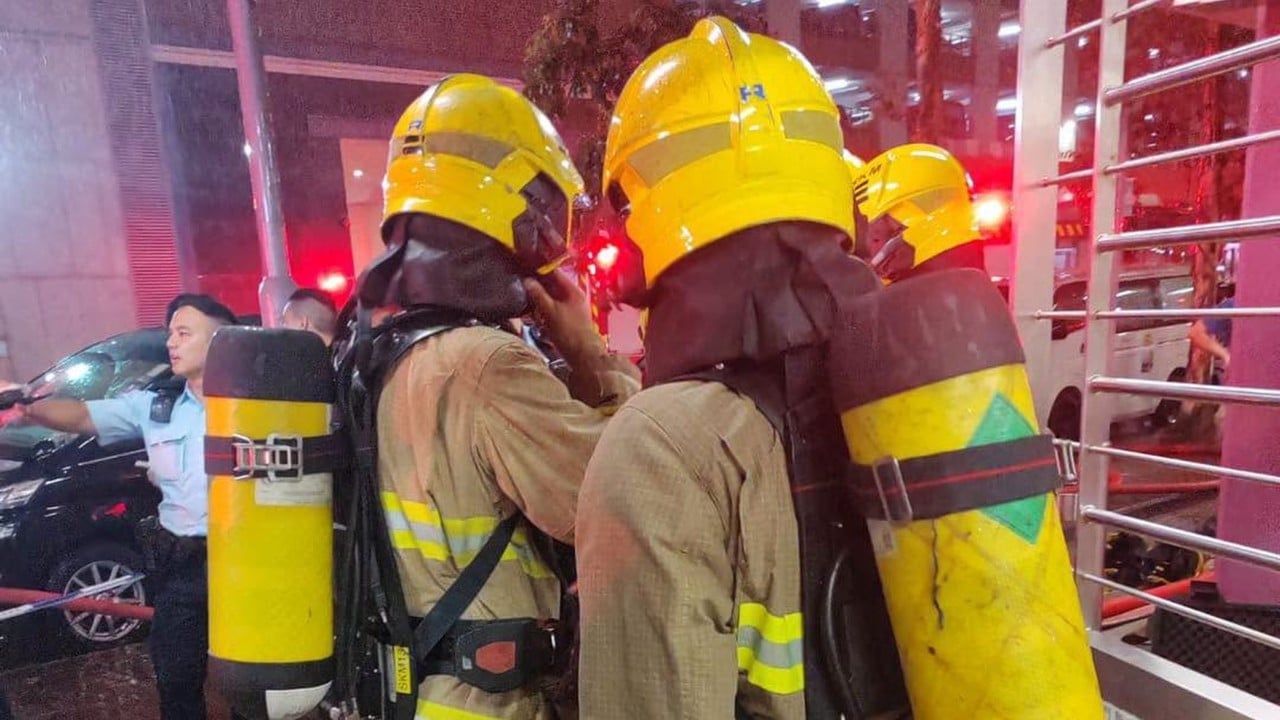
When the smoke clears and the sirens fade, the human toll is etched in smoke and hospital charts. Three human beings rushed to emergency care, fighting for clean air in their lungs. And the four cats, silent and small, lost to a hazard their owners never saw coming.
How did a pocket-sized convenience become an arsonist in the night?
The Invisible Reactor in Your Pocket
We treat portable chargers like household appliances, akin to a toaster or a desk lamp. They are not. They are high-density energy storage units, packing an enormous amount of chemical potential into a tiny space.
Think of a lithium-ion battery as a crowded elevator. Millions of lithium ions rush back and forth between two electrodes through a microscopic plastic barrier called a separator. As long as that separator holds, everything is fine. But puncture it, overheat it, overcharge it, or buy a counterfeit unit built with substandard materials, and the elevator crashes. The electrodes touch. A short circuit forms.
The energy has to go somewhere. It converts into raw, uncontrollable heat.
This is where the danger multiplies. Cheap power banks often lack the internal safety chips designed to cut off current when things get too hot. They lack proper thermal management. We buy them because they are cheap, because they are bright, because they promise ten full phone charges for twenty dollars.
We forget that energy does not negotiate with bargain prices.
I remember staring at my own portable charger last week, noticing a slight bulge near the USB port. My stomach dropped. I had dropped it on the subway concrete a month earlier, watched it bounce, and thought nothing of it because the plastic didn't crack. But internal damage is a ghost. It works until it doesn't. I unplugged it immediately, walked it outside, and disposed of it at an electronic waste recycling depot.
That paranoia is healthy. In fact, it is necessary.
Living with the Beast
We are never going back to a world without portable power. Our maps, our tickets, our livelihoods, our connections to the people we love are tethered to screens that drain their batteries by noon. We need these bricks of energy.
But we need to change how we respect them.
Never charge your power bank under a pillow, on a mattress, or unattended while you sleep. Treat it like an open flame. Give it room to breathe on a hard, non-flammable surface. Toss it the moment it bloats, cracks, or feels suspiciously hot to the touch during a normal charge cycle. Stop buying unbranded, discount-bin electronics from shadowy online marketplaces where quality control is a suggestion rather than a standard.
The flat in Hong Kong is quiet now. The smoke has cleared, leaving behind the scarred walls and the heavy, lingering grief of a preventable disaster.
The sun rises. You reach for your bag. You slide your charger inside, ready to face the day.
Check the casing. Feel the temperature. Respect the fire you carry.