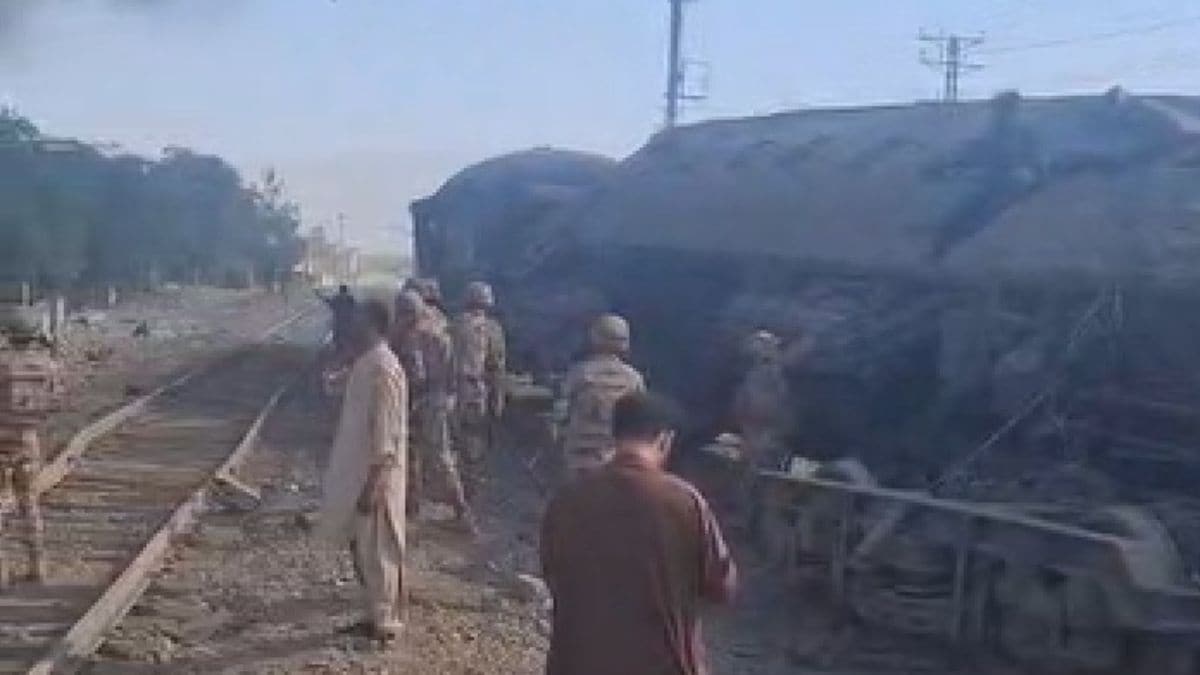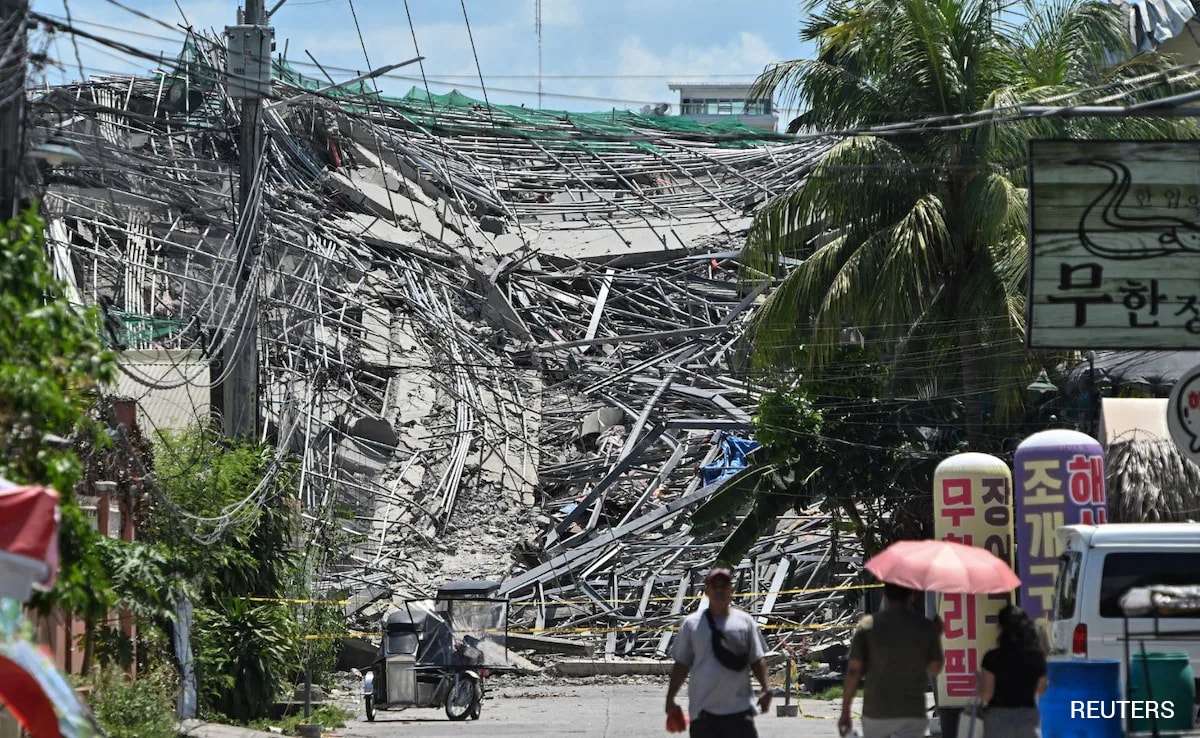
The headlines write themselves every single time a concrete slab cracks open in Manila or Cebu. Twenty-one people are missing under the rubble of a half-built mid-rise tower. Instantly, the media ecosystem triggers its scripted response. Reporters point fingers at the "rogue contractor." Government officials swarm the microphones to demand immediate, sweeping audits of every job site in the region. Activists decry the lack of safety oversight.
It is a comfortable, lazy consensus. It gives everyone a clear villain to hate and a straightforward, albeit useless, solution to vote for.
But if you believe that more regulations, stricter building inspectors, or a few heavily publicized fines will prevent the next structural failure in the Philippines, you are falling for a dangerous illusion.
I have spent nearly two decades auditing distressed infrastructure projects across Southeast Asia. I have watched developers cut corners in real time, and I have seen how the bureaucracy actually functions behind closed doors. The mainstream narrative surrounding structural failures is fundamentally wrong. These tragedies are not the result of a few bad actors breaking the rules. They are the logical, predictable outcome of a broken economic system where the rules themselves make safety financially impossible for mid-tier builders.
We need to stop talking about "accidents" and start talking about the brutal economics of structural engineering in developing markets.
The Myth of the Rogue Contractor
The immediate reaction to any construction failure is to blame a cowboy operator using substandard materials. The media loves to focus on low-grade rebar or watered-down concrete mixes. While physical material failure is the mechanical cause of a collapse, it is rarely the root cause.
In a typical developing market supply chain, the major developers—the conglomerates building massive townships and luxury high-rises—have the capital to command top-tier materials and international engineering oversight. The real risk lies in the massive, highly fragmented underbelly of the industry: the mid-rise commercial and residential projects.
These projects operate on razor-thin margins dictated by fluctuating global commodity prices and localized inflation. When the cost of structural steel or imported cement spikes, a mid-tier contractor cannot simply adjust their fixed-price contract. They are trapped.
To survive, they optimize. In engineering, "optimization" is often just a polite word for eroding the margin of safety. They do not do this because they are evil; they do it because the financial ecosystem rewards the lowest bidder while offering zero transparency into the actual structural integrity of the asset during construction. The current system punishes honest builders who price projects realistically, forcing them out of the market in favor of those willing to play roulette with structural loads.
Why More Regulation Always Fails
Whenever a building collapses, the public clamors for the same ineffective remedy: more building codes and more inspectors.
This response ignores the fundamental reality of regulatory capture and bureaucratic capacity in the archipelago. The Philippines already has the National Building Code (Presidential Decree No. 1096), along with structural codes that are ostensibly derived from stringent international standards, such as the American Concrete Institute (ACI) guidelines. On paper, the rules are adequate.
In practice, adding more layers of bureaucracy does not improve safety; it merely increases the cost of compliance, which ironically drives more builders into the informal or sub-standard market.
Consider how a building permit actually moves through a local government unit (LGU). The process is frequently choked by administrative bottlenecks. When a project is delayed for months waiting for a rubber stamp, the developer loses millions in holding costs. To recoup those losses, they must accelerate the actual construction phase.
They pour concrete faster than it can properly cure. They strip formwork early to reuse it on the next floor, violating basic structural curing Timelines.
$$\text{Curing Time} \propto \frac{1}{\text{Early Strength Development}}$$
When you force a contractor to choose between waiting 28 days for concrete to reach its full design strength ($f'_c$) or rushing the pour to avoid catastrophic financial penalties from a delayed timeline, the financial pressure wins almost every time. The regulatory system itself creates the very delays that incentivize dangerous construction practices.
The False Security of the Structural Audit
The standard political damage-control move after a disaster is ordering a mandatory structural audit of all ongoing projects. This is security theater at its finest.
A real, forensic structural audit is an incredibly complex, destructive, and expensive process. It requires non-destructive testing (NDT) like ground-penetrating radar to locate rebar placement, ultrasonic pulse velocity testing to check concrete homogeneity, and core drilling to test actual compressive strength in a lab.
The vast majority of quick-turnaround audits ordered by politicians consist of a visual walkthrough by an underpaid municipal engineer with a clipboard. They look for visible cracking or deflection. But by the time a structural defect manifests as a visible crack in a load-bearing column, the building is often already in a state of progressive collapse.
To make matters worse, the structural engineering profession itself is facing a severe talent drain. The brightest structural minds graduating from top institutions like the University of the Philippines or Mapúa are immediately snatched up by multinational firms or lured overseas to the Middle East and Singapore, where salaries are five to ten times higher. The engineers left to police local mid-tier construction sites are often overwhelmed, under-equipped, and vastly outnumbered by the sheer volume of active projects.
Dismantling the Standard Inquiries
People looking at these disasters from the outside always ask the wrong questions. Let us dismantle the three most common assumptions.
Why can’t we just ban low-quality steel imports?
Because the market cannot afford it. If you mandate that every single structure in the country use premium, traceable, seismically certified steel, you will instantly halt the construction of affordable housing, public schools, and local medical clinics. The economy relies on tier-two materials to make development viable. The solution is not banning materials; it is designing with a realistic understanding of the material's actual limits instead of relying on idealized textbook values.
Shouldn't the insurance companies refuse to cover unsafe buildings?
This assumes a level of insurance penetration and sophistication that simply does not exist in the mid-market segment. Many of these structures are financed through opaque private capital or localized banking relationships where structural risk assessments are treated as a bureaucratic checklist item rather than a rigorous engineering review. The insurance industry in developing markets rarely has the technical staff required to perform independent structural verification during the critical pouring phases.
Why don't workers speak up when they see bad practices?
The construction workforce in the Philippines is highly casualized, underpaid, and un-unionized. A laborer who notices that a column has fewer rebar ties than the blueprint specifies faces a brutal calculation: speak up and get fired on the spot, or keep quiet and feed their family for another week. There is no viable whistleblower protection on a standard job site.
The Real Solution: Shifting the Financial Liability
If you want to stop buildings from collapsing, you have to stop trying to police them with clipboards and start changing the financial risk profile of the people funding them.
Right now, developers shield themselves behind a web of shell corporations and special purpose vehicles (SPVs). If a project collapses during construction, the specific SPV goes bankrupt, the contractors sue each other in courts that take a decade to resolve anything, and the ultimate landowners walk away with their personal fortunes intact.
We must eliminate the corporate veil for structural failures.
Imagine a scenario where the lead developer, the principal architect, and the chief structural engineer are held personally, civilly, and criminally liable for the structural integrity of a building for 15 years post-construction, with no corporate shields allowed. If a building fails due to negligence, their personal assets are liquidated to compensate the victims.
Suddenly, the calculus changes entirely.
A developer will no longer pressure a contractor to strip formwork early if they know their personal bank account and real estate holdings are on the line. The structural engineer will refuse to sign off on a compromised design if they know they cannot hide behind the company's limited liability status.
Furthermore, we must digitize and open-source the construction process. Every concrete pour, every cylinder break test, and every rebar inspection report should be uploaded to a public, immutable ledger linked to the building’s geographic coordinates. If a contractor tries to fake a 28-day strength test, the data anomaly should be flagged automatically by basic algorithmic checks, visible to any prospective buyer or tenant.
The industry does not need more laws. It needs transparency that bypasses the corruptible human middleman and a liability structure that targets the wallets of the people at the top of the food chain. Until we change the financial architecture of development, the physical architecture will continue to fail. Stop looking at the rubble and start looking at the balance sheets.