Silence.
In a live television studio, silence is never merely the absence of sound; it is an alarm bell ringing at a frequency only producers can hear, a sudden vacuum where the hum of fluorescent lights and the rustle of cue cards abruptly vanish because someone, somewhere, just typed a threat into a contact form. Don't forget to check out our previous post on this related article.
To understand what is happening across Europe right now, forget the dry wire reports about coordinated email campaigns and emergency evacuations. Picture instead a hypothetical woman named Elena, a senior broadcast director in Brussels. It is 6:58 PM. Two minutes to the evening news. Her headset crackles, not with the anchor’s voice check, but with the trembling voice of the building’s security chief. An email has arrived. It claims explosive devices have been planted in the ventilation shafts. Elena looks through the glass at her anchor, adjusting his tie, completely unaware that in forty seconds he will be sprinting down a concrete stairwell into the freezing drizzle alongside three hundred camera operators, makeup artists, and interns.
That is the reality of the wave of hoax bomb threats currently washing over European broadcasters and air traffic control centers. While the headlines treat these incidents as routine digital nuisances—brief interruptions quickly resolved by bomb-sniffing dogs and weary police officers—the true cost is measured in human nervous systems pushed to the brink, billions of euros in evaporated logistics, and the slow, corrosive erosion of public trust in the systems that keep modern society airborne and informed. If you want more about the history of this, USA Today provides an informative summary.
The Architecture of a Ghost Attack
I have spent years reporting from newsrooms and covering aviation security across the continent, and I can tell you firsthand what an evacuation smells like. It smells of burnt coffee left on hotplates, wet wool coats grabbed in a panic, and the sharp, metallic tang of cold sweat. You stand on the pavement across the street from your workplace, watching K-9 units disappear through the revolving doors, wondering if this time—the fifth time this month—the boy crying wolf actually brought one.
This is not traditional terrorism. Traditional terrorism relies on kinetic destruction, the horrifying spectacle of physical violence. What European broadcasters and aviation hubs are facing today is closer to psychological guerrilla warfare, waged from behind layers of encrypted proxies and burner accounts.
Think of modern European infrastructure like a vast, interconnected nervous system. Your brain does not need a physical injury to trigger a debilitating panic attack; it only needs to believe a threat exists. The perpetrators behind these recent waves—targeting major public broadcasters in France, Germany, and Belgium, alongside regional airports and air traffic control facilities from Geneva to Vilnius—have discovered how to hack the human reflexes of our safety protocols.
Security protocols in aviation and media are binary by necessity. You cannot play the odds when two hundred lives are cruising at thirty-five thousand feet, nor can you gamble when a live broadcast studio holds dozens of staffers. When a threat arrives, the protocol demands immediate, total compliance. Planes are grounded. Airspace is cleared. Broadcasts cut to emergency loops of nature documentaries or pre-recorded reruns.
The attackers spend nothing. A virtual private network costs less than a sandwich. An automated script capable of blasting identical, chillingly specific emails to fifty press offices and twenty regional flight towers takes minutes to configure. Yet, the asymmetry is staggering. A single keystroke in an anonymous bedroom forces a symphony of expensive, high-stakes human machinery to grind to a screeching halt.
When the Sky Goes Quiet
Consider what happens next when the target shifts from a television studio to an air traffic control tower.
Let us step into the shoes of another hypothetical figure: Marcus, an air traffic controller working the night shift at a mid-sized European hub. His radar screen is a dark emerald canvas dotted with glowing vectors, each tag representing an aluminum tube packed with families, business travelers, and medical cargo. Around 2:00 AM, a threat is relayed through the airport authority’s administrative portal. The message claims an explosive is ticking somewhere inside the control facility.
Marcus cannot simply walk out the door. If he abandons his console without a seamless handoff, those glowing dots on his screen lose their choreography. In that agonizing window between receiving the threat and transferring airspace control to an adjacent sector—a process that normally takes careful, unhurried coordination—Marcus has to suppress the primal human instinct to run for his life while performing calculus in his head at breakneck speed.
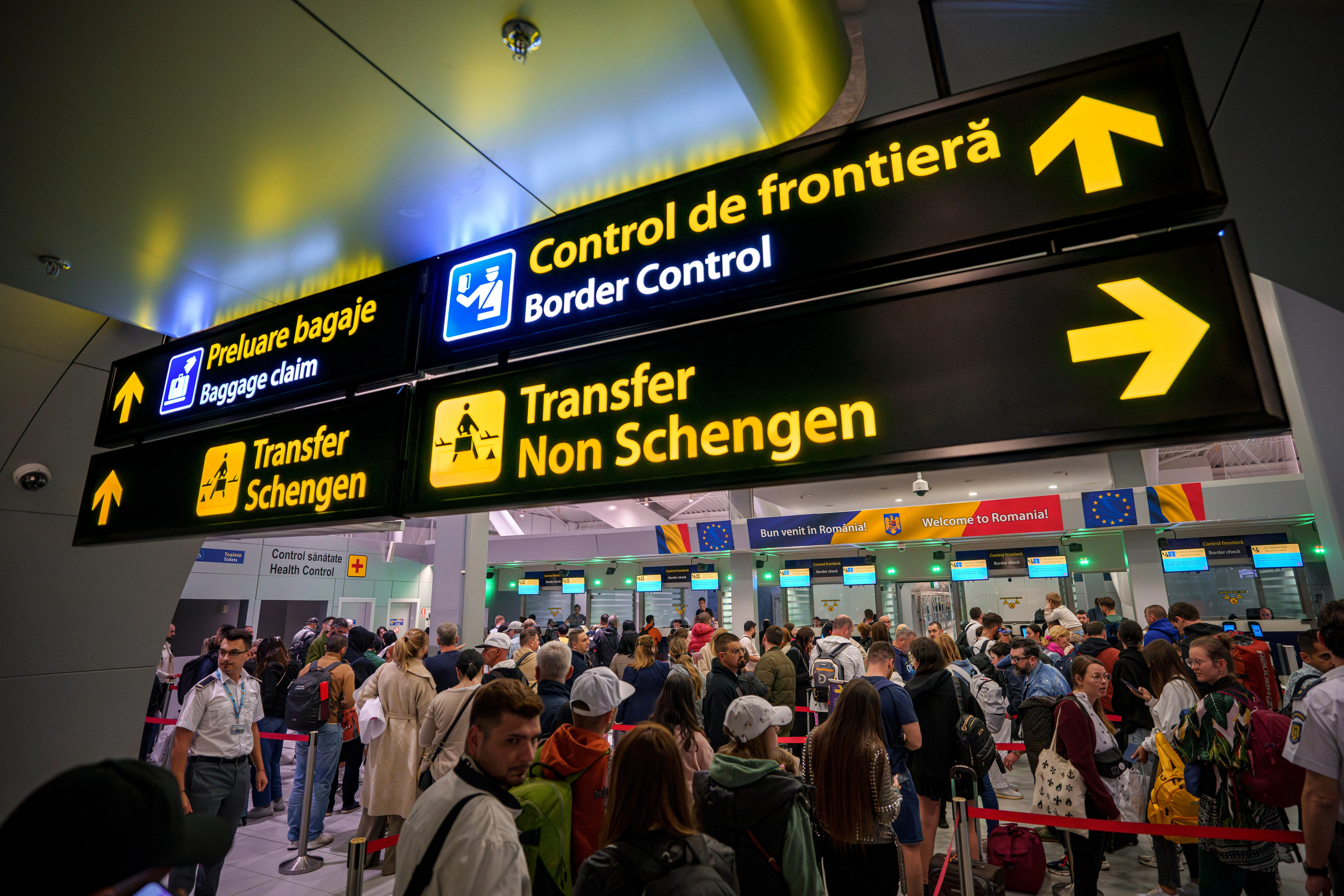
When an airport or control center evacuates, the ripple effects do not stay local. Aviation is a tightly wound watch; bend one gear in Frankfurt or Paris, and flights in Madrid, Warsaw, and Athens begin to slip out of time.
- The Immediate Ground Stop: Departing flights are held at the gate, engines idling, burning expensive jet fuel while crews edge closer to their legally mandated maximum duty hours.
- The Diversion Cascade: Incoming flights already low on fuel must be rerouted to secondary airports that suddenly find their tarmacs choked with unscheduled wide-body jets.
- The Passenger Toll: Thousands of ordinary people find themselves sleeping on terminal floors, missing surgeries, funerals, and job interviews, all because a ghost sent an email.
During the autumn of 2023, France experienced a terrifying preview of this exact vulnerability when dozens of regional airports were evacuated repeatedly over several weeks due to coordinated hoax threats. More than a hundred flights were canceled, thousands more delayed, and police resources were stretched to breaking point. Now, as fresh waves target both the skies and the airwaves simultaneously, it becomes clear that the playbook has evolved. The goal is no longer just disrupting travel; it is disrupting the very channels through which the public learns why their travel is disrupted.
The Dangerous Art of Crying Wolf
Here is the part that keeps security directors awake at 3:00 AM, and frankly, it terrifies me too: exhaustion breeds negligence.
Humans are terrible at sustaining high alert over long periods. It is an evolutionary quirk. When a threat proves false once, we feel relief. When it proves false ten times, we feel annoyed. By the twentieth time, we start rolling our eyes, leaving our bags behind at our desks, and walking slowly toward the fire exits instead of briskly.
Security experts call this alarm fatigue, and it is the invisible payload hidden inside every single hoax email.
To understand how insidious this is, look back at the Cold War tactics of psychological exhaustion, or even the history of maritime safety. Before automated distress signals were strictly regulated, false SOS calls threatened to make captains hesitate before turning their ships around in rough seas. Today, the attackers targeting European broadcasters and aviation hubs are weaponizing that exact psychological decay. They want the security guard at the television station to hesitate before hitting the evacuation alarm. They want the airport director to wonder if she can wait ten more minutes before grounding the morning rush.
Because the moment those professionals hesitate is the moment a real threat slips through the cracks.
At the same time, we have to be honest about our own confusion. When news breaks that a major European broadcaster has suddenly gone off the air due to a bomb threat, the public immediately looks for a singular mastermind. Is it state-sponsored hybrid warfare? Is it a loose network of teenage cyber-nihilists competing for clout on encrypted messaging apps? Is it domestic extremists testing response times?
The unsettling truth is that it is often all of the above, bleeding into one another. Law enforcement agencies across Europe have traced past waves to everything from hostile foreign intelligence operations seeking to sow low-grade chaos across NATO-aligned nations, to decentralized online extortion rings using swatting tactics as a twisted form of entertainment. The copycat effect acts like gasoline on dry brush. Once one group proves that a well-worded threat can knock a national television network off the air during prime time, a dozen imitators crawl out of the woodwork within forty-eight hours.
Rewiring the Reflexes
So how do you fight an enemy who never shows up to the battlefield? You cannot arrest an IP address routed through six jurisdictions in a single afternoon, and you certainly cannot ignore a credible-sounding threat when lives are on the line.
The solution lies not in abandoning caution, but in re-engineering how our critical institutions absorb the shock.
Over the past year, forward-thinking broadcasters and aviation authorities have begun quietly overhauling their crisis architectures. Instead of relying on single points of failure, European media networks are increasingly adopting distributed, cloud-based broadcast workflows. Think of it like moving from a single physical fortress to a fleet of submarines. If the main studio in Paris or Berlin has to be evacuated in sixty seconds, control can be switched instantly to a secondary facility hundreds of miles away—or even to producers working remotely from secure laptops—keeping the signal alive while police sweep the physical building.
Aviation is undergoing a similar, though far more complex, transformation. Remote digital towers—where controllers monitor runways via ultra-high-definition camera arrays and sensor networks from miles away—are moving from experimental novelties to vital redundancies. If a physical terminal or legacy tower receives a threat, digital backup centers can assume control of the airspace without forcing pilots into white-knuckle holding patterns.
Equally crucial is how law enforcement tracks the digital fingerprints left behind. European cybercrime units, working through Europol, are shifting away from treating each bomb threat as an isolated local police matter. By pooling linguistic patterns, metadata, and routing signatures across borders in real time, investigators are building behavioral profiles of the senders. What looks like a random, isolated threat in Antwerp often shares identical syntax and server hops with an email sent thirty minutes earlier to a radio station in Prague.
Yet technology and cross-border policing only solve half the equation. The other half is cultural. Organizations are finally realizing that treating staff like disposable pawns in endless evacuation drills is unsustainable. Forward-looking newsrooms and airports are investing in trauma-informed crisis training, transparent post-incident debriefings, and clear communication protocols so workers do not feel abandoned in the dark every time an alarm sounds.
The Empty Chair
We like to believe that modern civilization is held together by steel, fiber-optic cables, and concrete. It isn’t. It is held together by routine—by the quiet, unspoken agreement that when you sit down at a microphone, the light will turn red, and when you board a plane, the tower will guide you safely through the clouds.
The people sending these phantom threats across Europe understand how fragile that agreement really is. They know they do not need to plant a single ounce of explosive to shake a continent; they only need to make us doubt the safety of the rooms we work in and the skies we fly through.
Somewhere in Europe tonight, an anchor will sit down at a desk, smooth out a stack of paper, and wait for the floor manager to count down from five. Somewhere nearby, a controller will lean forward toward a glowing green screen, guiding a hundred tons of metal through the dark. Both of them will glance, just for a fraction of a second, toward the exit door.